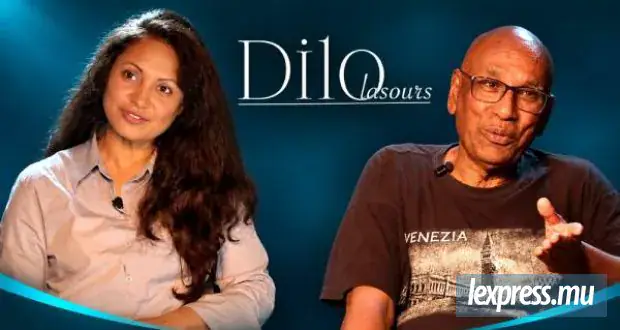
Gaston Valayden's introduction to theater began at the age of seven in a culturally rich environment. Growing up, his neighborhood was an artistic hub where almost all the young people were involved in theater, and he was no exception. At seven, he learned a speech by Marc Anthony, although he didn't understand the lyrics at the time. This early exposure sparked his interest in theater and performance.
Valayden's family background played a significant role in shaping his artistic inclinations. Born into a musical family, his father never showed him music, but he was drawn to it nonetheless. At 12, he gained admission to Royal College, where he was encouraged to pursue academic excellence. However, his true passion lay in music, which he studied under Odette Toolsy. Music became an integral part of his theatrical performances.
Valayden's career in theater took a significant turn when he began writing his own plays. He wrote over a dozen pieces, but it wasn't until recently that he published three of them: Baraz in Kreol, Le Nœud in French, and Madogs of Diego in English. The delay in publication was due to his perfectionism and desire to revive his works. The publication of these plays marked a milestone in his career, allowing his audience to experience his creations in their entirety.
One of Valayden's notable works, Madogs of Diego, highlights the story of the Chagossians, an issue close to his heart. The play explores themes of colonialism and the displacement of the Chagossian people. Initially written in Kreol, he translated it into English for a festival in San Francisco. The play's universal theme resonated with audiences, and it became an essential part of his published works.
Valayden's contributions to Mauritian culture and theater have been recognized, and he was awarded the Member of the Order of the Star and Key of the Indian Ocean. However, when his play Madogs of Diego was selected for a festival, the Minister of Culture at the time, refusing to support it, cited concerns that it might offend American sensitivities. This rejection led Valayden to return his medal, feeling that his work was not being acknowledged.
Valayden's views on the current state of culture and theater in Mauritius offer insights into the challenges faced by artists. He believes that the Ministry of Culture needs to be more supportive and open-minded. Theatrical performances should be encouraged and celebrated, rather than restricted by personal opinions or biases. He emphasizes the importance of cultivating a culture that appreciates and promotes artistic expression.
As Valayden looks back on his career, he reflects on the common thread of promoting cultural awareness and understanding through his plays. His works often address social and political issues, such as language and identity. Valayden's perseverance and dedication to his craft have enabled him to share his vision with a wider audience, and his published plays serve as a testament to his enduring legacy in Mauritian theater.
Key points
- Valayden's plays often explore themes of identity, culture, and social justice.
- He was awarded the Member of the Order of the Star and Key of the Indian Ocean for his contributions to Mauritian culture.
- Valayden's work has been influenced by his experiences with language and cultural identity in Mauritius.