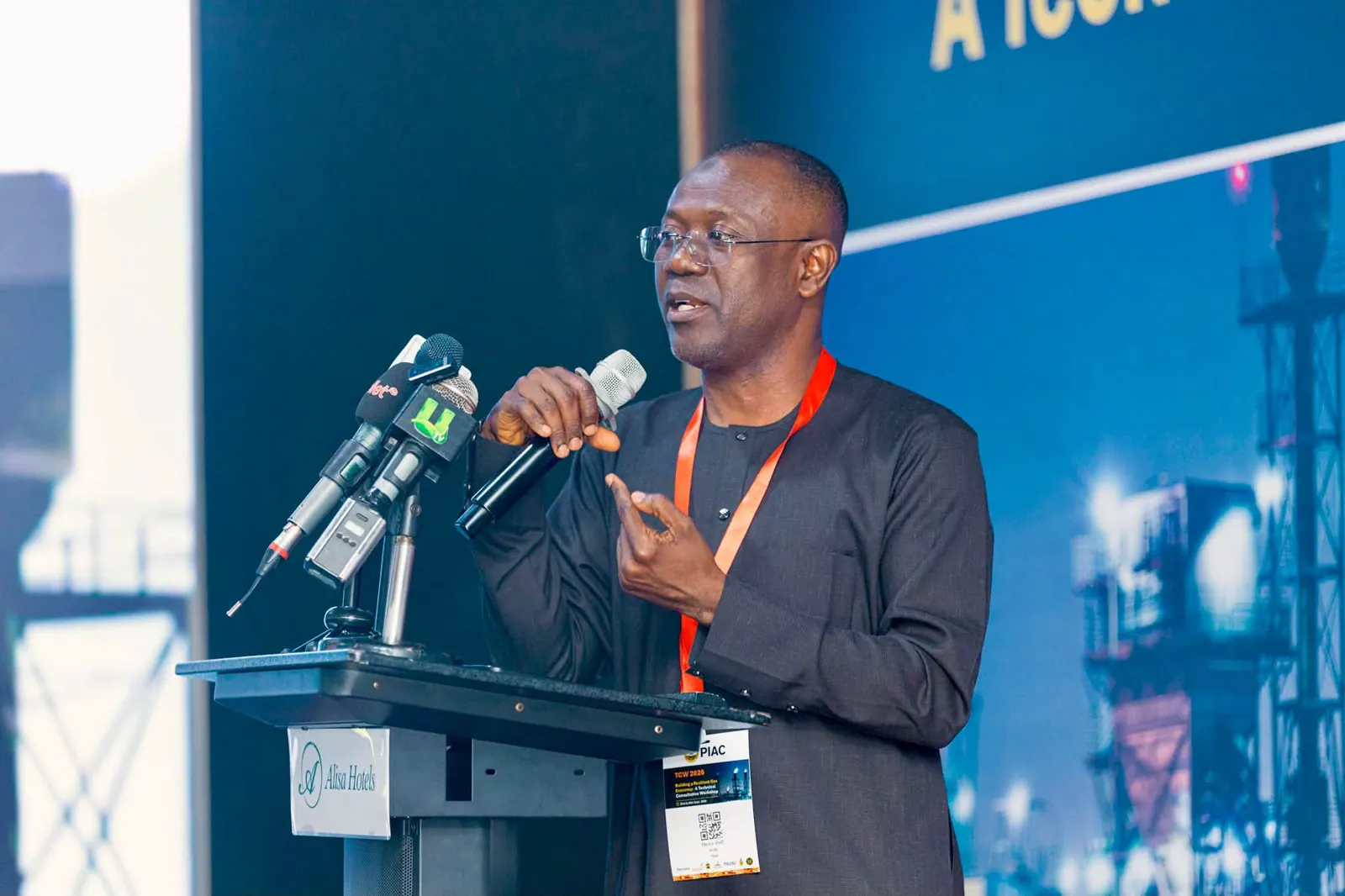
The Ghana National Petroleum Corporation (GNPC) has reported a significant increase in gas sales revenue, generating $952 million in 2025. According to Mr. Hamis Ussif, GNPC's Deputy Chief Executive in charge of Finance, Commercial and Administration, this development reflects the growing importance of gas to the Corporation's operations and Ghana's wider energy economy. The revenue growth is a result of the increasing demand for natural gas in power generation and industry.
Mr. Ussif made the disclosure at a Technical Consultative Workshop organised by the Public Interest and Accountability Committee (PIAC) on the theme: “Building a Resilient Gas Economy: Collaborative Strategies to Ensure an Efficient Gas Value Chain.” He emphasized that securing adequate and reliable gas supply is critical to Ghana's energy security, industrial development, and economic stability. The GNPC and its partners have announced about $3.5 billion in upstream investments expected to increase gas supply to the domestic market.
The GNPC is working with its partners to advance a Liquefied Natural Gas (LNG) project targeted to commence operations by the end of 2027, with the potential to supply up to 400 million cubic feet of gas per day. This additional supply will be significant given the increasing use of natural gas in power generation and industry. Mr. Ussif noted that gas consumption is expanding beyond the power sector, with industries from Tema to Takoradi and other parts of the country increasingly using the commodity.
The expected investments will deliver their full benefits only if the various segments of the gas value chain operate as an integrated system. Mr. Ussif stressed that Ghana needs a bankable structure capable of incentivizing investment across the upstream, processing, transportation, and distribution segments while ensuring stability throughout the value chain. A vulnerability in one segment can easily cascade and create a systemic risk across the whole chain.
Dr. Kwame Sarkodie of the Department of Petroleum Engineering, Kwame Nkrumah University of Science and Technology (KNUST), cautioned that Ghana would need to significantly expand its gas supply capacity to meet future demand. He projected that domestic gas demand could reach about 750 million cubic feet per day by 2030, while domestic fields are currently supplying less than that requirement. The projected demand underscores the need to create commercial conditions that would encourage investment in new gas production and infrastructure.
Dr. Sarkodie called for greater commercial clarity for upstream operators to encourage investment in non-associated gas exploration and production. He also advocated measures to address financial challenges within the gas and power sectors, including ring-fenced payment structures for gas processing and transportation utilities. Furthermore, Dr. Sarkodie emphasized the need to develop Ghana's gas transportation infrastructure beyond the coastal areas to the middle and northern belt to support industrialization.
The GNPC, as the national gas aggregator, has a central role in facilitating investment and ensuring adequate supplies to meet the country's energy needs. Mr. Ussif stated that the Corporation will continue working with industry partners to improve gas supply and maximize the economic value of the resource to Ghana. The growth of gas sales revenue is a positive development for Ghana's energy economy, and the GNPC's efforts to increase gas supply and investment will be crucial in meeting the country's energy demands.
Key points
- GNPC generates $952 million in gas sales revenue in 2025
- Ghana's gas demand projected to reach 750 million cubic feet per day by 2030
- GNPC and partners announce $3.5 billion in upstream investments to increase gas supply