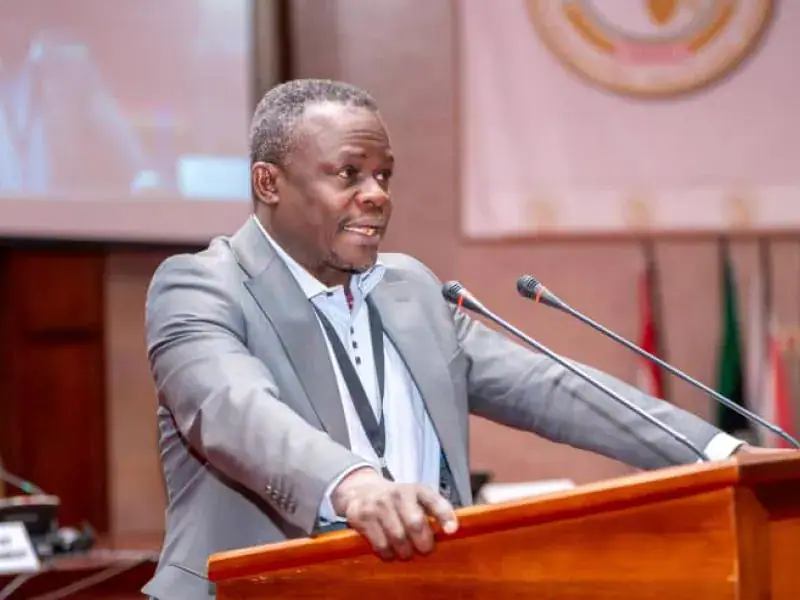
Democratic Republic of Congo's Deputy Garry Sakata has denounced tribalism as a grave menace to the country's republican pact. On November 2, 2026, during a Space live event organized by Stanis Bujakera Tshiamala, Sakata stated that tribalism has evolved beyond mere communal prejudice, now serving as an instrument for social mobilization, manipulation, and destabilization.
According to Sakata, the exploitation of ethnic affiliations by leaders at all levels, from the top of the state to village levels, has contributed to the proliferation of tribalism. He cited the "motions of support" that often follow the arrest of high-ranking officials as an example. The deputy noted that this manipulation thrives due to the lack of sanctions, stating that individuals engage in tribalism because they know they will not face consequences.
The conflict between Teke and Yaka has, in Sakata's opinion, exposed the limitations of the 1966 ordinance-law, which he considers outdated and deficient in penal provisions. He also criticized the law for being modeled after a Western framework. The deputy emphasized that the absence of penalties has allowed tribalism to persist, urging for a more effective approach to combat this issue.
Sakata's comments come as a renewed call to action against tribalism and xenophobia. On November 4, 2026, he also expressed concern over the six-year delay in passing a law against these vices at the National Assembly. The Congolese leader's concerns echo those of various stakeholders who have emphasized the need for legislation to curb tribalism and promote national unity.
The issue of tribalism has been a recurring theme in Congolese politics. In a related development, President Félix Tshisekedi has faced criticism for his handling of the country's affairs, with some questioning his commitment to upholding the constitution. On November 2, 2026, Tshisekedi engaged with opposition leaders over the strategic partnership agreement between Congo and the United States.
The conversation between Tshisekedi and the opposition came amid concerns over the country's sovereignty and the potential implications of the agreement. While the president has maintained that he is working to revive the nation, some have expressed skepticism over his efforts. Tshisekedi has reiterated his commitment to defending Congo's interests and sovereignty.
As Congo navigates its complex socio-political landscape, stakeholders continue to emphasize the need for concerted efforts to address pressing issues like tribalism, corruption, and national unity. The country's progress in these areas will likely be crucial in determining its future stability and prosperity.
Key points
- Deputy Garry Sakata warns that tribalism has become a tool for social mobilization, manipulation, and destabilization in Congo.
- Sakata cites the lack of sanctions as a reason for the persistence of tribalism, which he equates to corruption and embezzlement.
- The Congolese government faces renewed calls to pass legislation against tribalism and xenophobia, with a bill pending at the National Assembly for six years.