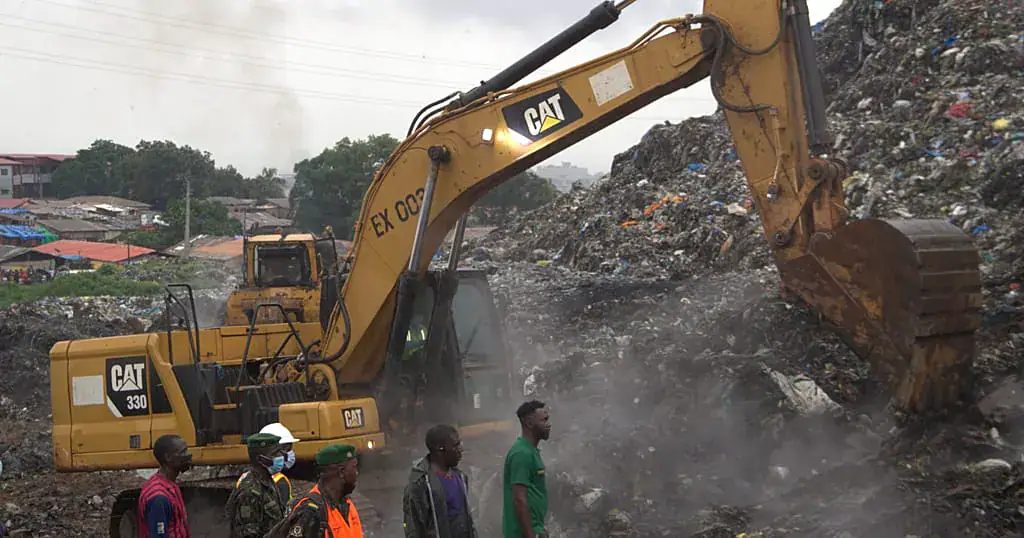
Along the two main traffic arteries in Guinea's capital Conakry, mountains of trash bags have accumulated, encroaching on pavements and emitting a foul-smelling liquid. The stench is acrid, making the air nearly unbreathable, with swarms of flies buzzing above the piles. This situation arose after the closure of a massive landfill in Conakry's Dar-es-Salam neighbourhood, which was shut permanently following a trash landslide that killed 36 people in late August.
The illegal dumping poses a threat to health, potentially fostering the outbreak of diseases such as cholera. Conakry resident Mariam Bayo expressed her frustration, stating that the smell is unbearable and there are worms, which could lead to disease. She mentioned that sanitation workers used to collect waste twice a week, but now they can go for three weeks without showing up. Bayo is preparing to burn a pile of garbage, highlighting the desperation of the situation.
The same sense of helplessness is shared by a large portion of the population, which is forced to dump trash wherever there is space. A Conakry suburb resident who requested anonymity told AFP that they had to put rubbish in their car's boot and dump it by the side of the road on their way to work. The situation has become overwhelming, with residents struggling to cope with the lack of waste management.
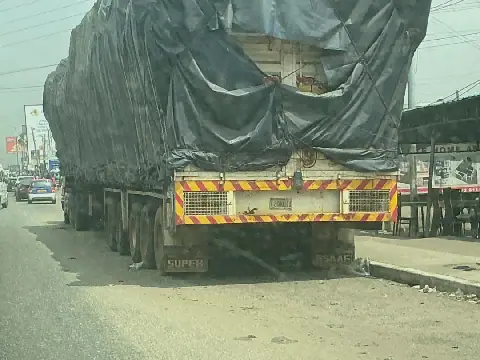
The Baritode site in the suburb of Coyah was meant to be the main dump for the roughly 3,000 tonnes of waste produced daily in the capital. However, its remote location and heavy traffic congestion have made its full-scale use nearly impossible. Oumar Pathe Bah, who runs a small waste-collection business, said that by the time a truck returns from Baritode, it's often 5:00 or 6:00 pm, making it difficult to complete their rounds.
Private rubbish collectors are struggling, with many clients cancelling due to the inability to collect waste efficiently. Bah mentioned that he used to have over a thousand clients, but now he doubts he has even 500 left. Siriman Conde of BCEIP Environnement, a company involved in waste management, stated that collectors don't know where to take all the waste that cannot be recovered or recycled.
Guinean authorities have begun rehabilitation work at the Dar-es-Salam landfill, which will be transformed into a park once the 7.2 million tonnes of garbage are stabilised and decontaminated. A new waste disposal facility is under construction at Baritode, but until then, residents of Conakry and its suburbs will continue to endure the garbage crisis and associated health risks.
The garbage crisis has become a significant challenge for the residents of Conakry, with many calling for a solution to the waste management problem. The situation remains dire, with no immediate end in sight. The government and private companies are working to address the issue, but it will take time to resolve the crisis.
Key points
- A new waste disposal facility is under construction at Baritode to replace the closed landfill.
- The closure of the Dar-es-Salam landfill has led to a significant increase in illegal dumping in Conakry.
- The garbage crisis poses a significant health risk to the residents of Conakry, with the potential for disease outbreaks.