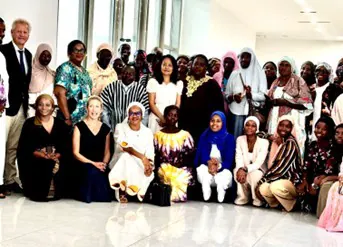
Women in Liberation and Leadership (WILL) recently launched its Survivor Network Regional Chapters in Gambia, aiming to strengthen survivor-led action against female genital mutilation (FGM) and other forms of violence against women and girls. The launch, held at the Sir Dawda Kairaba Jawara International Conference Centre, was themed “Building a Survivor-Led Movement to End FGM in The Gambia” and “Strengthening Collective Action to Eliminate Female Genital Mutilation in The Gambia.”
The initiative, funded by the United Nations Population Fund (UNFPA), brings together FGM survivors, regional representatives, civil society organisations, government institutions, and development partners to coordinate action against FGM across Gambia. The regional chapters aim to recognise survivors not only as beneficiaries of support but also as critical voices, leaders, and agents of change in the campaign to end FGM.
Fatou Sillah, a participant from the Upper River Region, highlighted that women continue to face several challenges, including forced marriage, early marriage, and rape, alongside FGM. She stated that the Survivor Network would give women the confidence and support needed to speak about challenges affecting them and work collectively to address them.
Fallou Sowe, National Coordinator of the Network Against Gender-Based Violence, described the initiative as crucial, urging survivors to return to their communities and take a firm stand against FGM. He emphasised that survivors and women could play an important role in challenging social pressure and confronting those who continue to promote FGM in the name of tradition.
Joy Michael, Programme Specialist at UNFPA, delivered the keynote address, stressing that sustainable change must be driven by communities themselves. She highlighted the importance of documenting survivors’ experiences, identifying barriers, tracking referrals, and using evidence from communities to inform national policies and interventions.
WILL Executive Director Fatou Baldeh stated that the organisation’s objective is to build a national movement of survivor advocates capable of sustaining the fight against FGM beyond individual projects. She explained that the regional chapters currently bring together survivors from the West Coast, Lower River, Central River, and North Bank regions, with the aim of building a nationwide survivor-led movement.
The initiative establishes community-based support systems and safe spaces for women and girls, while strengthening early-warning mechanisms and ensuring that survivor voices shape interventions. According to Baldeh, communities themselves helped identify women leaders, grandmothers, and influential young women to form the chapters, ensuring that women and girls have people within their communities whom they can comfortably approach.
Key points
- The launch of the Survivor Network Regional Chapters aims to strengthen survivor-led action against FGM and other forms of violence against women and girls in Gambia.
- The initiative brings together FGM survivors, regional representatives, civil society organisations, government institutions, and development partners to coordinate action against FGM.
- The regional chapters aim to recognise survivors as critical voices, leaders, and agents of change in the campaign to end FGM.