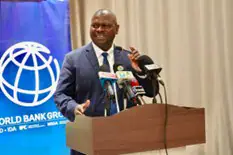
The Gambia has set a target of increasing its domestic revenue by approximately 3.21 percentage points of Gross Domestic Product (GDP) by 2030, under its first-ever Domestic Resource Mobilization Strategy (DRMS) covering the period 2026–2030. This was announced by Minister of Finance and Economic Affairs, Hon. Seedy K.M. Keita, at the African Tax Administration Forum (ATAF) in Cairo, Egypt, on November 4, 2026.
Minister Keita outlined the country’s efforts to strengthen domestic revenue mobilization amid growing global economic and financing challenges. He mentioned that The Gambia’s tax-to-GDP ratio increased from 9.8 per cent in 2020 to approximately 13 per cent by the end of 2025, supported by reforms and strong political leadership. Despite this progress, the country’s tax performance remains below the sub-Saharan African average.
The Gambia Revenue Authority (GRA) collected more than D3 billion in March 2026, marking the first time the institution had generated such an amount in a single month. Minister Keita disclosed that the DRMS combines tax policy, revenue administration, and diversified non-tax revenue measures to bring the country’s tax effort closer to the sub-Saharan African average by 2030.
Minister Keita highlighted the global financing challenges facing African countries, noting that the annual financing gap for achieving the Sustainable Development Goals (SDGs) stands at approximately US$4 trillion. He also mentioned that Africa loses an estimated US$90 billion annually through illicit financial flows, and that declining development assistance and rising debt-servicing burdens are further narrowing the fiscal space available to African governments.
Minister Keita outlined four key lessons for The Gambia’s reforms, including investment in digital tax administration, improvements in tax policy, strengthening public trust, and ensuring national ownership of revenue mobilization. The GRA is implementing an Integrated Tax Administration System, rolling out electronic VAT invoicing, and introducing digital compliance tools for rental income.
Minister Keita called for stronger implementation of the Compromiso de Sevilla, an international development financing commitment that includes doubling support for domestic resource mobilization by 2030. He urged ATAF, the African Union, and Regional Economic Communities to develop an African accountability framework to monitor these commitments and ensure they translate into measurable benefits for African countries.
Looking ahead, Minister Keita proposed three practical milestones for 2027, including predictable multi-year support from development partners for domestic revenue reforms, stronger ATAF-led capacity development and technical assistance, and access to debt-related relief arrangements for countries facing economic and climate-related shocks. He emphasized that domestic revenue mobilization remains essential to reducing dependence on external financing and enabling African countries to determine their own development priorities.
Key points
- The Gambia aims to increase domestic revenue by 3.21 percentage points of GDP by 2030.
- The country’s tax-to-GDP ratio increased from 9.8 per cent in 2020 to approximately 13 per cent by the end of 2025.
- Minister Keita called for stronger implementation of the Compromiso de Sevilla to support domestic resource mobilization.