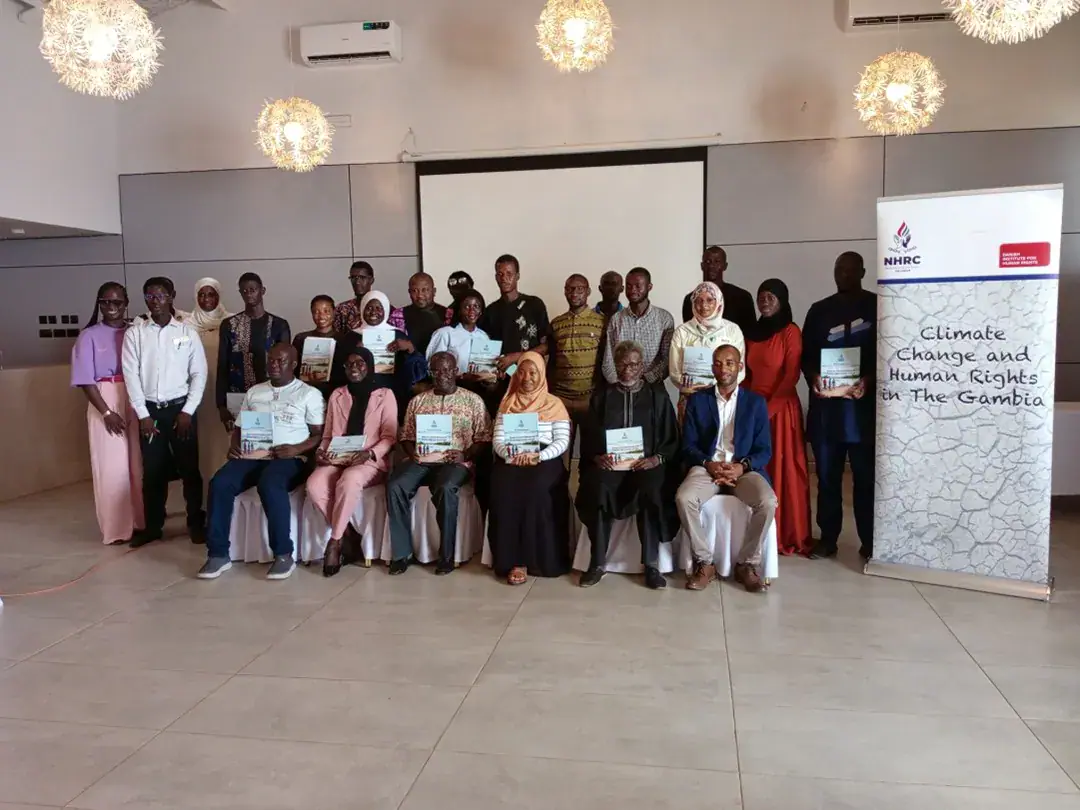
The National Human Rights Commission (NHRC) of Gambia has emphasized the need for urgent action to address the impact of climate change on human rights. Commissioner Njundu Drammeh described climate change as "an existential threat to our survival on earth," stressing that every individual and institution has a role to play in mitigating its effects. The NHRC presented findings from a 2025 study that examined the effects of climate change on communities across Gambia.
The study highlighted the experiences of vulnerable groups, including men, women, persons with disabilities, who reported severe disruptions to their livelihoods due to rising temperatures and erratic weather patterns. Commissioner Drammeh emphasized that the state must ensure that laws and policies are in place and effectively implemented to address climate change. He warned that policies should not be mere symbols without real impact.
The NHRC called for stronger collaboration with civil society organizations and climate justice activists to amplify the voices of communities. Commissioner Drammeh stressed that those responsible for decision-making must hear and act on the concerns of communities. The NHRC's scope has expanded to include environmental concerns due to their direct link to human rights.
Barisu Bah, Director of Legal and Investigation, noted that human rights are broad in nature, and climate change has significant consequences on rights such as food, water, and health. Bah emphasized that marginalized groups, especially persons with disabilities, tend to suffer more from the consequences of climate change on human rights.
The NHRC discussed key questions, including whether current measures are adequate and what changes are needed to mitigate the impact of climate change. The discussions focused on the collective actions that communities, individuals, and institutions must take to address climate change. The NHRC expressed gratitude to its research team and civil society representatives who attended the event.
The Commission urged stakeholders to strengthen existing measures, enact and enforce effective laws, and ensure that climate policies translate into real protections for people's rights. The NHRC's study aims to raise awareness and promote action on climate change and human rights in Gambia. The event aimed to popularize the NHRC's Climate Change and Human Rights Study 2025.
The NHRC's call for action comes as Gambia, like many other countries, faces the challenges of climate change. The country's vulnerability to climate-related disasters, such as floods and droughts, requires urgent attention and action. The NHRC's efforts aim to promote a human rights-based approach to addressing climate change in Gambia.
Key points
- The NHRC emphasizes the need for stronger policies and accountability to address climate change's impact on human rights.
- The state has a primary role in ensuring that laws and policies are in place and effectively implemented to address climate change.
- Marginalized groups, especially persons with disabilities, are most vulnerable to the consequences of climate change on human rights.