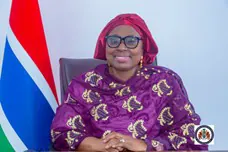
The Government of The Gambia recently joined the international community to commemorate the International Day of the Girl Child under the theme “End Child Marriage and Invest in Girls’ Rights.” This year’s celebration was marked with a pledge to prioritize the education, health, and protection of girls across the country. Minister of Gender, Children and Social Welfare, Honourable Fatou Kinteh, emphasized the importance of empowering girls, describing them as “powerful, capable, and indispensable assets and potential drivers” of the country’s sustainable development.
Minister Kinteh praised the courage and leadership shown by girls in both urban and rural communities, but highlighted that harmful traditional practices, gender-based violence, and early marriage remain significant challenges. These practices not only violate human rights but also hinder the achievement of the Sustainable Development Goals and The Gambia’s Children’s Act of 2005. The Minister stressed that addressing these issues requires a coordinated effort from all stakeholders, including government ministries, civil society organizations, and community leaders.
The government has outlined a comprehensive approach to address the challenges faced by girls. The Ministry of Basic and Secondary Education is expanding access to quality education through safe school policies and digital learning programmes. Additionally, the Ministry of Health has scaled up adolescent-friendly services, reproductive health education, and a nationwide HPV vaccination campaign. These initiatives aim to improve the health, education, and well-being of girls across the country.
Other government ministries are also playing a crucial role in empowering girls. The Ministry of Youth and Sports is building mentorship networks and safe spaces to promote leadership and entrepreneurship among young women. The Ministry of Justice is pursuing legislative reforms to protect girls from exploitation, while the Ministry of Finance is mainstreaming gender-responsive budgeting to ensure national investments address girls’ needs. These efforts demonstrate the government’s commitment to creating a supportive environment for girls to thrive.
Minister Kinteh commended UNICEF, UNFPA, ChildFund, SOS Children’s Villages, and other partners for their collaboration in empowering girls. However, she emphasized that lasting change must begin at home, with parents, traditional and religious leaders, educators, and policymakers playing a vital role. She called on parents to prioritize education over early marriage, urged traditional and religious leaders to challenge harmful norms, and asked educators to foster safe, inclusive schools.
The Minister also addressed girls directly, stating that their voices matter, their education matters, and their human rights are absolute and non-negotiable. She assured them that the government stands firmly with them. The commemoration ended with a renewed national pledge that no girl in The Gambia will be left behind. Empowering girls, the Minister said, is “a sacred obligation and a national promise.”
The government’s commitment to empowering girls is reflected in its partnerships with international organizations. The Ministry of Gender is working with UNICEF and partners to develop a comprehensive Adolescent Strategy and providing entrepreneurship training and startup capital to over 200 girls with the World Food Programme. These initiatives demonstrate the government’s dedication to creating opportunities for girls to succeed and become leaders in their communities.
Key points
- The Gambia government has pledged to prioritize the education, health, and protection of girls across the country.
- Minister Fatou Kinteh emphasized the importance of empowering girls, describing them as “powerful, capable, and indispensable assets and potential drivers” of the country’s sustainable development.
- The government has outlined a comprehensive approach to address the challenges faced by girls, including expanding access to quality education and scaling up adolescent-friendly services.