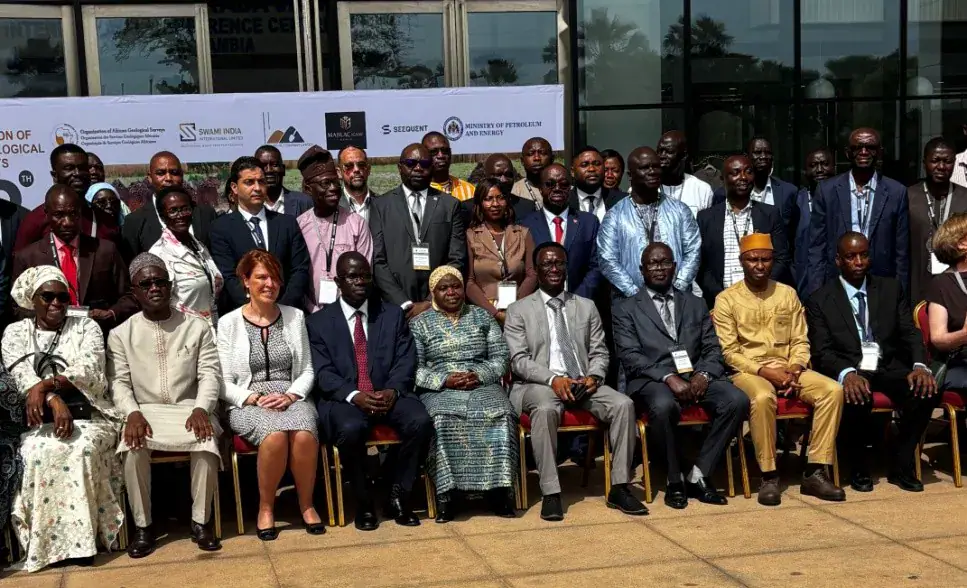
The Gambia is hosting the 18th General Assembly of the Organisation of African Geological Surveys (OAGS) for the first time, bringing together geological experts, government officials, and international partners. The three-day assembly opened on Monday, 26 October 2026, at the Sir Dawda Kairaba Jawara International Conference Centre. This gathering provides a platform for delegates from Africa and Europe to exchange knowledge and explore solutions to challenges facing geological surveys.
Organised by the Ministry of Petroleum, Energy and Mines, the assembly underscores the growing importance of geological science in economic development, mineral management, environmental protection, and access to water and energy. Alieu Jawo, Director of the Geological Department, described the assembly as a vital opportunity to strengthen cooperation among geological institutions. He emphasised that Africa's natural resources could drive industrialisation, job creation, and sustainable transformation if countries invest in strong geological institutions.
According to Jawo, geological surveys provide the scientific data governments need to guide investment decisions, formulate policies, and manage resources responsibly. He thanked the Ministry, Government, OAGS leadership, and development partners for organising the event. Gabriel Data, OAGS President and Assistant Commissioner at Uganda's Ministry of Energy and Mineral Development, highlighted the organisation's role in advancing geological science and supporting Africa's socio-economic development.
The assembly comes as global demand for critical minerals surges due to their importance in renewable energy and industrial applications, intensifying debate on how Africa can better assess, manage, and benefit from its resources. Representing the European geological survey community, Ms. Tirza Van Daalen stressed the importance of Africa-Europe partnerships. She noted that geological surveys face similar challenges, including securing water amid climate change and promoting responsible mineral development.
Van Daalen also highlighted the emerging role of artificial intelligence in interpreting geological data and making scientific knowledge more accessible. However, she stressed that technology must be supported by reliable evidence, field observations, and professional expertise. For The Gambia, hosting the assembly is an opportunity to strengthen ties with regional and international partners while showcasing its geological potential.
Addressing the gathering, the Minister of Petroleum, Energy and Mines, Hon. Nani Juwara, challenged African countries to end dependence on exporting raw minerals and importing finished products. Minister Juwara said Africa possesses significant deposits of copper, manganese, lithium, bauxite, and rare earth elements, yet many countries still export raw materials without capturing enough value.
Minister Juwara argued that Africa must move beyond raw extraction and prioritise local processing, manufacturing, technology transfer, skills development, and stronger regional value chains to accelerate industrialisation and create jobs. The assembly provides a platform for African countries to explore solutions to these challenges and work towards a more sustainable future for the continent's mineral resources.
Key points
- The Gambia is hosting the 18th General Assembly of the Organisation of African Geological Surveys to strengthen scientific cooperation and promote sustainable management of Africa's mineral resources.
- The assembly aims to promote local processing, manufacturing, and technology transfer to accelerate industrialisation and create jobs in Africa.
- The event brings together geological experts, government officials, and international partners to exchange knowledge and explore solutions to challenges facing geological surveys.