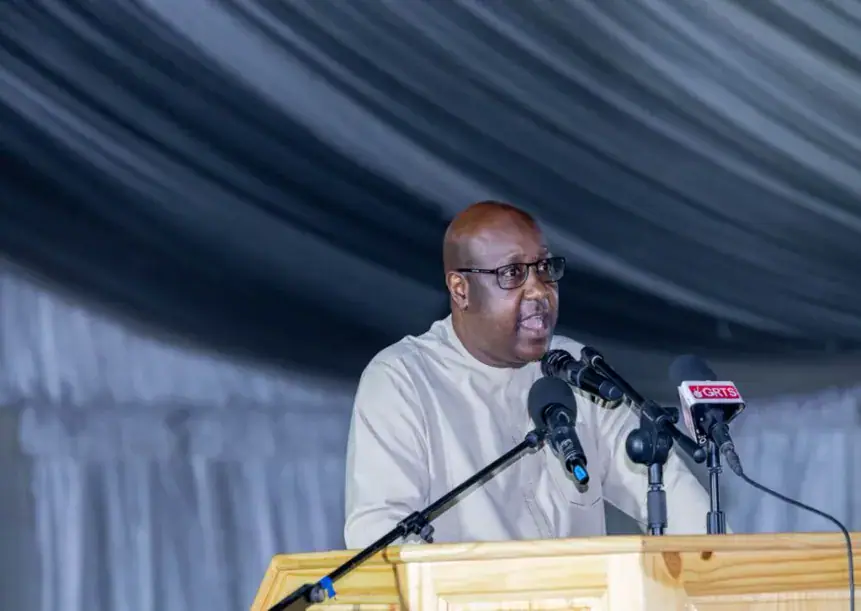
The Gambia's Minister of Agriculture, Livestock and Food Safety, Dr. Demba Sabally, has clarified that the government does not purchase groundnuts directly from farmers. Instead, it operates through Seed Co-operative Societies (Seccos) under the country's groundnut marketing system. This process aims to ensure accountability and proper management of funds. According to Dr. Sabally, the government provided funds to Secco presidents through their Wave accounts to purchase groundnuts from farmers this year.
Under the current system, Secco presidents are responsible for buying, collecting, and delivering groundnuts. They must deliver groundnuts worth at least 75 per cent of the allocated funds before receiving additional financing. Dr. Sabally stressed that all transactions are conducted through the Secco presidents and their committees. This approach allows for better management and oversight of the groundnut purchasing process.
In addition to clarifying the groundnut purchase process, Dr. Sabally highlighted several measures aimed at increasing agricultural production in The Gambia. The ministry distributed over 785 metric tonnes of improved seeds, more than 1,700 metric tonnes of fertiliser, and 9,000 litres of herbicides to farmers during 2026. These inputs are expected to support farmers in improving their yields and overall productivity.
The government has also made significant investments in mechanisation to support farmers. Dr. Sabally disclosed that over 130 tractors have been distributed across the country in recent years, with more units expected to be rolled out in the coming weeks. This initiative aims to modernise farming practices and increase efficiency.
Furthermore, the minister announced the introduction of rice transplanters for the first time in The Gambia. About 20 machines have already been deployed to support rice production. This move is part of the government's broader strategy to modernise rice production and boost agricultural output.
Dr. Sabally emphasised that the investments in farm inputs and mechanisation form part of the government's efforts to improve productivity, strengthen food security, and support farmers nationwide. These initiatives are crucial in enhancing the agricultural sector's contribution to the country's economy and ensuring food self-sufficiency.
The government's efforts to support farmers and improve agricultural production are ongoing. With the continued distribution of farm inputs and mechanisation, farmers are expected to increase their yields and contribute to the country's food security. The clarification on the groundnut purchase process has also helped to ensure transparency and accountability in the sector.
Key points
- The Gambia's government does not purchase groundnuts directly from farmers, but through Seed Co-operative Societies (Seccos).
- The ministry distributed over 785 metric tonnes of improved seeds and 1,700 metric tonnes of fertiliser to farmers in 2026.
- Over 130 tractors have been distributed across the country to support mechanisation and modernisation of farming practices.