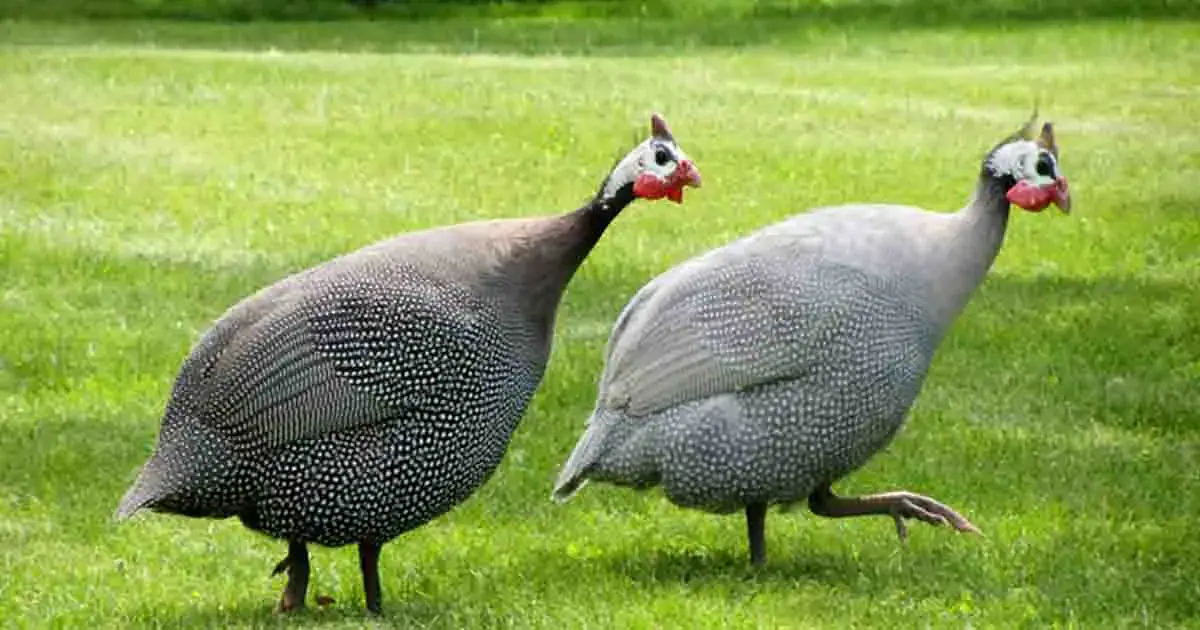
The Galinha de Angola, scientifically known as Numida meleagris, is a bird species originating from the African continent. It belongs to the Numididae family and is characterized by its dark plumage with white spots, partially featherless head, and a bony protuberance resembling a helmet. The species is found in various regions of Africa and has been introduced to other continents over the centuries. Despite its name being associated with Angola, the bird is not exclusively native to Angolan territory, with wild populations existing in several African countries.
The Galinha de Angola has significant food, economic, and environmental importance. It is raised for meat and egg production, and also consumes insects and small invertebrates. The bird's creation requires adequate conditions of food, shelter, hygiene, sanitary accompaniment, and protection against predators. The species is also known by other names, including Pintada, Capote, Fraca, and Galinha-do-mato. Its omnivorous diet consists of seeds, vegetation, insects, and other invertebrates.
The Galinha de Angola is a social and often noisy bird. Its eggs can be used for human consumption, with incubation in domestic systems typically taking between 26 and 28 days. The species is capable of flight and is classified as a species of least concern on the IUCN Red List, according to the 2018 assessment. The bird's weight ranges from approximately 1.1 to 1.8 kg, and its reproduction is oviparous.
The Galinha de Angola is a terrestrial bird belonging to the Galliformes order, which also includes domestic chickens, turkeys, pheasants, and quails. Although it shares some physical similarities with the common chicken, it belongs to a distinct family and has unique characteristics of behavior, reproduction, and environmental adaptation. The species has wild populations and domesticated varieties.
The Galinha de Angola's habitat includes savannas, open fields, and forest edges. Its conservation status is listed as "least concern" on the IUCN Red List. The species is also known as the Helmeted Guineafowl in English and Pintade de Numidie in French. Various sources, including the Animal Diversity Web, Zurich Zoo, Poultry Extension, and IUCN Red List, provide information on the bird's characteristics and conservation status.
The Galinha de Angola's domestication requires careful consideration of its dietary and environmental needs. The species' omnivorous diet and social behavior make it a unique and interesting bird to study and raise. Its ability to consume insects and small invertebrates also makes it a valuable asset for pest control and sustainable agriculture.
Overall, the Galinha de Angola is an important species in Africa, with significant cultural, economic, and environmental value. Its unique characteristics and adaptability make it an interesting subject for study and conservation efforts. Key points about the species include its omnivorous diet, social behavior, and importance in food and egg production.
Key points
- The Galinha de Angola is a species of least concern on the IUCN Red List.
- The bird's incubation period in domestic systems is typically between 26 and 28 days.
- The species has significant food, economic, and environmental importance in Africa.
Reporting sources
- Galinha de Angola: origem, características e 10 curiosidades · Hold On Angola