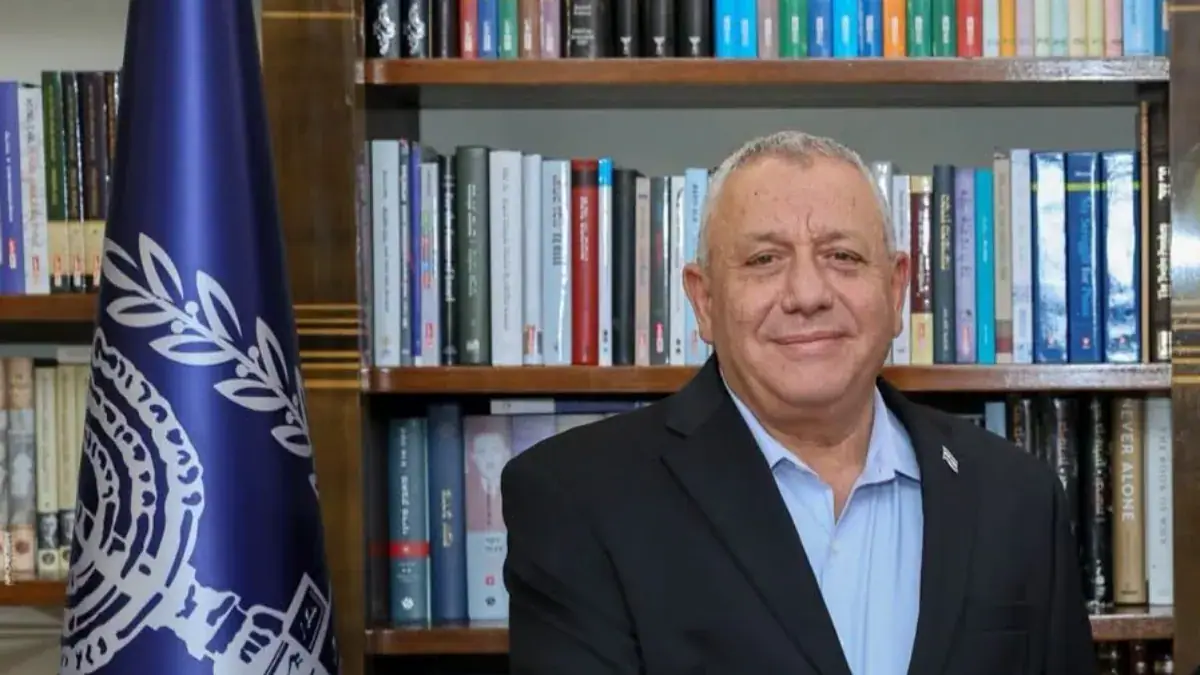
Gadi Eisenkot, a prominent Israeli politician of Moroccan descent, has been charged by Israeli President Isaac Herzog to form a new government. This development comes after the recent legislative elections in Israel, where no party secured an absolute majority. Eisenkot, as the leader of the opposition, now has twenty days to negotiate with other political parties, including Israeli Arab parties, to secure the necessary support. His appointment marks a significant milestone, as he is the first Israeli of Moroccan origin to hold such a high-ranking position.
Eisenkot's background is rooted in a military career, having served as the Chief of Staff of the Israeli Army from 2015 to 2019. Born in 1960 in Tiberias, Israel, to parents from Marrakech and Casablanca, Morocco, his rise to prominence is notable in the context of Israel's relations with Morocco. The two countries have been strengthening ties, with Israel's outgoing Prime Minister Benjamin Netanyahu's government including several ministers of Moroccan origin. However, Eisenkot's appointment as Prime Minister is a first for someone of Moroccan descent.
Despite being seen as a potential departure from Netanyahu's leadership, Eisenkot's own political stance is considered hawkish. His military career and past actions have been marked by significant involvement in Israeli military operations, including the 1982 and 2006 Lebanon wars, and the 2018 Gaza conflict, where he was a key figure in the planning and execution of military strategies. His role in the "Dahiya doctrine," which advocates for disproportionate force against civilians in response to attacks on Israeli territory, has been particularly controversial.
As Chief of Staff, Eisenkot was also responsible for the Israeli military's actions during the "March of Return" protests in Gaza, which resulted in 200 deaths and 18,000 injuries. His military background and the implementation of the "Dahiya doctrine" in recent conflicts suggest that his leadership style may not significantly diverge from Netanyahu's hardline approach. This has implications for potential negotiations with Palestinian groups and other regional actors.
Eisenkot's task ahead is challenging, given the current political landscape in Israel. With no party holding an absolute majority, he must navigate complex negotiations with various political parties, including those representing Israeli Arab communities. These groups have emerged as crucial arbiters in the current political scenario, and their support will be essential for Eisenkot to form a stable government.
The international community is closely watching Eisenkot's appointment, particularly in the context of ongoing conflicts in the region, such as the situation in Gaza. The United Nations has recently declared a state of famine in Gaza, criticizing Israel's actions. Eisenkot's approach to these issues will likely have significant implications for Israel's relations with international bodies and its neighbors.
As Eisenkot begins his tenure, he faces a critical period of negotiations and policy implementation. His success in forming a government and navigating Israel's complex political and military challenges will depend on his ability to balance internal political pressures with international expectations. The impact of his leadership on regional stability and conflict resolution remains to be seen.
Key points
- Gadi Eisenkot is the first Israeli of Moroccan origin to be named Prime Minister of Israel.
- Eisenkot has a hawkish political stance based on his military background and past actions.
- He faces significant challenges in forming a government due to the lack of an absolute majority in the Israeli parliament.