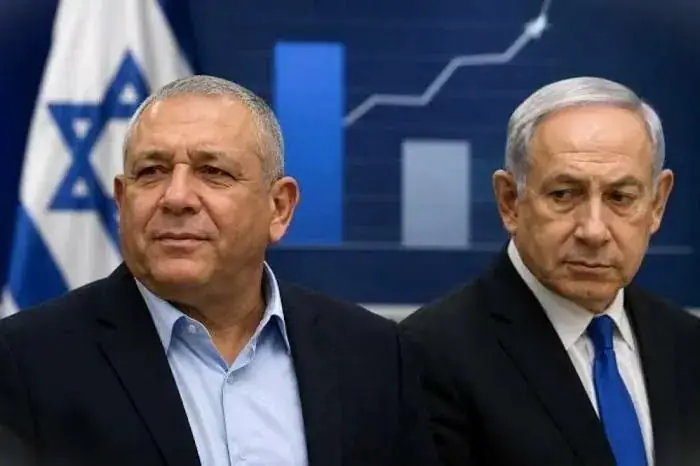
Israel's political landscape is experiencing a significant shift as the opposition camp, led by former Chief of Staff and Yashar party leader Gadi Eisenkot, gains momentum against Prime Minister Benjamin Netanyahu's camp. Preliminary election results indicate a potential change in the balance of power within the Knesset and the formation of the next government. Eisenkot, a prominent military and political figure, leverages his extensive security experience and criticism of the government's handling of the war and October 7, 2023, attacks.
Gadi Eisenkot was born on May 19, 1960, in Tiberias and raised in Eilat. He comes from a Jewish family of Moroccan descent and began his military service in 1978, joining the Golani Brigade. Over four decades, he rose through various leadership positions, serving as head of the Northern Command and Deputy Chief of the General Staff. In 2015, he was appointed as the 21st Chief of the General Staff of the Israeli military, a role he held until 2019.
During his tenure as Chief of Staff, Eisenkot focused on advancing Israel's military capabilities, strengthening readiness to confront Hezbollah, and curbing Iran's military presence in Syria. He also worked on modernizing operational, intelligence, and armament systems. After entering politics in 2022, Eisenkot joined the National Unity alliance led by Benny Gantz and served in the Israeli emergency government formed after the October 7, 2023, attacks.
Eisenkot's participation in the War Cabinet as an observer led to disagreements with Netanyahu regarding the war's conduct, the Gaza Strip's future, and the need for a clear political vision. He left the government alongside Gantz in June 2024. The war also had personal losses for Eisenkot, as his 25-year-old son, Gal, was killed during military operations in Gaza in December 2023, and two of his nephews were also killed.
Politically, Eisenkot has called for an investigation into the security and intelligence failures preceding the October 7 attacks and for those responsible to be held accountable. This issue has become a central theme in his criticism of the current government. In September 2025, Eisenkot founded the Yashar party, positioning it as a centrist force focusing on security, government performance reform, and accountability.
The Yashar party raises key issues, including security accountability, the relationship between the military and politics, military conscription, regional security, and the Palestinian issue. Eisenkot does not explicitly endorse an independent Palestinian state but has criticized certain settlement projects and government policies in the West Bank. The party focuses on changing the political leadership, improving institution management, and re-examining accountability for security failures.
Eisenkot's bid to challenge Netanyahu comes after years of wars, intense polarization, and disputes over responsibility for the October 7 attacks. He seeks to leverage his military experience and prior service in the war cabinet to position himself as a political alternative to Netanyahu, tapping into demands for accountability and leadership change. The outcome will depend on the final election results, coalition negotiations, and the positions of parties that could tip the scales.
Key points
- Gadi Eisenkot's Yashar party focuses on security, government performance reform, and accountability.
- Eisenkot's bid challenges Netanyahu's leadership, leveraging his military experience and criticism of the government's handling of the war.
- The outcome of the Israeli elections will depend on coalition negotiations and the positions of parties that could tip the scales.