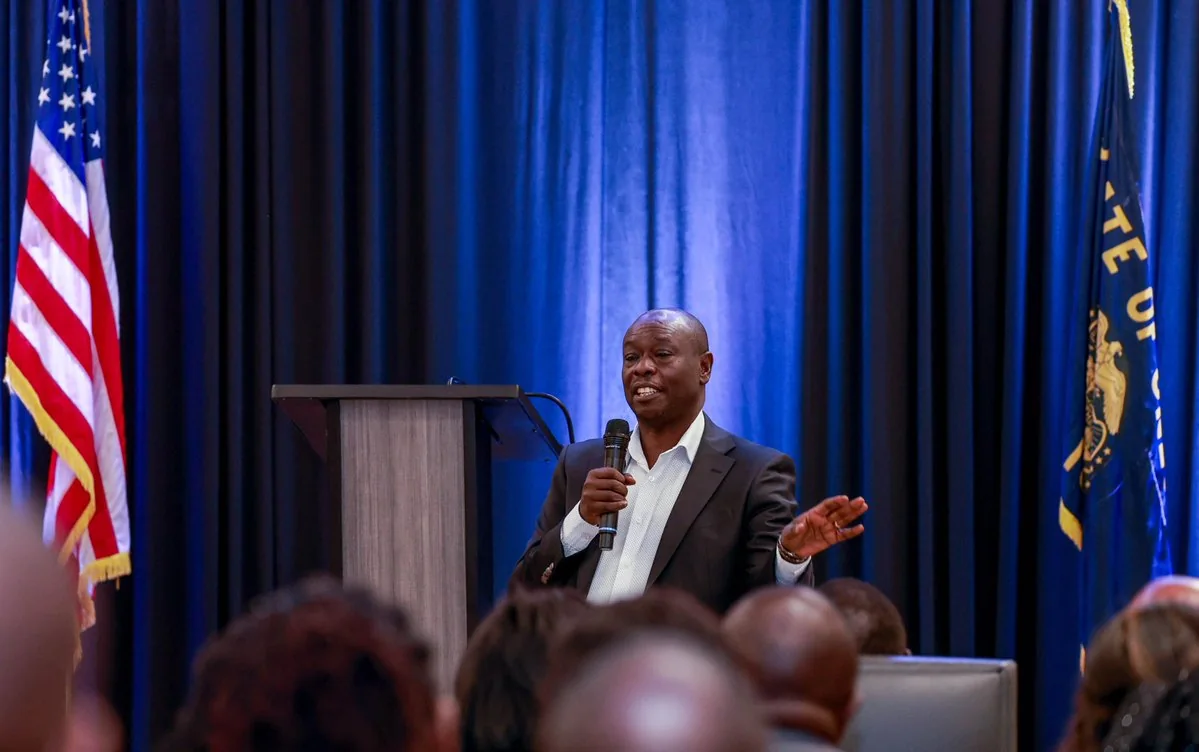
Democracy for the Citizens Party (DCP) leader Rigathi Gachagua has outlined his proposed economic agenda, focusing on addressing government debts, incomplete development projects, and procurement document credibility. Speaking to business executives in Kansas City, Missouri, USA, on September 18, 2026, Gachagua emphasized that delayed government payments have significantly impacted Kenyans whose livelihoods depend on contracts with public institutions. He noted that unpaid bills have pushed businesses and families into serious financial difficulties.
Gachagua claimed that national and county governments have accumulated over Sh900 billion in debts owed to businesses and contractors. He stressed that clearing verified government obligations should be an economic priority, as the funds would circulate through the wider economy, providing an economic stimulus. Gachagua's administration would prioritize settling verified obligations to contractors and suppliers before taking on fresh commitments, arguing that this approach would help alleviate the financial strain on businesses and families.
The DCP leader pointed out that Kenyans are suffering, with homes being auctioned, people experiencing depression, and families broken due to delayed government payments. He cited instances where businesses have been severely affected, with some entrepreneurs facing difficulties in accessing loans due to the government's unreliable payment history. Gachagua's proposed approach aims to restore trust in government commitments among suppliers, contractors, and financial institutions.
Gachagua's administration plans to change the approach to government development programs by prioritizing projects that have already started but remain incomplete. He argued that the government should avoid beginning fresh projects while existing ones remain unfinished. Gachagua claimed that several projects launched under retired President Uhuru Kenyatta were later abandoned as attention shifted towards new projects, often linked to opportunities for fresh commercial negotiations.
The DCP leader also wants to reform government procurement documents, such as Local Purchase Orders (LPOs) and Local Service Orders (LSOs), to regain the level of trust they once enjoyed among banks and businesses. He noted that banks previously accepted LPOs as sufficient evidence of expected government payments and were willing to lend against them. Gachagua emphasized that his administration would ensure that money is available before awarding contracts, rather than entering into obligations that later become unpaid bills.
Gachagua's proposal aligns with public-finance principles requiring government agencies to operate within approved budgets, appropriations, and financial controls. The National Treasury reported county pending bills of Sh183 billion as of June 30, 2025, with almost half of the amount having remained unpaid for more than three years. Gachagua's approach aims to address the burden of unpaid bills affecting county governments and restore confidence in government commitments.
The DCP leader concluded that enforcing existing regulations would help rebuild trust in government documents. He stated that his administration would prioritize economic stimulus by settling verified government debts and ensuring funds are available before awarding contracts. Gachagua's economic agenda focuses on addressing the financial strain on businesses and families, restoring trust in government commitments, and promoting economic growth.
Key points
- Rigathi Gachagua's administration plans to prioritize settling verified government debts and ensuring funds are available before awarding contracts.
- The DCP leader aims to restore trust in government procurement documents, such as LPOs and LSOs.
- Gachagua's proposed approach focuses on completing projects already under construction before starting new ones.