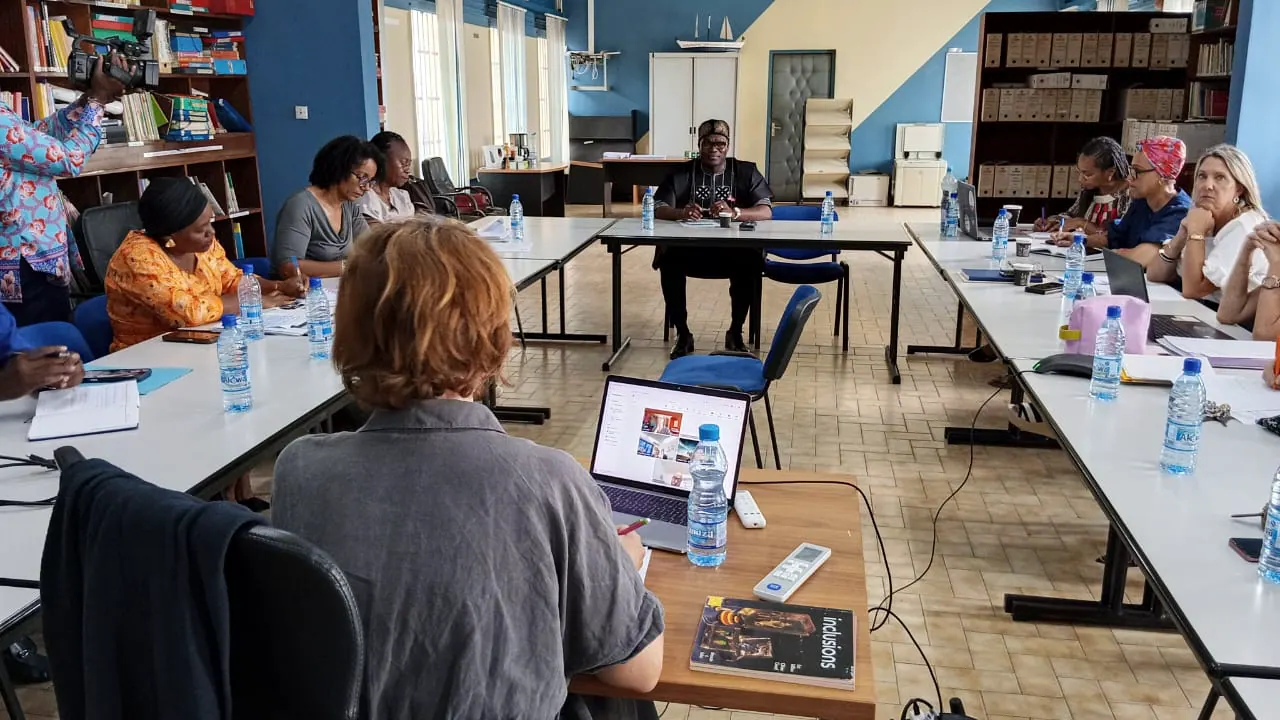
In Libreville, Gabon, the first steering committee of the 2026-2027 academic year was held for public convention schools. The meeting focused on evaluating the functioning of schools, student enrollment, and pedagogical priorities. This comes amid unannounced visits by the General Inspection of Services to schools claiming to offer the French program. Key stakeholders, including the Inspector General of Service Joachim Ondjila Ognele and the Educational and Linguistic Cooperation Attaché from the French Embassy, M. Beaufils, were present.
The President of the Association for the Promotion of Public Convention Schools, Laudy Lasseni Duboze, highlighted that the meeting allowed for an assessment of the current state of convention schools in Gabon. This included reviewing student enrollment, internal regulations, and measures to improve the school experience. Duboze also emphasized the need for better informing families about the homologation of public convention schools. This process aims to ensure that these schools meet specific standards and requirements.
One proposal discussed during the meeting was the establishment of an after-school care service. This service would enable students to remain under supervision after classes, addressing concerns about child safety and care. The idea is still being explored but could provide an essential support system for working parents. By offering such a service, schools can better cater to the needs of their students and their families.
On the pedagogical front, Valéry Robert, a pedagogical advisor for public convention schools, announced the development of a continuous teacher training plan. This plan will be based on the results of national student evaluations, aiming to enhance teaching quality and adapt to changing educational needs. Four pedagogical advisors, two from Gabon and two from France, regularly support educational teams in implementing programs and updating their practices.
The educational offer in Gabon's public convention schools has expanded with the opening of a new class for young children at the Gros-Bouquet 1 school. This class caters to children as young as two years old, providing early childhood education. Additionally, the school has established an inclusion unit for thirteen students with special educational needs, offering them specialized support alongside their regular schooling.
The steering committee meeting addressed various administrative, organizational, and pedagogical challenges facing public convention schools. These schools aim to increase their attractiveness and meet the evolving needs of families while adhering to homologation requirements. By tackling these issues, the schools can improve their overall quality and effectiveness in providing education.
The public convention schools in Gabon continue to evolve and adapt to the changing educational landscape. With a focus on enhancing their capacity and priorities, these schools are working to provide high-quality education that meets the needs of their students and the wider community. The involvement of international partners, such as the French Embassy, underscores the importance of collaboration in achieving these goals.
Key points
- Public convention schools in Gabon assess their capacity and priorities for the 2026-2027 academic year.
- The schools aim to improve their attractiveness and meet the needs of families while adhering to homologation requirements.
- A continuous teacher training plan is being developed to enhance teaching quality based on national student evaluations.