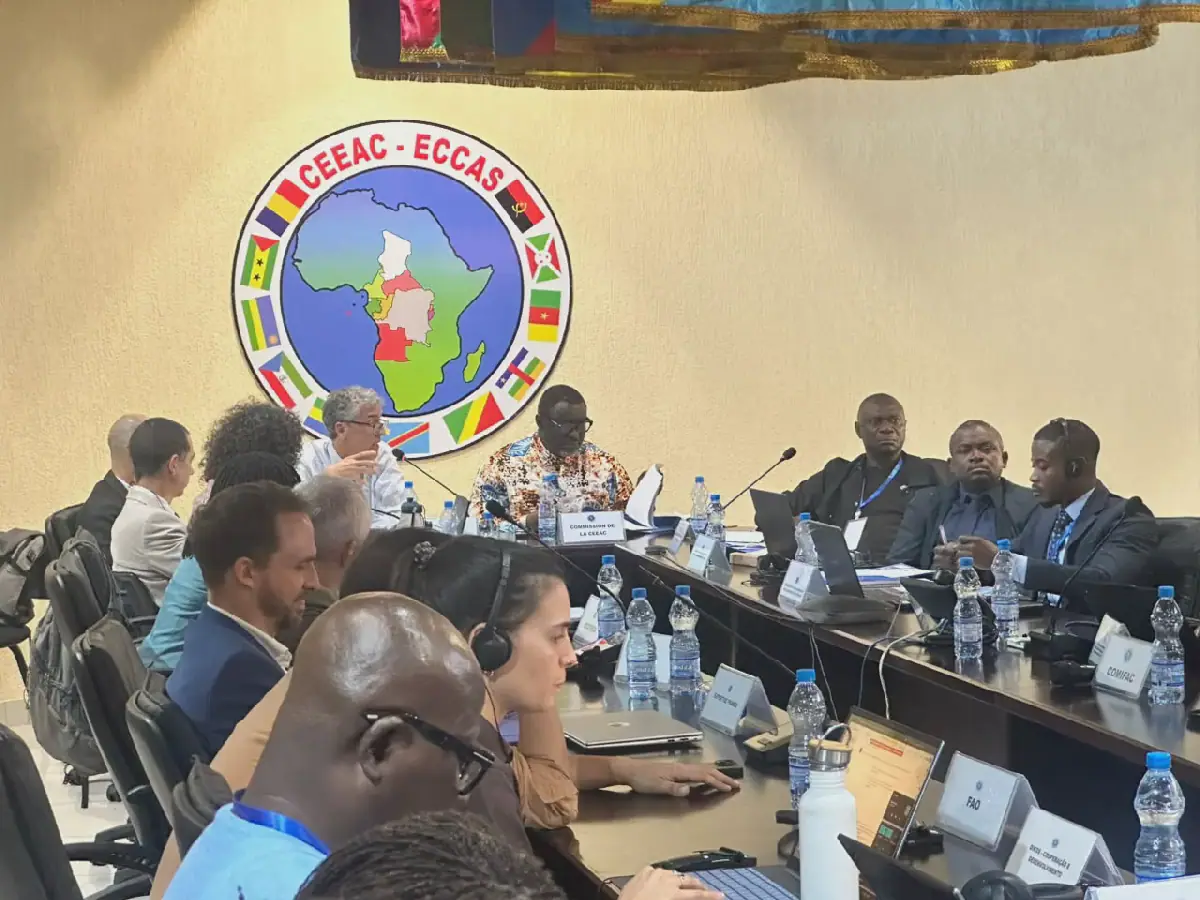
The first session of the Committee of Strategic Orientation (COS) for the Sustainable Ocean and Blue Economy in Central Africa (ODEBAC) program concluded in Libreville, Gabon, with several key recommendations. The session, held at the Economic Community of Central African States (CEEAC) headquarters, was co-chaired by CEEAC Commissioner Maxime Nzita Nganga Di Mavambu Mba and European Union cooperation chief Claudio Bacigalupi. The meeting brought together various program stakeholders, national focal points, and international NGOs.
The recommendations followed presentations from three technical committees on oceanic governance, integrated blue economy, and territorial innovation, as well as sustainable fishing and aquatic resources. On governance, participants suggested establishing a clear partnership between CEEAC and the European Union to formalize a governance framework and joint monitoring mechanism for program implementation. They also recommended better coordination between technical committees and the COS, and involving Angola in governance and program monitoring.
The CEEAC and European Union are responsible for implementing these recommendations, with a deadline set for the first quarter of 2027. In terms of technical coordination, CEEAC will oversee program activities across relevant departments and assess the opportunity to involve non-ODEBAC member states in strategic document endorsement processes. The European Union will ensure project agreements are signed by the first quarter of 2027 and share key related information.
Participants also recommended strengthening project capitalization at the regional level to identify, analyze, and disseminate project outcomes and lessons learned for the benefit of regional countries. The integration of gender considerations into the program will be based on CEEAC and COMIFAC's work. The session allowed participants to examine gender inclusion in ODEBAC and explore collaborative digital tools and knowledge-sharing platforms.
The CEEAC Commissioner emphasized the importance of sustained mobilization among national focal points, noting that regional programs require attentive participation due to complex coordination. The session demonstrated various digital tools and platforms to facilitate collaboration and knowledge sharing among stakeholders.
Key areas of focus for the recommendations include governance, technical coordination, project deployment, and capitalization, as well as gender integration. The implementation of these recommendations is expected to enhance the effectiveness of the ODEBAC program in promoting a sustainable ocean and blue economy in Central Africa.
The conclusions of the COS session mark a significant step towards the effective implementation of the ODEBAC program, with clear actions assigned to CEEAC and the European Union. The involvement of various stakeholders, including national focal points and international NGOs, underscores the collaborative approach required for the program's success.
Key points
- Recommendations focus on governance, technical coordination, and project deployment.
- CEEAC and European Union to implement recommendations by the first quarter of 2027.
- Program aims to promote sustainable ocean and blue economy in Central Africa.