On September 18, 2026, Gabon's President Brice Clotaire Oligui Nguema relocated the Council of Ministers to Port-Gentil, a move seen as a significant shift from the country's traditional centralized governance. This decision marks a turning point in the nation's history, as it acknowledges the importance of the Ogooué-Maritime region, the economic hub of Gabon. By taking this step, President Nguema aims to address the region's long-standing concerns regarding infrastructure, employment, and access to basic services like water and electricity.
The Ogooué-Maritime region, often referred to as the "poumon économique" (economic lung) of Gabon, has long been a significant contributor to the country's economy, particularly through its oil industry. However, despite its importance, the region has faced numerous challenges, including inadequate infrastructure, high unemployment rates among young people, and limited access to essential services. The President's decision to hold the Council of Ministers in Port-Gentil is seen as a recognition of the region's plight and a commitment to addressing its needs.
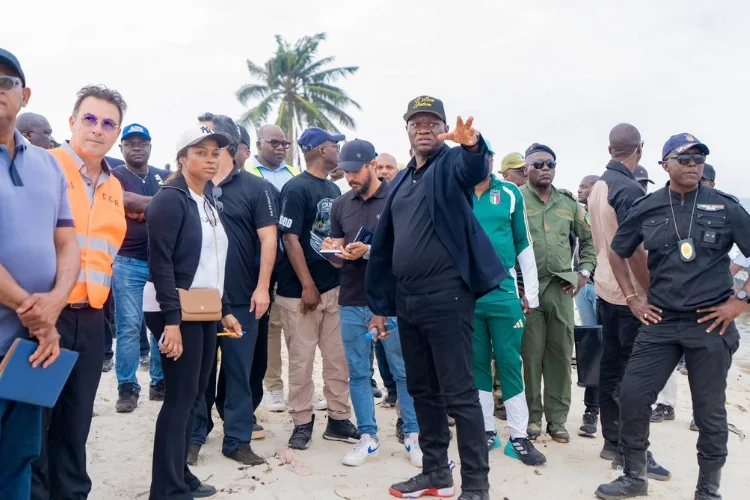
During his visit, President Nguema inspected the state's water and electricity networks, as well as healthcare facilities, highlighting the government's focus on improving the lives of vulnerable populations. This emphasis on social welfare is a key aspect of the Fifth Republic's agenda, with the President stressing the importance of tangible results on the ground. By prioritizing the needs of the people, the government aims to transform the region's oil wealth into concrete progress in areas like healthcare, education, and infrastructure.
The President's visit and the Council of Ministers' meeting in Port-Gentil have sparked optimism among locals, who see this as an opportunity for meaningful change. The government's priorities, as outlined by the President, focus on three main areas: empowering young people by creating sustainable job opportunities in the region's industrial basin; ensuring infrastructure sovereignty by securing universal access to clean water and electricity; and decentralizing healthcare services by modernizing regional health facilities.
The local community has welcomed the President's initiative, with many residents expressing hope that this shift in governance will bring about lasting improvements. Michel Régis Onanga Ndiaye, a local resident, shared his thoughts on the President's visit, highlighting the significance of this move for the region. As the government begins to implement its plans, residents will be watching closely to ensure that promises are translated into concrete actions.
The Council of Ministers' meeting in Port-Gentil has also sparked discussions about the need for further reforms, including the potential abolition of parliamentary pensions. Ntoutoume Ayi, a member of the National Assembly, has proposed the suppression of these pensions, sparking a debate that is expected to gain momentum in the coming weeks. As the government continues to roll out its agenda, it is likely that further reforms will be proposed to ensure greater accountability and transparency.
As the President's visit comes to a close, the focus shifts to the implementation of the announced measures and the government's ability to deliver on its promises. With the region's economic and social challenges in mind, the government will need to demonstrate its commitment to improving the lives of Gabon's citizens, particularly in the Ogooué-Maritime region. The success of this initiative will depend on the effective execution of the President's vision and the collaboration of various stakeholders.
Key points
- President Brice Clotaire Oligui Nguema relocates the Council of Ministers to Port-Gentil, marking a shift from centralization.
- The government aims to address the region's long-standing concerns regarding infrastructure, employment, and access to basic services.
- The President's visit and the Council of Ministers' meeting have sparked optimism among locals, who see this as an opportunity for meaningful change.