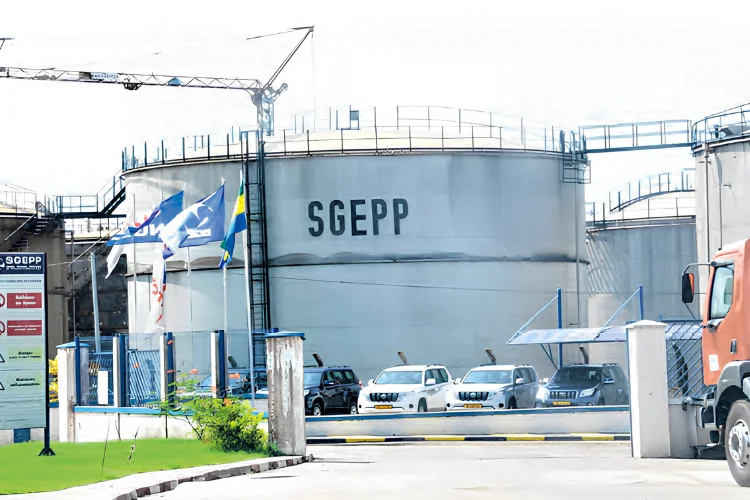
The Gabonese population is facing significant stress due to a recent fuel shortage, which seems counterintuitive given the country's status as a top 5 African producer of oil. The shortage has sparked concerns about the capacity of the country's refining and storage infrastructure. Specifically, the Sogara refinery and the SGEPP storage facility have been identified as having insufficient capacities, leading to a reliance on imports to meet the country's fuel demands.
An analysis of the situation reveals that the Sogara refinery is only able to process 45 to 50 percent of the country's crude oil. This is in stark contrast to other African countries, such as Côte d'Ivoire, which has a refining capacity of nearly 4 million tons per year, representing around 80 percent of its crude oil. The limitations of the Sogara refinery are compounded by a lack of modern technology, including an hydrocraqueur, which is necessary for converting heavy hydrocarbons into lighter, higher-quality products.
The SGEPP storage facility also faces significant challenges, with only one dedicated storage tank available. Industry experts suggest that at least five tanks are required to ensure a stable and reliable fuel supply. The current shortage has highlighted the need for urgent investment in the country's refining and storage infrastructure to prevent similar crises in the future.
The Gabonese government has been aware of the need for investment in the refining and storage sector for some time. In 2023, the SGEPP announced plans to increase its storage capacity, with discussions underway with five major market players, including Petro Gabon, TotalEnergies, Ola Energy Gabon, Gab’Oil, and Vivo Energy Gabon.
The current crisis has prompted President Brice Clotaire Oligui Nguema to take action, with efforts underway to resolve the shortage and restore fuel supplies to the country. The situation has also sparked concerns about the impact on other sectors, including the water and electricity industries, which may face challenges due to the fuel shortage.
The fuel shortage has had significant economic and social impacts, with daily life in the Grand Libreville area severely disrupted. The situation has also raised questions about the long-term sustainability of the country's fuel supply and the need for strategic investment in the sector.
As the country looks to address the current shortage, there is a growing recognition of the need for a comprehensive strategy to develop the refining and storage sector. This includes plans for a new refinery in Port-Gentil, which is expected to enhance the country's refining capacity and reduce its reliance on imports.
Key points
- The Sogara refinery can only process 45 to 50 percent of Gabon's crude oil, leading to a reliance on imports to meet fuel demands.
- The SGEPP storage facility has only one dedicated storage tank, which is insufficient to ensure a stable fuel supply.
- The Gabonese government is seeking to invest in the refining and storage sector, including plans for a new refinery in Port-Gentil and increased storage capacity at SGEPP.