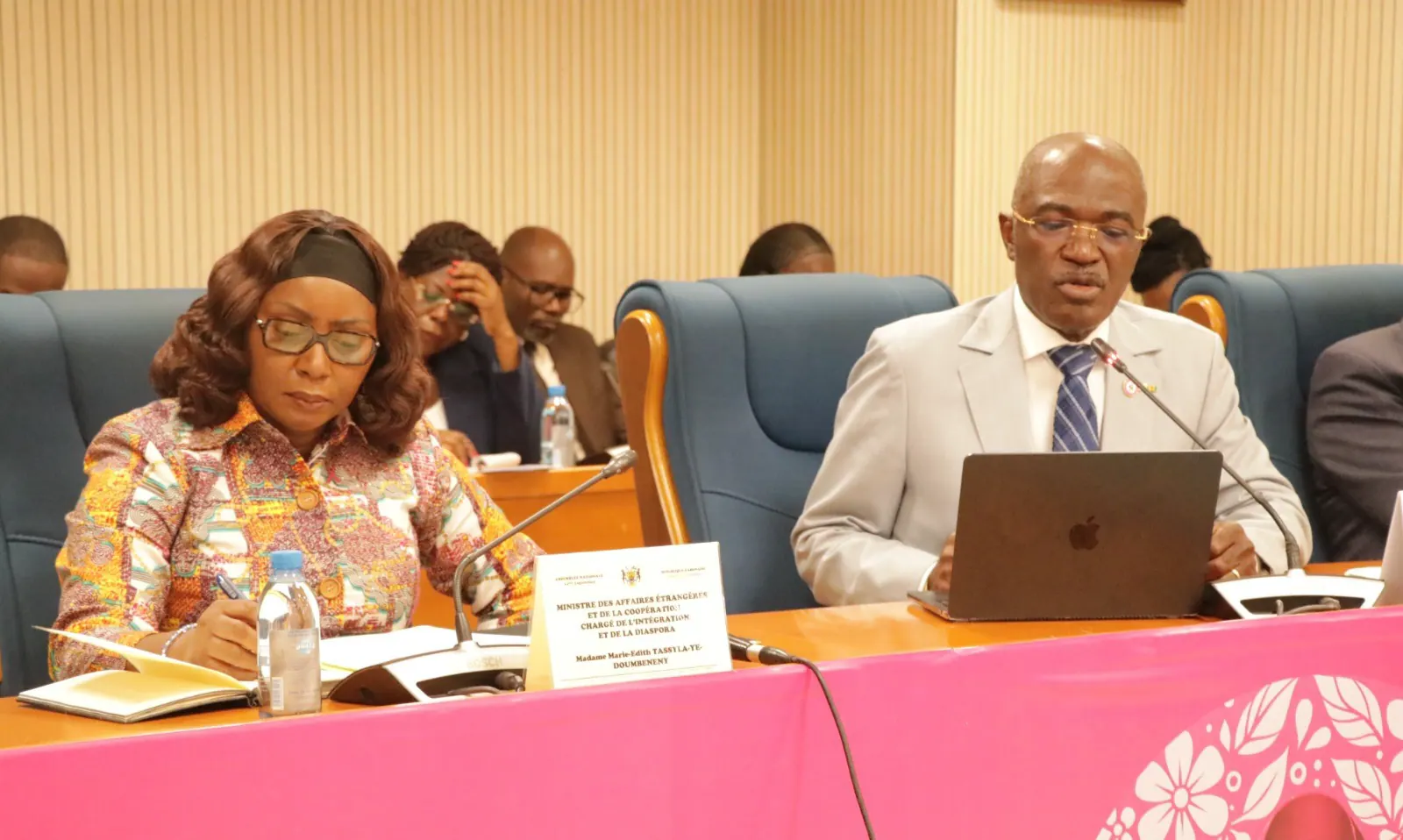
On Friday, October 2, 2026, Gabon's Foreign Minister Marie-Edith Tassyla-Ye-Doumbeneny appeared before the National Assembly's Foreign Affairs Committee to defend two bills on the ratification of the Samoa Agreement and the creation of the International Mangrove Center. The Samoa Agreement aims to redefine relations between the European Union and the Organization of African, Caribbean, and Pacific States (OACP). The agreement was signed in Apia, Samoa, on November 15, 2023.
The Samoa Agreement succeeds the Lomé and Cotonou agreements and establishes a renewed cooperation framework for the next twenty years. According to Minister Tassyla-Ye-Doumbeneny, this agreement is of strategic importance for Gabon, particularly in the context of economic diversification. The agreement is expected to provide predictable funding for sustainable development, poverty reduction, and inclusive economic growth while preserving Gabon's cultural and sovereign specificities.
The Minister emphasized that Gabon cannot afford to exclude itself from this framework, which governs commercial, political, and financial relations between Europe and the OACP bloc. In response to concerns from parliamentarians about protecting local industries from market opening, the Minister cited safeguard clauses negotiated in the African protocol. The agreement is expected to provide new opportunities for cooperation and development between Gabon and the European Union.
The second bill concerns the ratification of the agreement establishing the International Mangrove Center (CIM). Minister Tassyla-Ye-Doumbeneny stated that this bill aligns with Gabon's historical commitment to preserving biodiversity and combating climate change. With thousands of hectares of mangroves along its coastline, Gabon is a sanctuary for this ecosystem, which plays a crucial role in carbon sequestration and coastal stabilization.
The Minister highlighted that Gabon's formal adhesion to the International Mangrove Center will enable the country to share its scientific expertise and attract new multilateral funding through carbon finance and blue economy mechanisms. By defending this bill, Minister Tassyla-Ye-Doumbeneny demonstrated that Gabon's diplomacy uses the environment as a lever for influence and geopolitical negotiation.
Following the hearing, the Foreign Affairs Committee issued a favorable opinion on the two bills, citing the relevance of the arguments presented. The bills are expected to be transmitted to the plenary session for final examination and adoption. The adoption of these bills is seen as a significant step in strengthening Gabon's relations with the European Union and promoting sustainable development.
The successful defense of these bills by Minister Tassyla-Ye-Doumbeneny reflects the government's commitment to promoting Gabon's interests and engaging in international cooperation. The Samoa Agreement and the International Mangrove Center are expected to play a crucial role in Gabon's development and environmental protection efforts in the coming years.
Key points
- The Samoa Agreement aims to redefine relations between the European Union and the Organization of African, Caribbean, and Pacific States (OACP) for the next twenty years.
- The International Mangrove Center will enable Gabon to share its scientific expertise and attract new multilateral funding through carbon finance and blue economy mechanisms.
- The adoption of these bills is seen as a significant step in strengthening Gabon's relations with the European Union and promoting sustainable development.