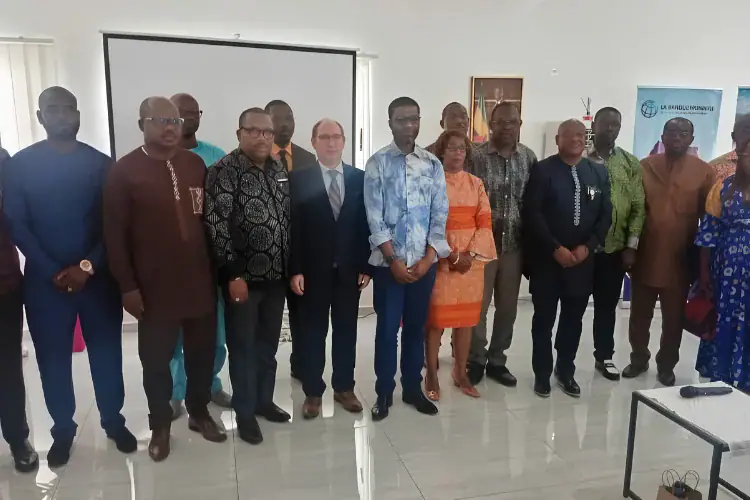
The Gabonese government's efforts to enhance transparency and efficiency in public spending have led to an expansion of its national development project mapping initiative. The Commissariat Général au Plan (CGP), in collaboration with the World Bank through the HISWACA project, recently hosted a workshop to present the latest findings. The event brought together 50 participants from various ministries, decentralized administrations, local authorities, and executing agencies. This gathering underscores the inter-ministerial nature of the exercise.
The initiative has made significant progress, with the number of identified projects increasing from 675 in April 2025 to 1,162. This represents a 72% growth, made possible through collaborative efforts with sectoral ministries to consolidate and verify each project. The CGP has also upgraded its tools, transitioning to Power BI, which will be integrated into the future Système intégré de gestion des investissements publics (SIGIP). This business intelligence tool provides a digital dashboard presenting cartography results, enabling users to navigate data and make comparisons.
The new tool allows for a province-by-province assessment of each project's status, including those that are ongoing, completed, or unfinished. According to Vulgain Andzembe Tsiegori, the Commissaire Général au Plan, the goal is to provide decision-makers with a robust aid-to-decision tool. This will enable them to identify areas requiring attention, such as roads, energy, education, or school construction, at the local level.
The exercise aims to promote transparency and efficiency in public spending. The Commissaire Général emphasized that with the finalization of this tool, transparency in public investment management will become a reality, making it impossible to conceal information. This initiative aligns with the country's National Growth and Development Plan (PNCD) 2026-2030.
The PNCD serves as a framework for the country's development, outlining priorities and strategies for growth. By integrating the project mapping initiative with the PNCD, the government seeks to ensure that development efforts are targeted and effective. The World Bank's support through the HISWACA project has been instrumental in facilitating this progress.
The success of the project mapping initiative relies on collaboration among various stakeholders, including sectoral ministries, decentralized administrations, and local authorities. Their involvement ensures that the data collected is accurate and comprehensive, providing a reliable foundation for decision-making.
As the government continues to refine its project mapping tool, it is expected to play a critical role in shaping the country's development trajectory. The enhanced transparency and efficiency in public spending will contribute to improved outcomes in various sectors, ultimately benefiting the population.
Key points
- The Gabonese government has identified 1,162 development projects through its national mapping initiative, representing a 72% increase from the initial 675 projects recorded in April 2025.