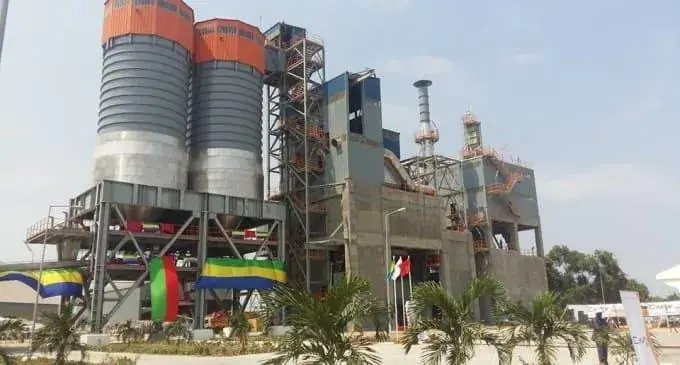
On November 26, 2026, President Brice Clotaire Oligui Nguema inaugurated a third production line at the CIMAF cement facility in Owendo, near Libreville. This expansion represents an investment of CFA25 billion and increases the company's annual production capacity from 850,000 tonnes to 1.85 million tonnes. The development aims to strengthen Gabon's domestic supply of construction materials and support major infrastructure projects. Cement is crucial for road construction, housing, bridges, commercial buildings, and public infrastructure.
The CIMAF expansion is part of an agreement signed between the company and the Gabonese government on March 20, 2025. The project is particularly relevant as the government prepares to restrict clinker imports from January 1, 2027. Clinker is the primary intermediate material used in cement production. The planned restriction highlights the importance of developing domestic industrial capacity and alternative supply arrangements. CIMAF, a subsidiary of Morocco's CIMAT-CIMAF group, has established a significant presence in Gabon's cement industry.
The government and the company have also discussed a proposed clinker manufacturing facility at Ntoum, which would support greater local production of cement inputs. However, this project remains a separate development and should not be confused with the newly inaugurated cement production line. Expanding cement-grinding capacity does not automatically eliminate dependence on imported clinker. To strengthen the entire production chain, Gabon will need to develop reliable access to raw materials and energy required for manufacturing.
The Owendo expansion represents a substantial increase in installed production capacity, which could strengthen domestic supply, support the construction sector, and reduce pressure to source finished cement from external markets. The actual impact on prices will depend on production costs, transport, energy prices, competition, and the extent to which the new facility operates at capacity. The investment also highlights the importance of private-sector participation in African industrial development.
For the benefits to extend beyond the factory, local participation must remain central. Gabonese suppliers, transport operators, maintenance businesses, and small enterprises could gain opportunities through the expansion of the industrial supply chain. Technical training and employment pathways would also help strengthen the country's manufacturing workforce. The broader opportunity is to develop an industrial ecosystem rather than focus solely on increasing output.
Cement production depends on reliable electricity, efficient transport, access to raw materials, skilled workers, and predictable regulation. Improvements in these areas can support other manufacturing activities and strengthen the competitiveness of domestic businesses. Across Africa, infrastructure development continues to create demand for construction materials. Countries that can produce these materials competitively and sustainably are better positioned to support their development programs while participating in regional markets.
For Gabon, the next challenge will be to translate additional production capacity into dependable supply, competitive prices, and stronger local industrial participation. Environmental standards and energy efficiency will also matter as the sector expands. The CIMAF investment is an opportunity to strengthen domestic manufacturing and improve the country's capacity to support its infrastructure ambitions. Its lasting contribution will be measured by how effectively Gabon connects industrial investment with local skills, enterprise development, and reduced dependence on external supply chains.
Key points
- The CIMAF expansion increases Gabon's annual cement production capacity to 1.85 million tonnes.
- The project aims to strengthen Gabon's domestic supply of construction materials and support major infrastructure projects.
- The investment highlights the importance of private-sector participation in African industrial development.
Reporting sources
- Gabon’s CIMAF Expansion: Strengthening Local Manufacturing and Reducing Import Dependence · African Leadership Magazine