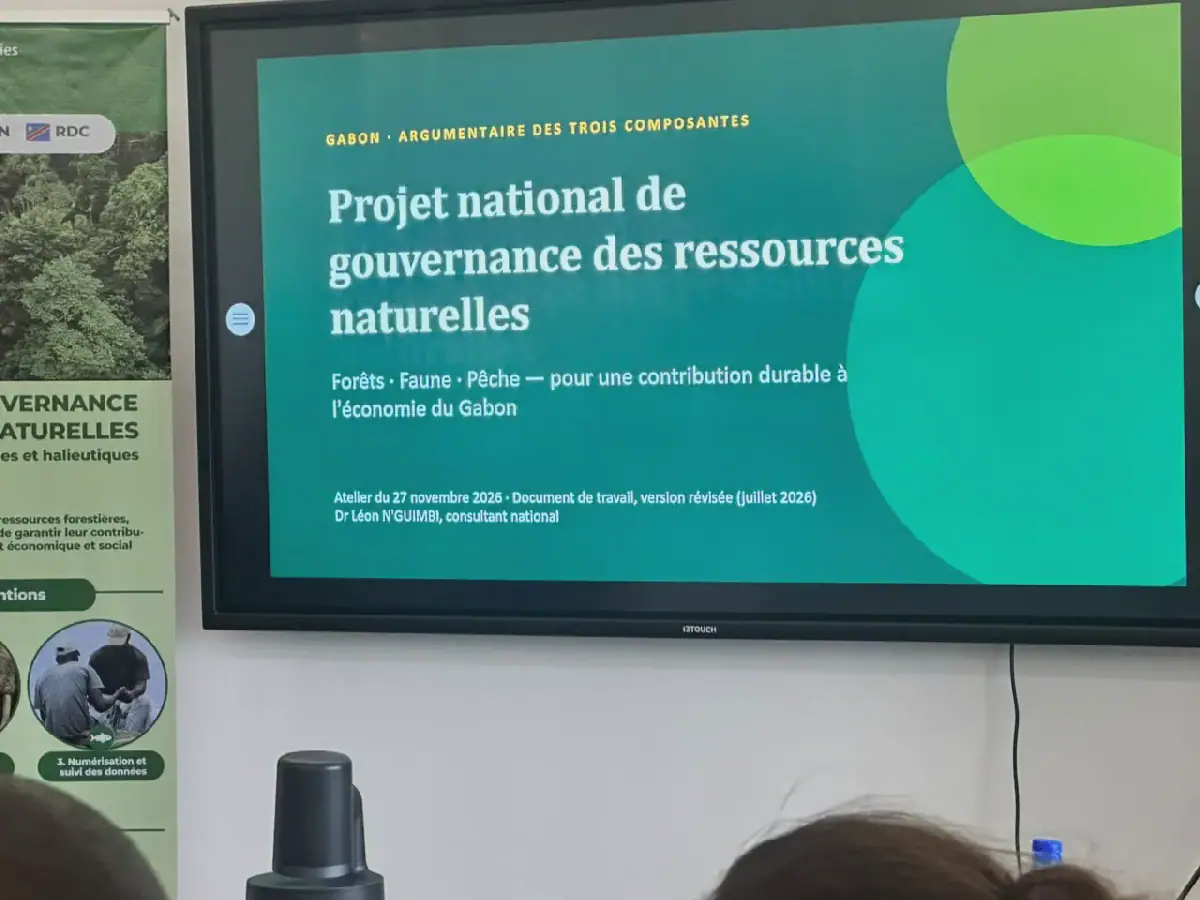
The Gabonese government has taken a step towards improving the governance of its natural resources with a proposal by national consultant Dr. Léon N’guimbi. On November 28, 2026, at the Food and Agriculture Organization (FAO) headquarters in Libreville, Dr. N’guimbi presented an innovative three-part plan aimed at ensuring the sustainable and transparent management of Gabon's natural resources. This initiative follows an extensive study and was presented during a national technical validation workshop.
The proposed architecture is built around three main components. The first involves laying the foundations for participatory governance through capacity building, a robust legal framework, and an interoperable information system. This foundation is critical for effective stakeholder engagement and informed decision-making. The second component focuses on generating knowledge through scientific research, data collection, and real-time monitoring. This will enable the government to make data-driven decisions.
The third component of the architecture emphasizes the importance of value chains, including local employment, formalized sectors, and secured fiscal revenues. The overall goal is to ensure that Gabon's forest, wildlife, and fisheries resources contribute sustainably and transparently to the national economy. Dr. N’guimbi's proposal also includes three critical political conditions necessary for the success of this architecture.
These conditions include the establishment and operationalization of the National Multisectoral Working Group (GTNM) to eliminate institutional silos. Dr. N’guimbi recommends setting up this group by the end of 2026. Additionally, he suggests resolving the longstanding issues related to the National Land Allocation Plan (PNAT), which has been pending since 2017, and establishing real transparency in natural resource management.
The national technical validation workshop also involved group discussions that enriched the three proposed components. Participants adopted the study's report pending the incorporation of additional information. The workshop concluded with a speech by Inspector General Daniel Idiata Mambounga, who commended Dr. N’guimbi and stakeholders for their work.
The implementation of Dr. N’guimbi's proposal could mark a significant shift in how Gabon manages its natural resources. The plan aims to balance economic development with environmental sustainability and social equity. If successful, it could serve as a model for other countries facing similar challenges in natural resource governance.
The Gabonese government's commitment to enhancing natural resource governance comes at a critical time. With growing global concerns about environmental degradation and sustainable development, Gabon's approach could have far-reaching implications. The effectiveness of Dr. N’guimbi's three-part architecture will depend on its implementation and the government's ability to address longstanding institutional and policy challenges.
Key points
- Dr. Léon N’guimbi proposes a three-part architecture for sustainable natural resource management in Gabon.