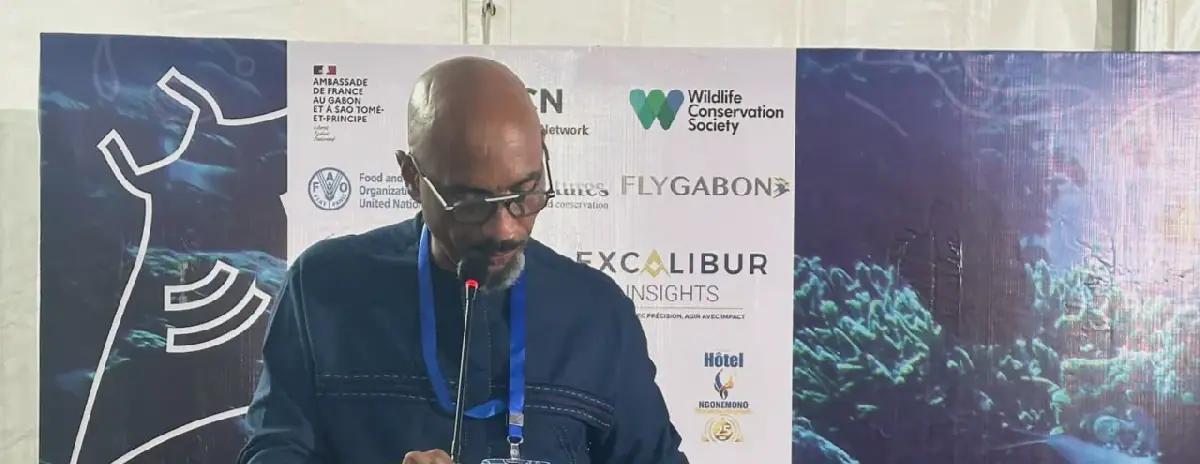
The Gabonese government has outlined seven key areas to enhance marine conservation and promote sustainable development of the blue economy in Central Africa. These areas were presented by Koumba Kombila, coordinator of the marine program at the National Parks Agency (ANPN), at the end of the Central African Blue Forum (FOBAC). The forum, which was coupled with the Street Whale event and the launch of the Sustainable Ocean and Blue Economy in Central Africa (ODEBAC) program, aims to strengthen the governance of marine and coastal areas in the sub-region.
One of the main recommendations from the forum is the need for stronger regional governance through increased cooperation between states, public administrations, regional organizations, scientific institutions, civil society, and the private sector. Experts also called for better harmonization of legal frameworks and enhanced transborder cooperation for more effective management of marine resources. This would involve accelerating the identification, evaluation, and support of existing initiatives, while clarifying recognition criteria, governance mechanisms, monitoring systems, and financing opportunities.
The forum also emphasized the importance of developing coordinated programs for marine megafauna, including cetaceans, sea turtles, sharks, and rays. To achieve this, experts stressed the need for improved scientific knowledge, better data sharing, and consolidated conservation efforts at the regional level. Additionally, the sustainable management of fisheries was highlighted as a major area of focus, with participants advocating for improved fisheries data, strengthened controls and surveillance systems, and enhanced cooperation to combat illicit, unreported, and unregulated fishing.
Participants also recommended actions to reduce the impacts of bottom trawling and bycatch on marine ecosystems. They called for greater engagement from local communities in promoting the blue economy, through support for community initiatives, sustainable value chains, and entrepreneurship for women and young people. Furthermore, experts emphasized the need to restore marine and coastal habitats, while reducing various forms of pollution through better mobilization of scientific research and the availability of reliable data to inform public policies.
In terms of research and knowledge sharing, the forum recommended strengthening scientific partnerships, harmonizing research protocols, and promoting participatory science to improve understanding and management of marine ecosystems. Participants also stressed the importance of mobilizing public, private, and innovative financing to support conservation initiatives, promote regional projects, and guarantee transparency, accountability, and financial sustainability.
The seven priority areas were developed based on several key findings from the discussions. These included the need for consolidated integrated governance of marine areas, the importance of adapted tools and sustainable financing to achieve the global 30×30 target, and the requirement for conservation efforts to be more grounded in scientific data and regional cooperation. The discussions also highlighted the need for improved fisheries monitoring tools and strengthened collective control mechanisms to ensure sustainable exploitation of fish resources.
The participants were invited to translate these orientations into concrete actions, in line with their mandates and capacities, to make marine conservation a driver of sustainable development for Central Africa. The goal is to promote a coordinated approach to marine conservation and sustainable development of the blue economy in the region, with a focus on community engagement, scientific research, and innovative financing.
Key points
- Strengthening regional governance and cooperation is crucial for effective marine conservation in Central Africa.
- Improving scientific knowledge and data sharing is essential for informed decision-making and effective conservation efforts.
- Mobilizing public, private, and innovative financing is necessary to support conservation initiatives and promote sustainable development of the blue economy.