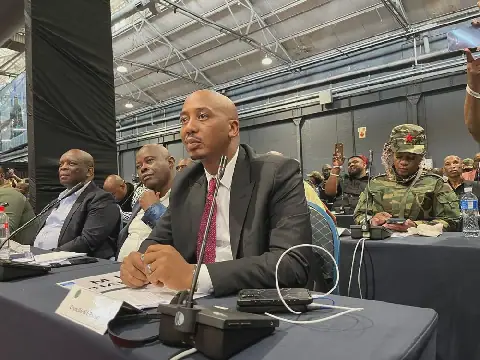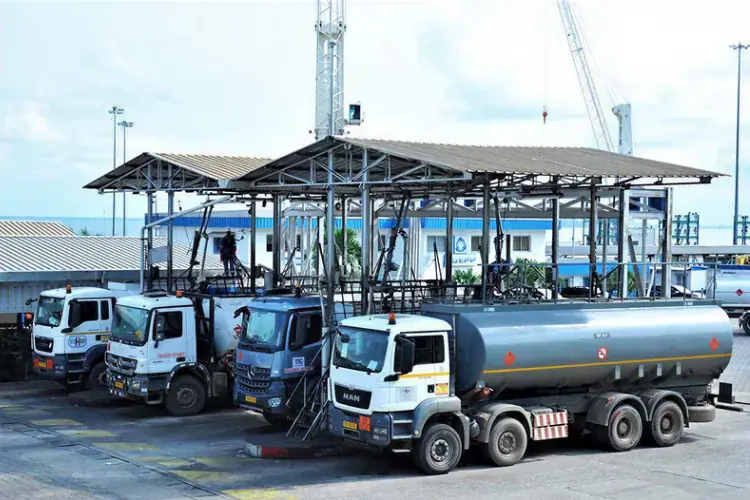
The Gabonese government plans to end fuel subsidies effective January 1, 2027, according to Vice-President Hermann Immongault, who presented the plan to President Brice Clotaire Oligui Nguema on November 25. The move aims to address the unsustainable burden of fuel subsidies, estimated at 35 billion FCFA per month. The government has not yet released an official document or new tariff grid for January 2027.
In October, a proposed tariff grid attributed to the National Commission for Petroleum Products Prices circulated, but its authenticity could not be verified. The government has since announced two measures to cushion the impact on households. The state-owned transport company, Compagnie nationale des transports (CNT), will offer reduced tariffs, while a support system will ensure the delivery of essential goods without price hikes due to increased transportation costs.
The proposed end of fuel subsidies is part of the government's efforts to reassess its spending priorities. No details have been provided on the scope, cost, or beneficiaries of the proposed compensatory measures. The government has not specified how it plans to mitigate the potential effects on inflation, economic growth, or the overall cost of living.
President Brice Clotaire Oligui Nguema has been actively engaged in discussions on the country's economic development. On November 26, he oversaw a significant development in the cement industry, as CIMAF Gabon's production capacity increased to 1.85 million tons. The president has also been involved in promoting entrepreneurship and youth development, as highlighted during the 8th YouthConnekt Africa summit in Kigali, Rwanda.
The Gabonese government has been exploring partnerships to drive economic growth and development. On November 25, the Union signed a cooperation agreement with an unspecified partner, while the National Anti-Corruption Commission and the Moroccan National Instance of Probity, Prevention, and Repression of Corruption signed a cooperation agreement to combat corruption.
Other initiatives aimed at boosting economic growth and development are underway. The Caisse de stabilisation et de péréquation (Caistab) recently organized a training session to support the relaunch of the coffee and cocoa sectors. Portéo BTP Gabon has also made significant progress on the Alembé-Mikouyi road project, with industrial operations in full swing.
The government faces the challenge of implementing the subsidy removal plan while minimizing its impact on households and the broader economy. The proposed measures aim to alleviate the effects of the subsidy removal, but their effectiveness and scope remain to be seen. The coming weeks will likely provide more clarity on the specifics of the plan and its implementation.
Key points
- The Gabonese government plans to end fuel subsidies by January 2027.
- Proposed measures to mitigate the impact on households include reduced tariffs for the state-owned transport company and a support system for essential goods.
- The subsidy removal plan aims to address the unsustainable burden of fuel subsidies, estimated at 35 billion FCFA per month.