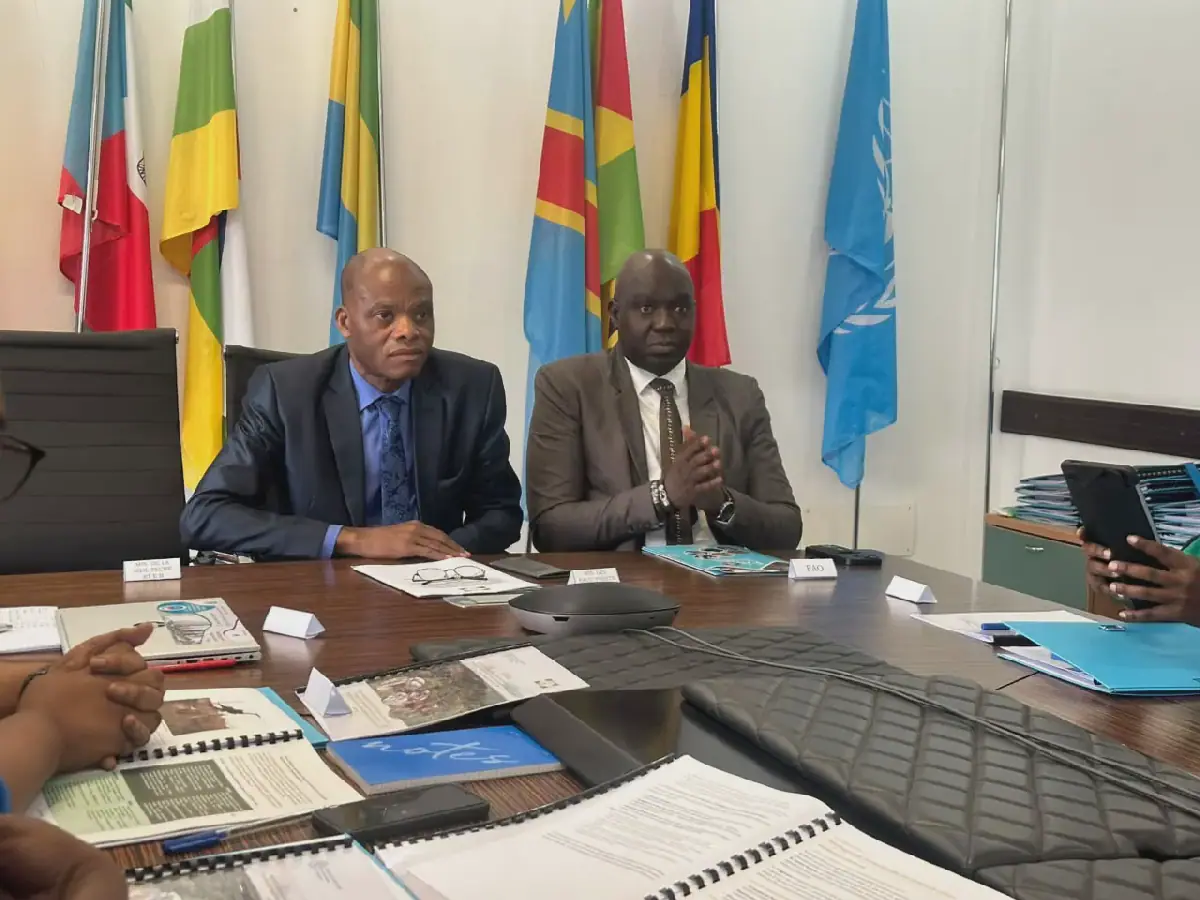
The Gabonese government has initiated a national workshop to validate a study on the governance of natural resources, which was opened by Inspector General Daniel Idiata Mambounga, representing the Minister of Water and Forests, Maurice Ntossui Allogo, in Libreville. The workshop, organized at the Food and Agriculture Organization (FAO) office, aims to technically validate the diagnostic report and consolidate associated performance indicators. This effort seeks to address the current state of natural resource governance in Gabon.
According to Mambounga, the diagnostic study reveals that Gabon's governance of natural resources remains "too compartmentalized" and is deemed insufficient by 91% of consulted stakeholders. He noted that the wealth of Gabon's ecosystems is not adequately reflected in the national economy, particularly for wildlife, which largely escapes national accounting, and for the fishing sector, which only represents 0.13% to 0.42% of the country's GDP. These findings highlight the need for improved governance and management of natural resources.
The workshop's objectives align with Gabon's National Growth and Development Plan (PNCD), focusing on strengthening institutional coherence and intersectoral coordination, improving the sustainable economic valuation of resources, and consolidating technical, human, and financial capacities of national institutions. The plan includes ambitions such as achieving complete local transformation of wood by 2030, enhancing traceability and certification, reducing poaching by half, and making 100 community hunting territories functional.
Oumar Ndiaye, Lead Technical Specialist for Land, Water, Forests, and Climate Change at the FAO's subregional office for Central Africa, emphasized that the major challenge is to make the future national project an effective instrument for transforming the governance of natural resources. The project aims to translate study recommendations into concrete actions, strengthen institutional capacities, improve actor coordination, and promote better economic valuation of resources.
The FAO has reaffirmed its commitment to supporting Gabonese authorities and stakeholders in this endeavor, stressing that good governance of natural resources should be a lever for economic diversification, wealth creation, and sustainable development for present and future generations. The organization highlights the importance of engagement from public authorities, national appropriation, and support from technical and financial partners.
Key aspects of the project include developing precise, verifiable indicators with realistic targets and reliable sources of verification. The indicators will help assess institutional progress, economic results, and environmental effects of interventions, ensuring coherence with national priorities and the capacities of structures responsible for their monitoring. This approach aims to ensure the feasibility, implementation, and durability of proposed interventions.
The workshop and subsequent project represent an opportunity for Gabon to support the development of value chains, local transformation, job creation, and improved incomes for populations, while preserving the country's natural capital. The initiative underscores the importance of collective appropriation and concerted mobilization of technical and financial partners to achieve the envisioned goals in natural resource governance.
Key points
- The workshop aims to validate a study on natural resource governance to improve management and economic benefits.
- Gabon seeks to enhance traceability and certification of its natural resources, aiming for complete local transformation of wood by 2030.
- The project aims to translate study recommendations into concrete actions, strengthen institutional capacities, and promote better economic valuation of resources.