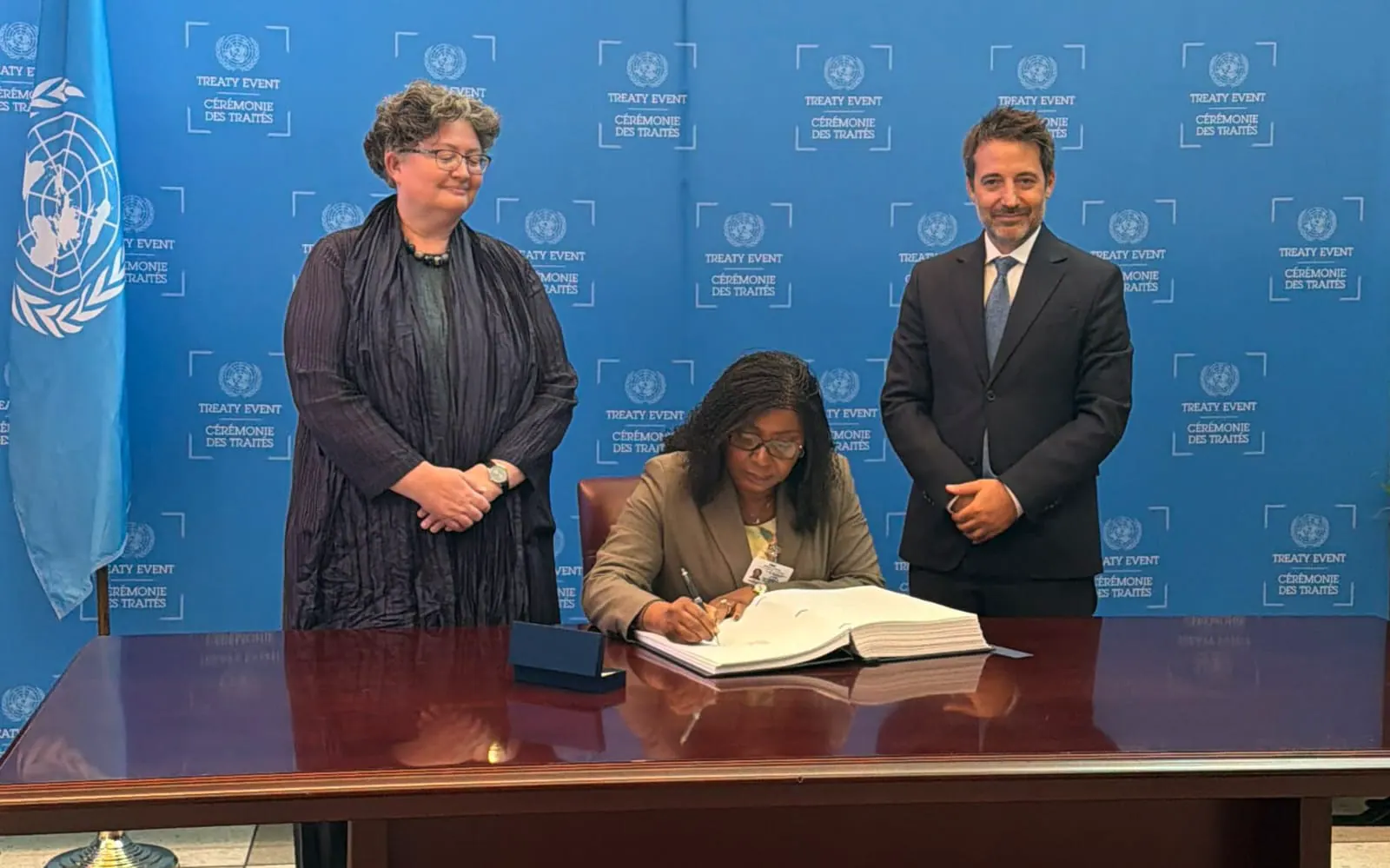
On the sidelines of the United Nations General Assembly high-level week, Gabon's Foreign Minister, Marie-Édith Tassyla-Ye-Doumbeneny, signed two significant treaties on behalf of the Gabonese State. The treaties aim to combat cybercrime and ban nuclear weapons. This development underscores Gabon's commitment to strengthening its engagement in favor of multilateralism based on law, international cooperation, and population protection.
The Treaty on the Prohibition of Nuclear Weapons (TPNW) aligns with Gabon's long-standing diplomatic efforts to eliminate nuclear arsenals. The country has consistently advocated for disarmament within multilateral forums, including during preparatory works for the Nuclear Non-Proliferation Treaty (NPT) Review Conference. By signing the TPNW, Gabon reaffirms its position alongside the United Nations.
Adopted by the UN in 2017 and entered into force in 2021, the TPNW is the first international legally binding instrument to prohibit the development, stockpiling, production, transfer, use, and threat of use of nuclear weapons. As of now, the treaty has 95 signatory states and 75 parties. Gabon's signature demonstrates its commitment to a safer world through multilateralism.
The second treaty signed by Gabon is the UN Convention against Cybercrime, also known as the Hanoi Convention. This instrument aims to strengthen the international response to cybercrime, which has intensified in recent years. The convention provides a framework for facilitating international cooperation in combating cybercrime, particularly in judicial assistance and collecting and exchanging electronic evidence.
The signing of these treaties reflects Gabon's conviction that population security, whether digital or existential, can only be achieved through multilateralism, law, and international cooperation. According to the Foreign Minister, these instruments will enable Gabon to contribute to the implementation of these principles alongside its partners.
The treaties signed by Gabon are part of a broader international effort to address pressing global challenges. The UN Convention against Cybercrime is a critical step towards establishing a coordinated response to cyber threats. Meanwhile, the TPNW represents a significant milestone in the quest for nuclear disarmament.
With these signatures, Gabon has taken a significant step towards strengthening its commitment to international law and cooperation. The country has demonstrated its willingness to engage in global efforts to address pressing challenges, including cybercrime and nuclear proliferation. The implementation of these treaties will require continued cooperation and commitment from Gabon and its international partners.
Key points
- Gabon signs UN treaties on cybercrime and nuclear disarmament
- The treaties aim to strengthen international cooperation in combating cybercrime and eliminating nuclear weapons
- Gabon's accession to the treaties reflects its commitment to multilateralism and international law