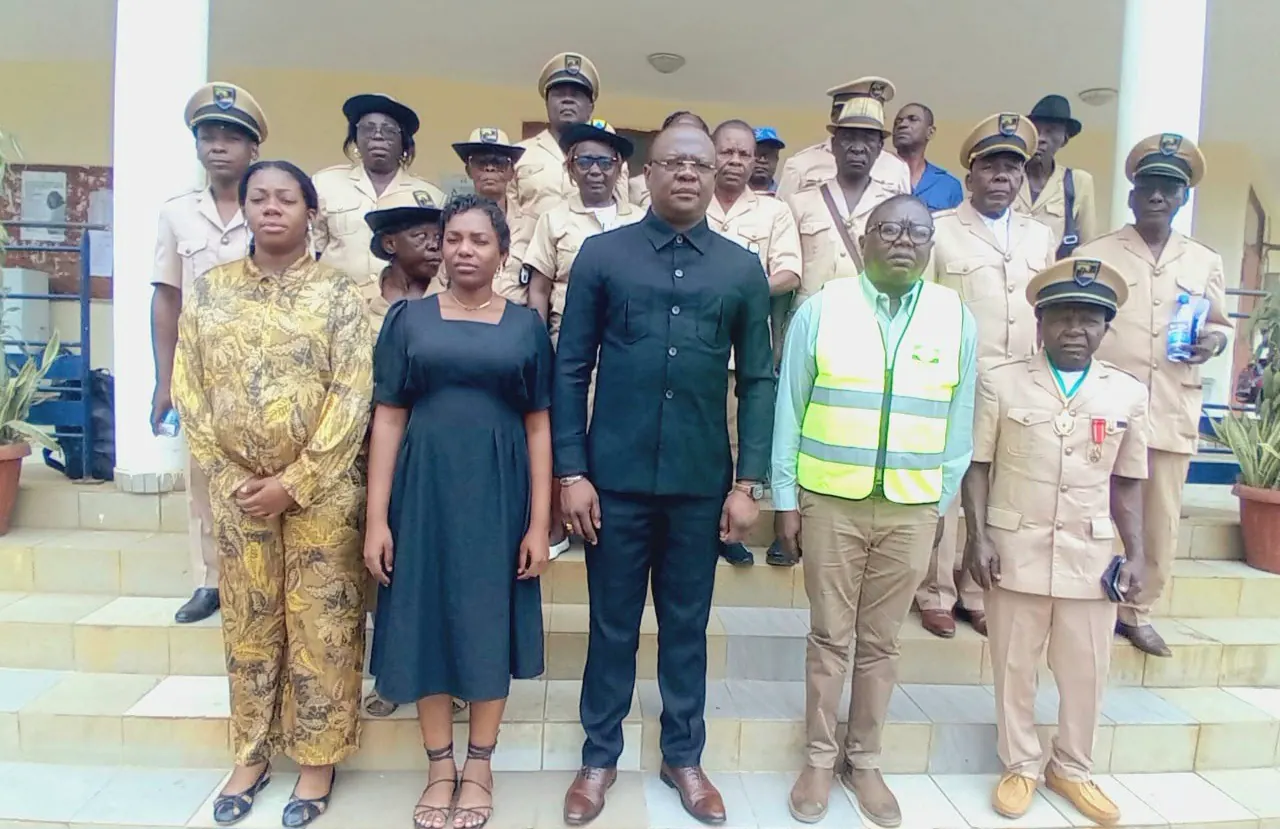
In a move to enhance administrative oversight, the mayor of Ntoum's 1st arrondissement, Jean Paul Essone Obiang, convened a meeting with quarter chiefs and leaders of the associative mapping mission. The gathering, which took place on September 30, 2026, aimed to disseminate directives from the Ministry of Interior, Security, and Decentralization. This initiative marks the beginning of the first phase of the National Cartography of Associative Organizations in the Greater Libreville area.
The mapping exercise, scheduled to run from September 28 to October 15, 2026, targets civil and religious associations, non-governmental organizations (NGOs), and political parties. Representatives of these entities are required to visit the local municipality or their respective quarter chiefs, providing necessary documentation, including a definitive receipt. The goal is to enable authorities to gain a comprehensive understanding of existing organizations within various quarters, facilitating administrative monitoring.
According to Mayor Jean Paul Essone Obiang, the cartography initiative seeks to improve knowledge of local organizations, thereby enhancing their administrative management. The exercise is expected to provide valuable insights into the presence and activities of associations, NGOs, and political parties within the region. By doing so, authorities can better coordinate their efforts to support these organizations.
During the meeting, participants identified potential challenges that may hinder the fieldwork, including unclear boundaries in certain Ntoum-Centre quarters, unclear demarcations in the Tchad sector, and the absence of signposts in Matoto. In response, the mayor recommended clarifying territorial limits and installing identification panels to facilitate the deployment of cartography teams.
The associative mapping initiative is part of a broader effort to improve governance and administrative efficiency in Gabon. By gathering accurate data on local organizations, authorities can develop targeted strategies to support their activities, while ensuring compliance with regulatory requirements. The success of this initiative is expected to have a positive impact on the region's development.
The cartography exercise is being conducted in accordance with guidelines set by the Ministry of Interior, Security, and Decentralization. The ministry's involvement underscores the importance of this initiative in enhancing administrative oversight and promoting good governance. Local stakeholders are being encouraged to cooperate fully with the cartography teams.
The outcome of the associative mapping initiative is expected to inform policy decisions and guide the development of targeted interventions in the region. By engaging quarter chiefs and local organizations, the Ntoum authorities aim to ensure that the exercise is both comprehensive and inclusive. The success of this initiative will depend on the active participation of all stakeholders involved.
Key points
- The associative mapping initiative aims to improve administrative oversight of local organizations in Ntoum.
- The exercise targets civil and religious associations, NGOs, and political parties.
- The initiative is part of a broader effort to enhance governance and administrative efficiency in Gabon.