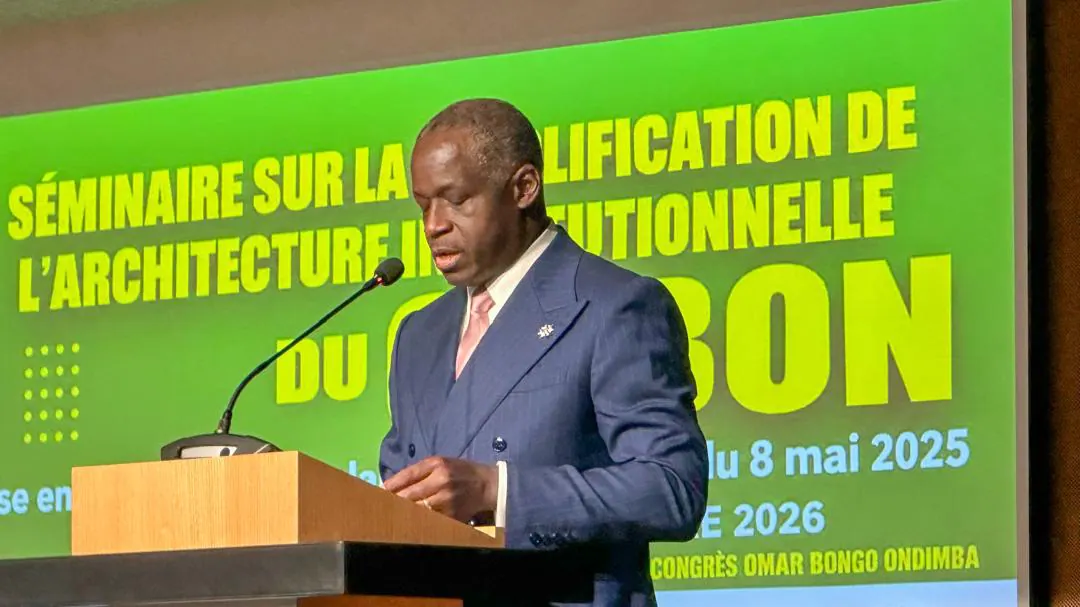
The Gabonese government has initiated a seminar to reform the state's institutional architecture, as part of President Ali Bongo Ondimba's program. The event, which opened on October 5, 2026, at the Palais des congrès in Libreville, is being led by Vice President Hermann Immongault. The seminar aims to address the complexities and inefficiencies in the current administrative system, which has been marked by overlapping competencies, dispersed responsibilities, and cumbersome procedures.
The proposed reforms seek to establish a more streamlined and effective administration, with a focus on three key pillars: a strategic decision-making center, effective government coordination, and a structured administration focused on execution and accountability. The new architecture is expected to clarify competencies, eliminate duplication, shorten decision-making circuits, and enhance legal security. This, in turn, is expected to consolidate an effective and transparent state that citizens can trust.
According to Vice President Immongault, the seminar's objective is to create an administration that is not only transparent but also efficient, effective, and worthy of the trust placed in institutions by Gabonese citizens. He emphasized that the initiative is guided by the President's vision, which aims to create a united state with clearly defined areas of competence, coherent articulation of powers, and a stable environment conducive to development.
The Minister of Reform and Relations with Institutions, François Ndong Obiang, highlighted the significance of the seminar, stating that it will trigger a collective dynamic that transforms ideas into actions and principles into visible results. He urged participants to work together to create an administration that communicates effectively with citizens, acts promptly, and adheres to republican ethics.
The seminar, which will run until October 6, 2026, is expected to produce operational roadmaps with clear priorities and a realistic execution timeline. These roadmaps aim to improve the state's action and the quality of services rendered to citizens. The initiative is part of the government's efforts to implement reforms and enhance the effectiveness of the administration.
The current institutional architecture of the state has been criticized for its complexity and inefficiencies. The proposed reforms aim to address these challenges and create a more streamlined and effective administration. The seminar has brought together members of the government and administrative officials to discuss the proposed reforms and develop a roadmap for implementation.
The success of the seminar and the implementation of the proposed reforms will depend on the collaboration and commitment of all stakeholders. The government has emphasized its determination to push forward with the reforms, with the ultimate goal of creating a more efficient and effective state that serves the needs of Gabonese citizens.
Key points
- The Gabonese government has launched a seminar to simplify the state's institutional architecture.
- The proposed reforms aim to create a more streamlined and effective administration.
- The seminar is expected to produce operational roadmaps with clear priorities and a realistic execution timeline.