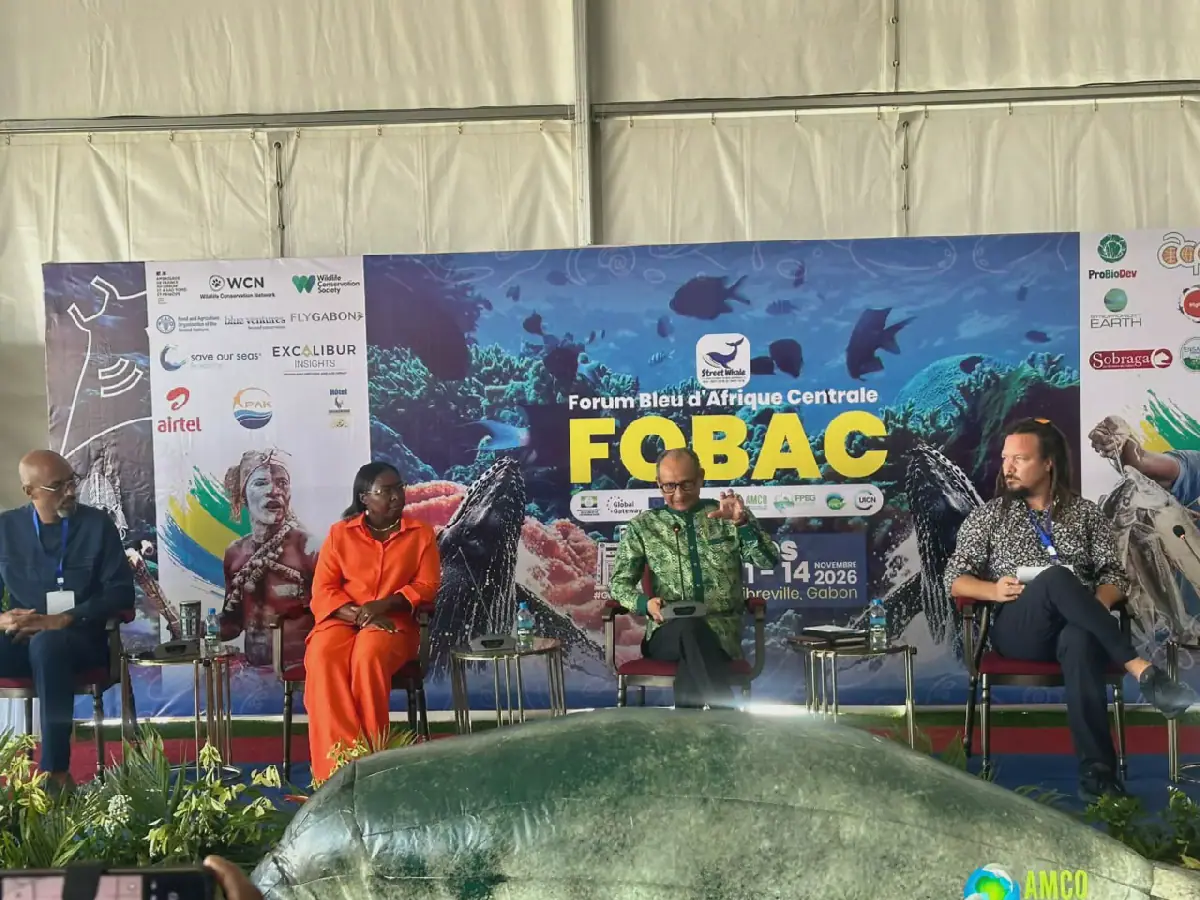
The Gabonese government recently hosted a workshop on "How can Central Africa align with the 30×30 goal?" The event, moderated by Professor Guy Rossatanga-Rignault, brought together experts from various organizations, including the African Marine Conservation Organisation (AMCO), the Wildlife Conservation Society (WCS), the National Parks Agency (ANPN), and the Project Management Unit (UGP). The workshop aimed to discuss ways to achieve the 30×30 goal, which seeks to conserve 30% of the world's oceans by 2030.
Koumba Kombila, coordinator of the marine program at ANPN, acknowledged that Gabon has made significant investments in raising awareness and disseminating laws to local communities, with the support of technical and financial partners. The government has also established the Gabon Biodiversity Preservation Fund (FPBG), which aims to support local communities in preserving marine and coastal ecosystems and promoting the blue economy. Kombila emphasized the importance of adapting awareness-raising efforts to limit conflicts with communities.
However, Kombila also stressed the need to focus on security, given the links between illegal, unreported, and unregulated (IUU) fishing and other maritime crimes. Dr. Godefroy De Bruyne of WCS praised Gabon's efforts, noting that the country's actions have had a positive impact on neighboring countries, such as Congo, which has recently established three marine protected areas. De Bruyne highlighted the importance of creating new policy and scientific tools to identify priority areas for protection.
Samyra Yeno of UGP emphasized that Gabon has relied on technical and financial partners, including blue bonds, to support its conservation efforts. She believes that this type of mechanism is essential for states to achieve their conservation goals, as international conventions often rely on commitments from Northern countries that may not materialize. Yeno noted that blue bonds provide a dynamic for conservation, protection, and development over long periods, covering 15 years in Gabon's case.
The blue bonds issued by Gabon not only support conservation but also the development of a national marine spatial plan and zoning of its waters. Yeno stressed that this approach ensures that conservation is not the only consideration, but rather one aspect of a broader strategy for sustainable development. The workshop highlighted the need for innovative financing solutions to support marine conservation in Central Africa.
Dr. Aristide Takoukam Kamla of AMCO and other participants emphasized the importance of collaboration and knowledge-sharing to achieve the 30×30 goal. They recognized that Gabon's efforts have set a positive precedent for the region and encouraged other countries to follow suit. The workshop provided a platform for experts to discuss challenges and opportunities for marine conservation in Central Africa.
The Gabonese government is committed to preserving its marine ecosystems, and the workshop demonstrated its willingness to explore new approaches to achieve this goal. With the support of international partners and innovative financing mechanisms, Gabon aims to make progress in protecting its marine biodiversity and promoting sustainable development.
Key points
- Gabon has established the Gabon Biodiversity Preservation Fund (FPBG) to support local communities in preserving marine and coastal ecosystems.
- The country has issued blue bonds to finance its conservation efforts, covering a period of 15 years.
- The workshop highlighted the need for innovative financing solutions to support marine conservation in Central Africa.
Reporting sources
- Gabon/FOBAC : diversifier les financements pour garantir une gestion durable · Gabon Press Agency