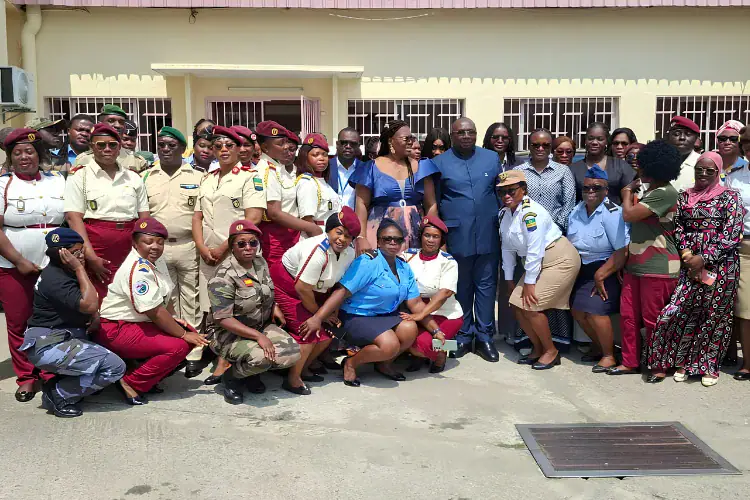
Military health personnel in Gabon have begun a training program focused on collecting and reporting reliable data on HIV care and treatment. The training, which is being held at the Programme de lutte contre les infections sexuellement transmissibles et le VIH-Sida (PNLIST) in the capital city, aims to equip healthcare workers with the skills needed to accurately collect and report data on HIV cases. This initiative is part of a broader effort to improve the country's response to the HIV epidemic.
According to the 2025 programmatic data for Gabon, approximately 50,000 people are living with HIV, with a prevalence rate of 3.6%. While 80% of those individuals know their HIV status and 35,334 are receiving antiretroviral treatment, only 9,156 have undergone viral load testing, representing just 26% of those on treatment. These statistics highlight the progress made so far, but also underscore the need for improved data collection and patient follow-up.
The training program, which is being supported financially by Medical Care Development Health (MCD), aims to address the gaps in data collection and reporting. The program includes practical exercises and sessions on applying the skills learned in real-world settings. The training is set to conclude on November 13. By enhancing the capacity of military health personnel to collect and report accurate data, the program hopes to improve the overall quality of HIV care and treatment in Gabon.
The need for reliable data in HIV care and treatment cannot be overstated. According to Alain Charles Rotimbo, Secretary General of the Ministry of Health, improving the quality of information collected is crucial for informed decision-making and effective patient care. Dr. Raïssa Okouyi Ndong Assapi, Director of PNLIST, emphasized the importance of mastering data collection tools, including registers, examination requests, consultation notebooks, and reports, before they are used in the DHIS2 platform.
The training program is part of a larger project aimed at strengthening Gabon's response to HIV and other sexually transmitted infections. By focusing on data collection and reporting, the program seeks to improve the country's ability to track progress, identify areas for improvement, and allocate resources effectively. The involvement of military health personnel in this effort highlights the importance of a collaborative approach to addressing the HIV epidemic.
The training program is also seen as an opportunity to enhance collaboration between different stakeholders in the HIV response, including government agencies, healthcare providers, and civil society organizations. By working together, these stakeholders can leverage their respective strengths and expertise to improve the overall effectiveness of HIV care and treatment in Gabon.
As the training program comes to a close, participants are expected to return to their duties equipped with the skills and knowledge needed to collect and report reliable data on HIV care and treatment. The impact of this program will be closely watched, as Gabon continues to work towards achieving its goals in HIV prevention, care, and treatment.
Key points
- The training program aims to improve the quality of data collected on HIV care and treatment, which is essential for informed decision-making and effective patient care.