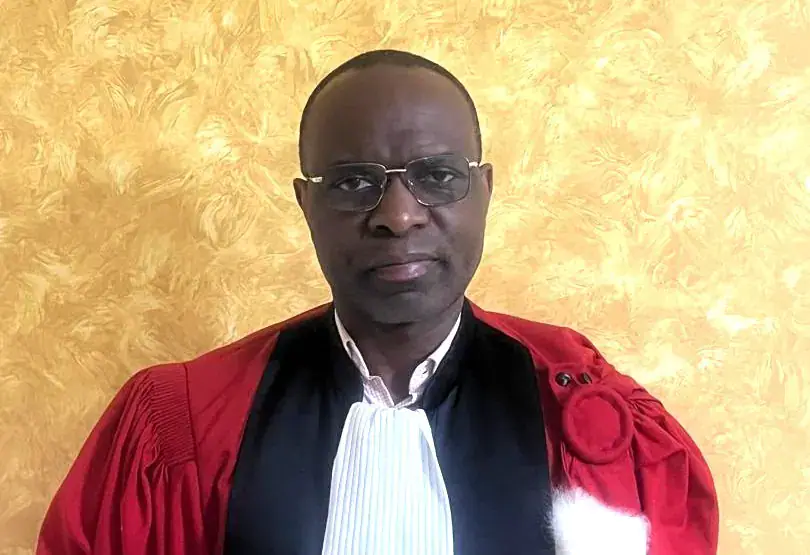
Pr. Alexis Essono Ovono, a renowned expert in public law and dean of the Faculty of Law and Economic Sciences at the University of Omar Bongo, has weighed in on Gabon's proposed electoral reform to make voting mandatory. In an interview with the Gabonese Press Agency, he emphasized that mandatory voting can improve democracy if accompanied by measures to moralize public life. This comes as President Brice Clotaire Oligui Nguema highlighted the need for moralization in public and political life during a recent Council of Ministers meeting.
The proposed reform aims to address issues such as the manipulation of voters, particularly through organized transportation of electorates, and to promote citizen responsibility. Pr. Essono Ovono noted that moralizing public life has become a significant theme in democratic debates, especially in light of politico-financial scandals that have contributed to a crisis of democracy. Gabon has not been immune to this crisis, with citizens feeling that politicians prioritize personal interests over national service.
The professor highlighted that the trial of Sylvia Bongo Ondimba and former collaborators of ex-President Ali Bongo Ondimba exposed problems of ethics in public life. To address this crisis, Pr. Essono Ovono emphasized the need for moralization in public life, promoting integrity, transparency, and preventing corruption. He sees the debate on mandatory voting as part of this effort to restore trust between citizens and politicians.
Pr. Essono Ovono stressed that mandatory voting must be accompanied by broader legislative measures to be effective. These measures include combating corruption and conflicts of interest, strengthening controls on party campaign accounts, and capping campaign expenses. A redrawing of electoral boundaries based on democratic criteria is also necessary. By doing so, mandatory voting can help restore trust and improve democratic representation.
The professor noted that the current optional voting system in Gabon is enshrined in the Constitution, which recognizes the theory of national sovereignty. However, he argued that mandatory voting, practiced in countries like Belgium, can give universal suffrage its sincerity and representative democracy its value. If only a fraction of citizens participate in elections, the representative nature of elected officials becomes illusory.
Pr. Essono Ovono emphasized that mandatory voting can improve democracy, but it must be accompanied by measures to moralize public life. He called for a comprehensive approach to electoral reform, including measures to promote citizen participation and responsibility. By doing so, Gabon can strengthen its democracy and promote more representative governance.
The proposed electoral reform has sparked a national debate on the future of democracy in Gabon. As the country considers making voting mandatory, Pr. Essono Ovono's insights highlight the need for a comprehensive approach to electoral reform. The Gabonese Press Agency will continue to monitor developments on this issue and provide updates as more information becomes available.
Key points
- Pr. Alexis Essono Ovono advocates for mandatory voting as a means to strengthen democracy and moralize public life in Gabon.