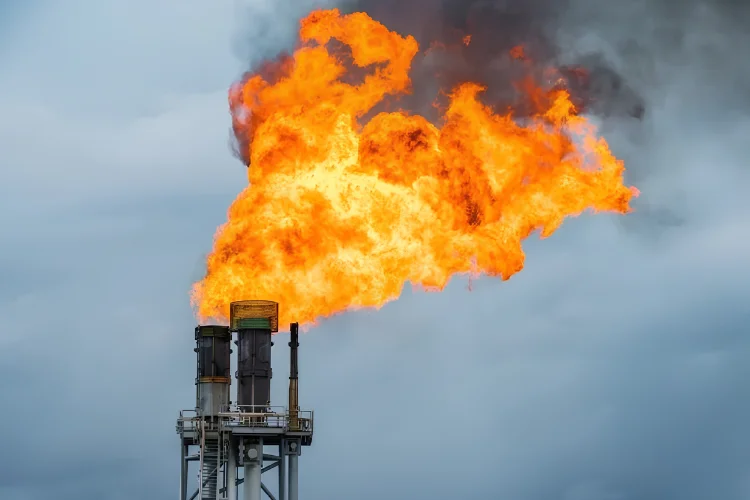
The Gabonese government has taken a significant step towards reducing the environmental impact of gas flaring by introducing a tax on the practice. The Council of Ministers, led by President Brice Clotaire Oligui Nguema, announced the new tax on October 8, 2026, which will apply to gas flared or released during exploration, development, production, and treatment of hydrocarbons in the country. This move is expected to encourage companies to adopt more environmentally friendly practices.
Gas flaring, the practice of burning off excess gas without harnessing its energy, has been a longstanding issue in Gabon. Despite a ban on the practice being introduced in 2010, it has continued to be a problem. The government had intended to implement a mechanism to valorize gas production, but it never came into effect. The new tax aims to put an end to this wasteful practice and encourage the recovery and valorization of gas, which can be used to improve the lives of Gabonese citizens.
The introduction of the tax is expected to have significant economic benefits for Gabon. Globally, an estimated 167 billion cubic meters of gas were flared in 2025, equivalent to the annual gas consumption of Africa. In countries such as Algeria, Nigeria, and Libya, the cumulative financial losses due to gas flaring have exceeded $8.5 billion. By reducing gas flaring, Gabon can increase its revenue and improve its public finances.
The government is keen to emphasize that the tax is part of its efforts to promote a transition to cleaner energy and reduce the country's environmental footprint. The valorization of gas can also contribute to the country's economic development and improve the standard of living of its citizens. The move has been welcomed by those who have been advocating for a more sustainable approach to hydrocarbon extraction in Gabon.
According to Guy-Romuald Mabicka, the tax was introduced on October 9, 2026, and companies operating in Gabon's sedimentary basin will be required to pay the tax. The government is confident that the tax will encourage companies to adopt more environmentally friendly practices and reduce the negative impact of gas flaring on the environment.
The issue of gas flaring has been a contentious one in Gabon, with many citizens calling for the government to take action to reduce the practice. The introduction of the tax is seen as a positive step towards addressing this issue and promoting sustainable development in the country. The government has also taken steps to address other pressing issues, such as fuel shortages, which have been affecting the country.
Overall, the introduction of the tax on gas flaring is a significant development in Gabon's efforts to reduce its environmental impact and promote sustainable development. The move is expected to have economic and environmental benefits, and it is hoped that it will encourage companies to adopt more responsible practices.
Key points
- The tax on gas flaring is expected to reduce the environmental impact of the practice and encourage companies to adopt more sustainable approaches.