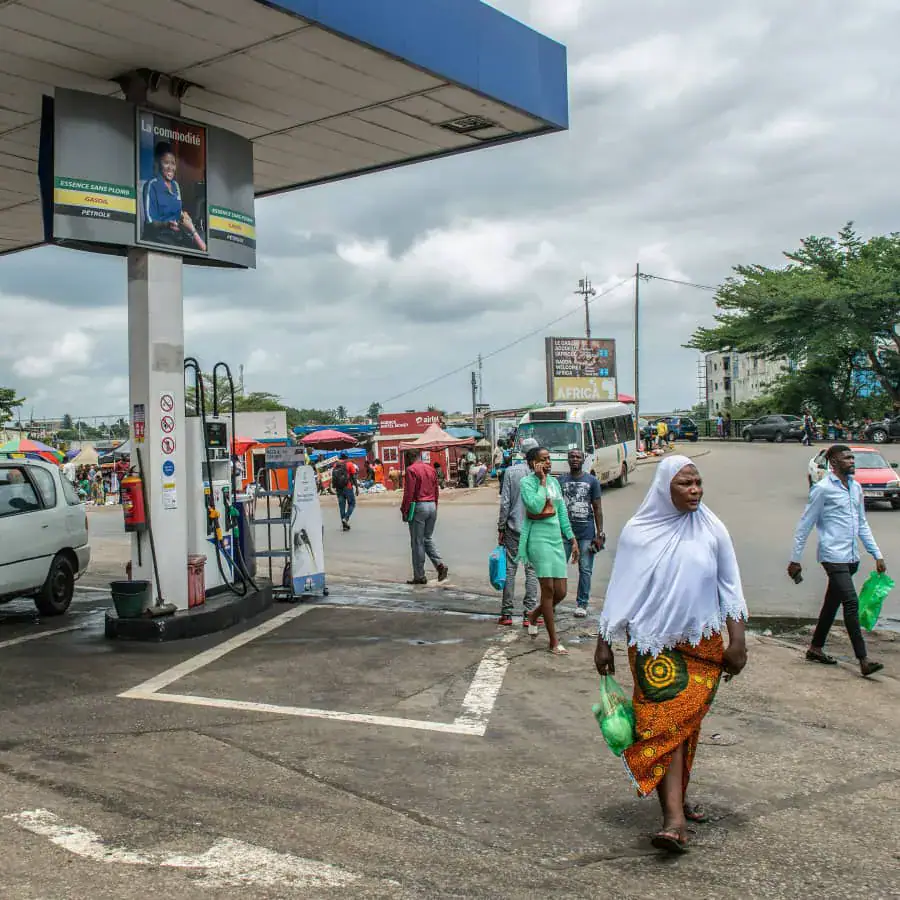
The Government of Gabon has increased fuel prices effective November 1, 2026. Petrol now costs 735 FCFA per liter, up 140 FCFA from the previous price of 595 FCFA. This represents a 23.5% increase. Diesel has also seen a rise, going up 130 FCFA to 705 FCFA per liter, a 22.6% increase. These changes were confirmed by sources close to the matter and reported by the Gabon Press Agency.
The price adjustments also affect industrial users. For them, the new tariffs are set at 1,060 FCFA per liter for petrol, 1,310 FCFA for diesel, and 930 FCFA for industrial fuel oil. However, not all fuel products see a price change. The government has decided to keep the prices of butane gas and kerosene unchanged as part of measures to protect household budgets. A 12.5 kg cylinder of butane gas remains at 4,950 FCFA, and kerosene stays at 450 FCFA per liter.
The decision to increase fuel prices comes amid growing pressure on public finances. This pressure is largely due to the cost of the fuel price stabilization mechanism. In September 2026 alone, this mechanism cost the public treasury 30 billion FCFA. This is significantly higher than the average of 7 to 9 billion FCFA seen before the Ukraine war. The increase in global fuel prices has strained the government's subsidy bill.
The government's move aligns with President Brice Clotaire Oligui Nguema's directives. He aims to gradually reduce the burden of fuel subsidies on the state budget while protecting essential products for households. By adjusting fuel prices, the government hopes to manage its subsidy expenditures more effectively. This approach is part of broader efforts to stabilize public finances and manage the economic impact of global price fluctuations.
The increase in fuel prices is expected to have various impacts on the economy and households. Higher fuel costs can lead to increased transportation and production costs, potentially affecting the prices of goods and services. However, the government's decision to keep certain fuel products' prices stable aims to cushion the impact on household budgets. The balance between managing public finances and protecting households remains a key challenge.
The Gabonese government faces the task of balancing economic stability with social considerations. Fuel subsidies have been a significant burden on the state's budget. By adjusting prices and selectively maintaining subsidies, the government seeks to achieve a sustainable fiscal policy. The implementation of these changes will be closely watched by both the public and economic analysts.
The recent changes in fuel prices reflect the ongoing adjustments in Gabon's economic policy. The government continues to navigate the complexities of global economic trends and their impact on domestic finances. As the situation evolves, further adjustments may be necessary to ensure economic stability and manage the welfare of the population.
Key points
- The government increased fuel prices to reduce the burden of subsidies on the state budget.
- Petrol and diesel prices have risen by 23.5% and 22.6%, respectively.
- The prices of butane gas and kerosene have been kept unchanged to protect household budgets.