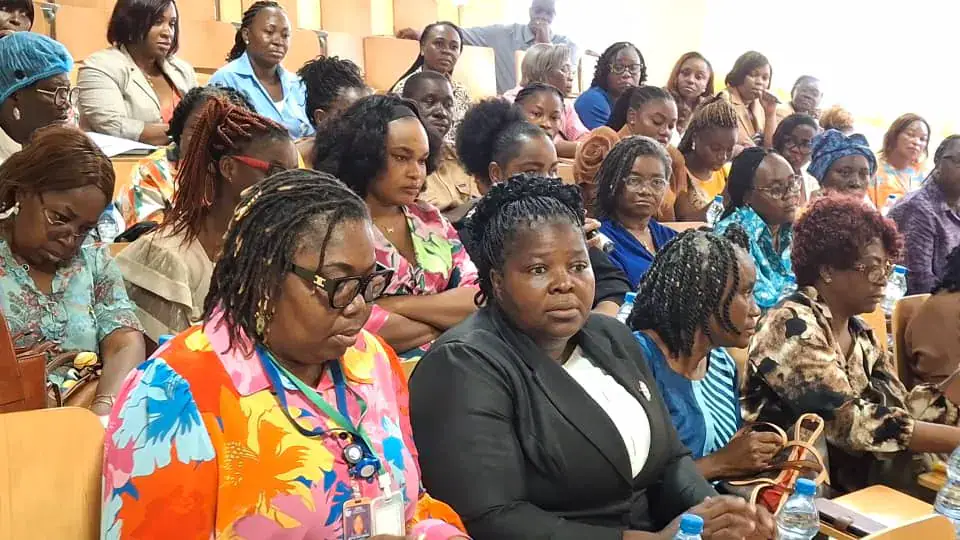
The Gabonese Society of Perinatology (SO-GA-PER) in partnership with the Health Ministry organized a training workshop at Libreville's University Hospital Center (CHUL) to improve premature newborn care practices. The workshop, held on November 16, 2026, precedes the National Premature Day and brought together midwives, majors, and pediatricians from various health facilities in Libreville and Oyem. The training aimed to harmonize practices and enhance the skills of healthcare professionals caring for vulnerable newborns.
The workshop focused on three essential practices to improve premature newborn survival rates: delayed umbilical cord clamping, skin-to-skin contact, and proper reception and installation techniques for premature infants. These practices have been recognized for their effectiveness in improving premature newborn outcomes. According to organizers, the training aims to standardize practices across health facilities and strengthen the competencies of healthcare professionals caring for premature newborns.
Dr. Steeve Micha Minto'o Rogombe, General Director of CHUL, emphasized the importance of mastering these medical procedures, citing that over 30 children are born prematurely in Gabon every day. He encouraged participants to not only learn but also transmit their knowledge, noting that a well-learned gesture today can benefit dozens of newborns tomorrow. The event also highlighted the significance of addressing premature birth as a major public health challenge.
The President of the Gabonese Society of Perinatology noted that premature birth remains a significant public health challenge due to its high prevalence and impact on infant mortality. She identified hypothermia, anemia, and inadequate newborn care as primary causes of death among premature infants. Addressing these issues is crucial to reducing neonatal mortality rates and improving the survival chances of premature newborns.
Dr. Ismaël Hervé Koumakpayi, General Director of Health Promotion, emphasized that improving medical practices is essential to reducing neonatal mortality and providing better survival chances for premature infants. The SO-GA-PER initiative aims to train participants as relays who can disseminate best practices among their colleagues, ultimately improving the quality of care provided to premature infants in Gabon's health facilities.
The workshop concluded with the restitution of recommendations and the awarding of certificates to participants. Through this initiative, SO-GA-PER seeks to make a lasting impact on premature newborn care in Gabon by enhancing the skills and knowledge of healthcare professionals. By standardizing practices and promoting best practices, the organization aims to contribute to a reduction in neonatal mortality rates.
The collaboration between SO-GA-PER and the Health Ministry demonstrates a commitment to addressing the challenges of premature birth in Gabon. By investing in the training of healthcare professionals and promoting best practices, the country can work towards reducing infant mortality rates and providing better health outcomes for premature newborns. The National Premature Day serves as a reminder of the importance of prioritizing premature newborn care.
Key points
- The workshop trained healthcare professionals on delayed umbilical cord clamping, skin-to-skin contact, and proper reception and installation techniques for premature infants.