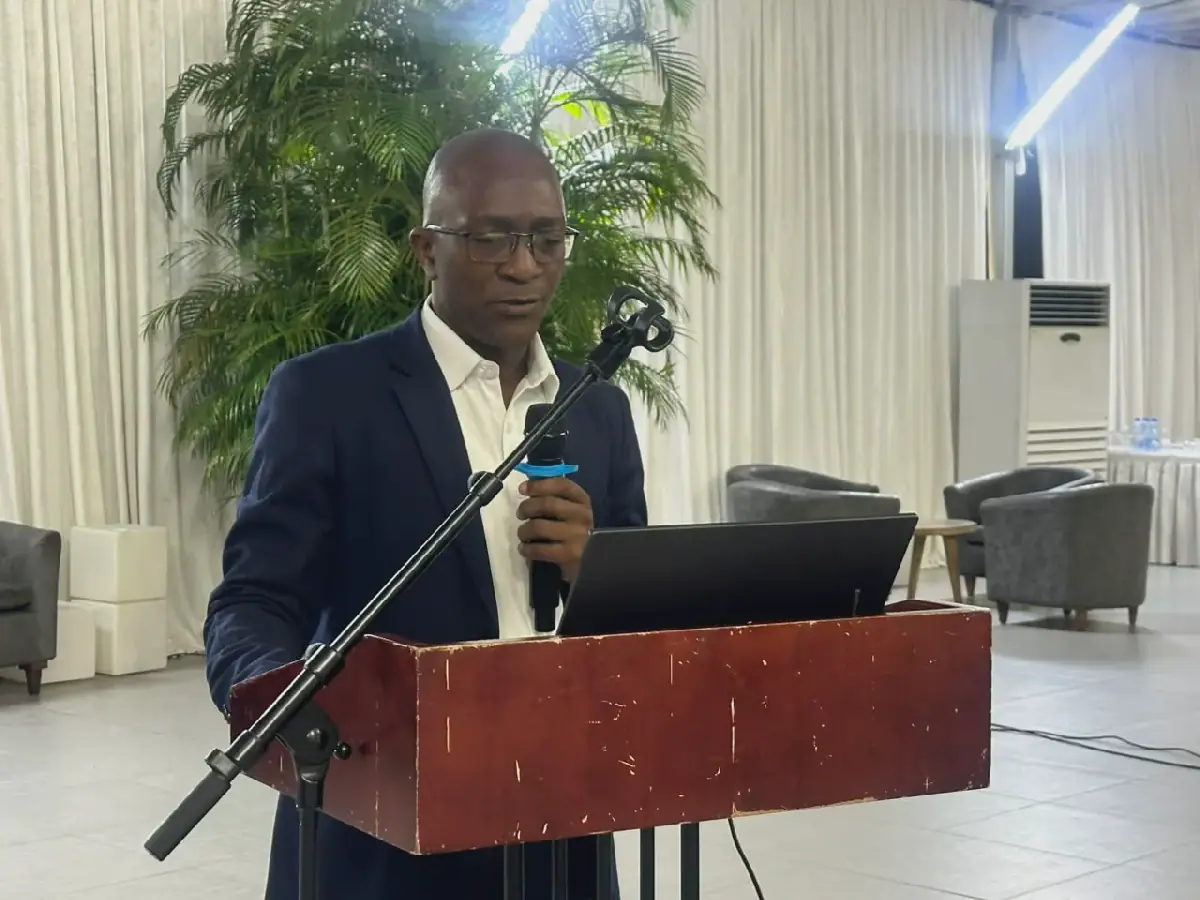
The Gabonese government recently hosted a national validation workshop in Libreville, focusing on a comparative analysis of REDD+ and MRV mechanisms. Expert Janvier Kevin Ndong from the National Climate Council presented on the mechanisms for reducing emissions from deforestation and forest degradation, as well as measuring, reporting, and verifying greenhouse gas emissions. The workshop aimed to enhance understanding of these mechanisms and their role in promoting sustainable forest management. Ndong highlighted the importance of robust data in demonstrating emission reductions and mobilizing international financing.
The REDD+ mechanism, under the UN Framework Convention on Climate Change, rewards developing countries for reducing emissions and enhancing forest carbon stocks. In Gabon, REDD+ covers five activities, including reducing emissions from deforestation and forest degradation, conserving carbon stocks, and promoting sustainable forest management. The country's REDD+ strategy aligns with its Nationally Determined Contributions and the Warsaw Framework for REDD+. Ndong emphasized that the RIL-C protocol, part of the REDD+ mechanism, measures emissions and documents gains from sustainable management through direct, reproducible, and verifiable measurements in forest concessions.
The MRV mechanism collects data through field inventories and remote sensing, enabling countries to estimate their greenhouse gas balance. This information is then verified through international technical evaluation and independent audits. In Gabon, the MRV system is integrated into the National Forest Monitoring System, which supports the country's climate commitments. Ndong noted that 62% of emission reductions from selective logging can be achieved through RIL-C practices. This approach is seen as a pathway to national certification criteria, incorporating progress from reduced-impact logging.
The workshop highlighted the significance of robust data in demonstrating emission reductions and mobilizing international financing for sustainable forest management. Gabon's efforts to implement REDD+ and MRV mechanisms align with its commitments under the Paris Agreement and the Central African Forest Initiative. The country's sustainable forest management practices aim to balance economic development with environmental conservation. Ndong's presentation emphasized the importance of integrating RIL-C into the national forest monitoring system to ensure accurate monitoring and reporting of greenhouse gas emissions.
The national validation workshop brought together officials and experts to discuss the analysis of REDD+ and MRV mechanisms. Participants reviewed the RIL-C protocol and its role in supporting Gabon's climate commitments. The workshop outcomes will inform the country's future efforts to implement sustainable forest management practices and reduce greenhouse gas emissions. Gabon's experience with REDD+ and MRV mechanisms can serve as a model for other countries in the region.
The emissions from selective logging in Gabon are primarily attributed to road construction, logging, and skidding. The country's REDD+ strategy aims to address these emission sources through sustainable forest management practices. By implementing RIL-C and MRV mechanisms, Gabon can demonstrate its commitment to reducing greenhouse gas emissions and promoting sustainable development. The country's efforts to combat climate change are critical, given its rich biodiversity and significant forest cover.
The national validation workshop concluded with a renewed commitment to implementing REDD+ and MRV mechanisms in Gabon. The country's experience with these mechanisms can inform regional and global efforts to promote sustainable forest management and reduce greenhouse gas emissions. As Ndong emphasized, robust data and verification are essential for demonstrating emission reductions and mobilizing international financing. Gabon's progress in this area will be closely watched by the international community.
Key points
- Gabon hosts national workshop to validate analysis of REDD+ and MRV mechanisms for sustainable forest management
- RIL-C protocol can help Gabon reduce emissions from selective logging by 62%
- REDD+ and MRV mechanisms align with Gabon's climate commitments and international agreements