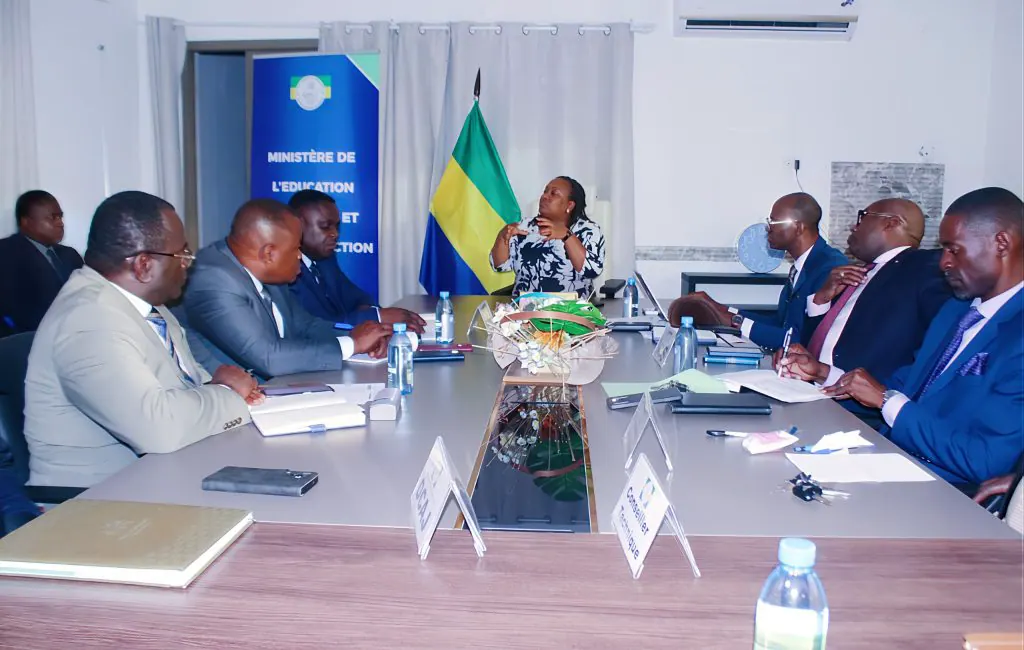
The Gabonese government has initiated a process to enhance education access for indigenous peoples, with a meeting led by Minister of State for National Education, Camélia Ntoutoume Leclercq. The gathering brought together representatives from the Gabonese Association for Assistance to Indigenous Women (AGAFI) and provincial academy directors via videoconference. Discussions centered on integrating indigenous children into the education system, opening specialized classes, and establishing base schools within Baka communities.
The goal is to bring educational opportunities closer to indigenous families. The meeting marks a significant step towards inclusive education, addressing the unique challenges faced by indigenous communities. By creating schools and classes tailored to their needs, the government aims to increase enrollment and retention rates among indigenous children. This initiative also seeks to provide equal opportunities for indigenous students to access quality education.
Jeanne Marthe Minkoue-Mi-Ella, president of AGAFI, welcomed the government's attention to indigenous education, emphasizing the crucial link between educational inclusion and access to legal identity. She noted that without birth certificates and other essential documents, indigenous children face significant barriers to education. Minkoue-Mi-Ella stressed that establishing legal identity is essential for accessing education and other vital services.
Minkoue-Mi-Ella also highlighted the challenges faced by young indigenous graduates, who often struggle to pursue further education, access complementary training, or enter the workforce. She called for revisiting and integrating the contributions of indigenous organizations from the 2010 General Education Conference into current discussions on educational inclusion. This would help address the specific needs and concerns of indigenous communities.
The meeting has paved the way for a more comprehensive approach to indigenous education, encompassing access to school, legal identity, and professional integration. This initiative aligns with the government's commitment to inclusive education, aiming to reduce inequalities and ensure that no child is left behind. By engaging with indigenous organizations and communities, the government can develop targeted solutions to address their unique challenges.
The government's efforts focus on creating a more equitable education system, acknowledging the distinct realities of indigenous communities. By providing specialized educational programs and support, the government hopes to improve educational outcomes and socio-economic prospects for indigenous peoples. This initiative has the potential to positively impact the lives of thousands of indigenous children and young adults in Gabon.
The next steps will involve implementing the agreed-upon measures, monitoring progress, and making adjustments as needed. The government will work closely with indigenous organizations, educators, and community leaders to ensure the success of this initiative. Key outcomes will include increased access to education, improved academic performance, and enhanced socio-economic opportunities for indigenous communities.
Key points
- The Gabonese government has launched an initiative to improve education access for indigenous peoples, focusing on inclusion, specialized educational programs, and reducing inequalities.