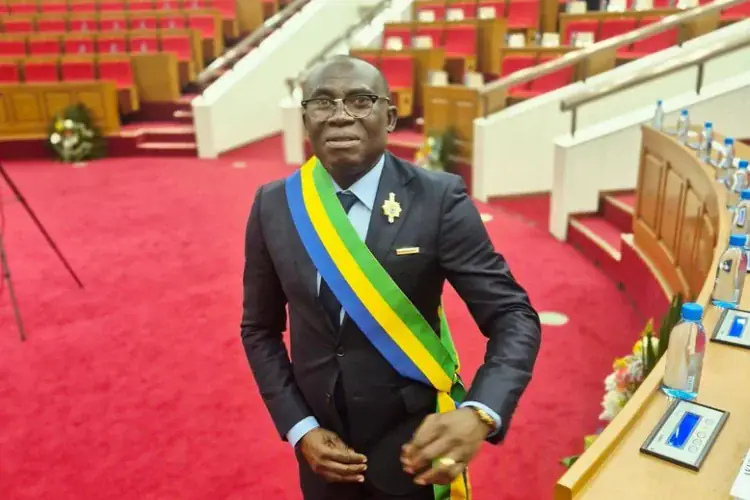
The Gabonese football landscape is facing intense scrutiny as the country prepares for the presidential election of the Gabonese Football Federation (Fégafoot) on December 19. Recently, Deputy Donatien Afatoughe Bié sparked controversy when he questioned the use of funds allocated to the sport. During a session at the National Assembly, Afatoughe Bié expressed concerns over the alleged misappropriation of funds provided by FIFA and CAF for development programs.
Afatoughe Bié's comments have resonated with many who have long been skeptical about the management of football finances in Gabon. The deputy claimed that funds were being used for propaganda and personal gain rather than for the development of the sport. He cited examples of tournaments being organized in various regions, such as Lambaréné, Mouila, Oyem, and Tchibanga, for women's football, allegedly to demonstrate activity to FIFA and CAF. However, he argued that these efforts were superficial and did not contribute meaningfully to the sport's growth.
The deputy also highlighted the poor performance of Gabon's youth teams in international competitions, citing heavy losses, including a 9-1 defeat. These revelations align with the findings of a task force established to examine the state of football in Gabon, which recently submitted 108 proposals to the Minister of Sports, Paul Ulrich Kessany. The task force's report likely underscores the need for reforms within the country's football governance structure.
Afatoughe Bié's intervention has been seen as a courageous move, as it shifts the focus from individuals to the accountability and effectiveness of the development model. He proposed a new approach that empowers grassroots actors, citing the work of individuals like Parfait Ndong, Thierry Ebobola, and Désiré Backita, who have been working tirelessly to develop football in Gabon despite limited resources.
The proposal has garnered support from many who see it as a recognition of the vital role played by private centers in supplementing the federal authorities' efforts. By engaging with these actors, the government may be able to create a more sustainable and effective model for football development in Gabon. This approach could also help address some of the systemic issues that have contributed to the sport's stagnation.
As the election for the Fégafoot presidency approaches, the debate over football governance is likely to intensify. With Afatoughe Bié's comments sparking a national conversation, stakeholders will be watching closely to see how the government and football authorities respond to the allegations and proposed solutions. The outcome may have significant implications for the future of football in Gabon.
The scrutiny of football governance in Gabon comes at a critical time, with many hoping that the forthcoming election will usher in a new era of transparency and accountability. As the country looks to revitalize its football sector, the emphasis on grassroots development and effective use of resources will be crucial in ensuring a sustainable and successful future for the sport.
Key points
- Deputy Afatoughe Bié alleges misappropriation of FIFA and CAF funds in Gabonese football.