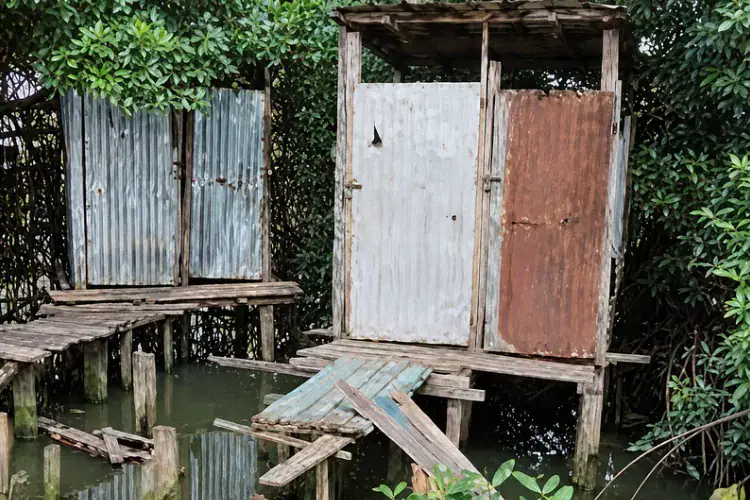
The Gabonese government has begun dismantling illegal villages constructed along the Libreville coastline, prompting backlash from affected communities. The villages, home to mostly Beninese, Nigerian, and other West African nationals, were built without permits, authorization, or urban planning. Authorities say the demolition is necessary to protect the environment, ensure public safety, and assert state sovereignty. The mangrove ecosystem, a natural barrier against flooding, fish nursery, and carbon sink, has been severely degraded by the unauthorized construction.
The destruction of the villages has sparked heated debate, with some accusing the government of targeting foreigners. However, authorities insist that the action is not a witch hunt, but rather a necessary measure to enforce the law. The government claims that the villages have become hubs for illicit activities, including drug trafficking, human smuggling, and the circulation of counterfeit medicine. Several police operations have resulted in seizures and arrests, highlighting the need for greater control and regulation in the area.
The mangrove ecosystem plays a vital role in maintaining the environmental balance of the region. Its destruction not only exacerbates flooding in nearby neighborhoods but also threatens the livelihoods of local residents. The government argues that it is responsible for protecting the environment and ensuring public safety, and that the demolition of the villages is a necessary step towards achieving these goals.
The affected communities are contesting the demolition, demanding protection, compensation, and relocation. However, authorities argue that the residents have no legitimate claim to the land, having built their homes and businesses without permission. The government maintains that it is not a "no man's land" and that all individuals, regardless of nationality, must respect the country's laws and regulations.
The Gabonese government asserts that it is not singling out foreigners, but rather enforcing the law equally across the board. According to authorities, Gabonese nationals who build illegally also face demolition of their properties. The government emphasizes that respecting the country's laws is not optional, but a requirement for all individuals who wish to reside and conduct business in Gabon.
The demolition of the villages has sparked a wider conversation about the balance between economic development, environmental protection, and human rights. While some argue that the government's actions are necessary to protect the environment and maintain law and order, others contend that the authorities should have provided alternative solutions for the affected communities.
The controversy surrounding the demolition of the villages highlights the complexities of addressing issues related to migration, environmental degradation, and economic development in the region. As the government continues to enforce its laws and regulations, it remains to be seen how the affected communities will be supported and what measures will be taken to prevent similar situations in the future.
Key points
- The Gabonese government has begun dismantling illegal villages constructed along the Libreville coastline.
- The demolition is necessary to protect the environment, ensure public safety, and assert state sovereignty.
- The affected communities are contesting the demolition, demanding protection, compensation, and relocation.