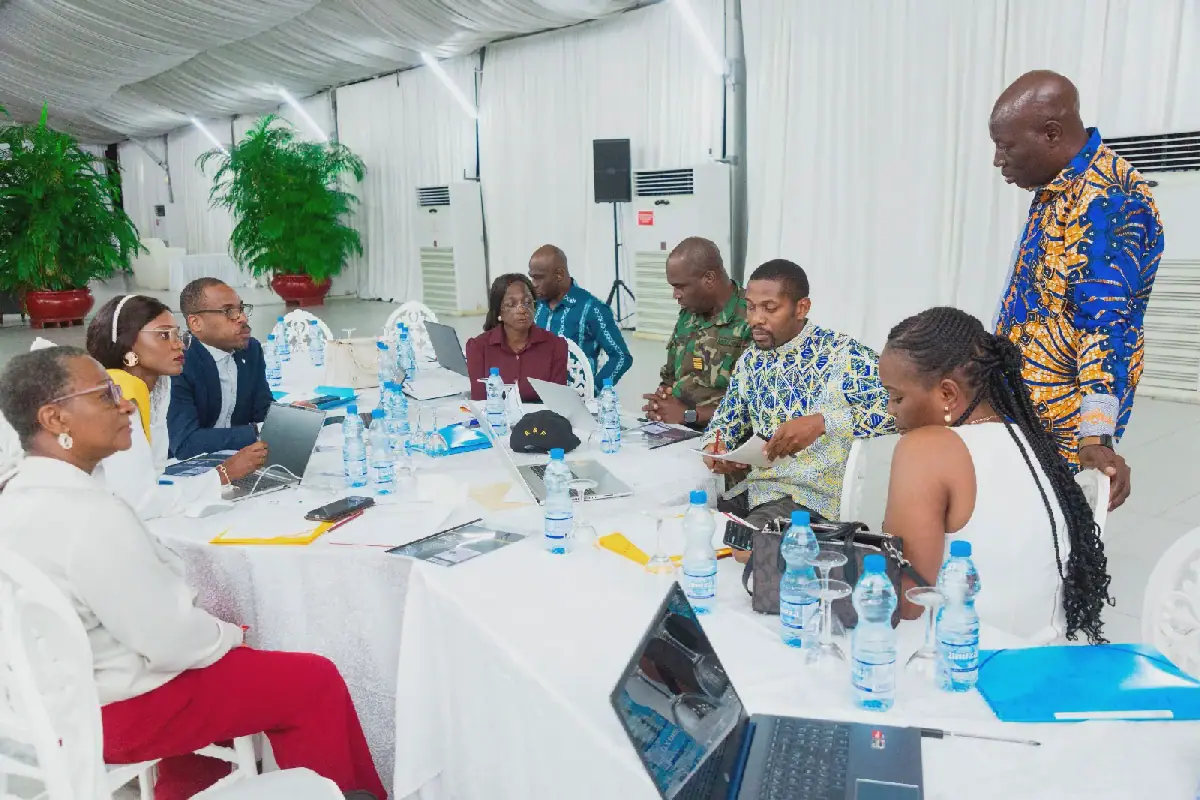
The national validation workshop for the RIL-C protocol in Gabon has concluded with 16 recommendations, including six revisions. The two-day workshop aimed to gain acceptance of the protocol from all stakeholders in Gabon's forest ecosystem. Participants acknowledged the RIL-C protocol as a national reference tool for measuring and monitoring carbon emissions from forestry activities. They praised improvements to the revised protocol, including standardized data collection methods and enhanced quality control procedures.
The workshop featured presentations, plenary discussions, and group work divided into three themes: field measurement and forest infrastructure, biomass, carbon, and analysis, and MRV, certification, and management. Participants emphasized the importance of having national emission factors based on measured data adapted to Gabon's ecological realities. They also stressed the need to ensure data quality, traceability, transparency, and archiving within the protocol framework.
Experts highlighted areas for improvement in the final protocol version, including enhancing sampling device representativeness and reference sites, harmonizing mapping methods and coding systems, and developing secure digital tools for data collection and management. They also recommended strengthening the use of remote sensing, drones, and geospatial technologies, as well as formalizing quality control and assurance mechanisms.
The workshop led to specific recommendations, such as determining the sampling unit size with operators, installing nested plots, and replacing certain terms. For areas without vegetation, participants suggested a 100-meter long plot jump and digitizing collection sheets with a simple and secure application. They also proposed collecting samples for the herbarium by collaborating with the National Herbarium and mobilizing available IRET data.
Additional recommendations included adding certification mentions for certified companies and integrating stakeholder amendments. The revised protocol aims to provide a robust framework for measuring and monitoring carbon emissions from forestry activities in Gabon. The country's forest ecosystem plays a vital role in regulating the global climate, and the adoption of the RIL-C protocol is expected to enhance sustainable forest management practices.
The national validation workshop brought together various stakeholders, including experts from The Nature Conservancy (TNC), represented by Saint Clair Ebaye Mpiga. The workshop's outcomes are expected to inform the finalization of the RIL-C protocol, which will be crucial for Gabon's forest sector. The protocol's implementation is anticipated to improve the country's capacity to monitor and report on carbon emissions from forestry activities.
The Gabonese government, through the Ministry of Environment, is expected to consider the recommendations and finalize the RIL-C protocol. The protocol's adoption is seen as a significant step towards enhancing sustainable forest management and reducing carbon emissions in Gabon. The country's commitment to environmental conservation and sustainable development is reflected in its efforts to implement the RIL-C protocol and promote eco-friendly practices in the forest sector.
Key points
- The national validation workshop for the RIL-C protocol in Gabon resulted in 16 recommendations to improve the country's forest ecosystem and carbon emissions monitoring.