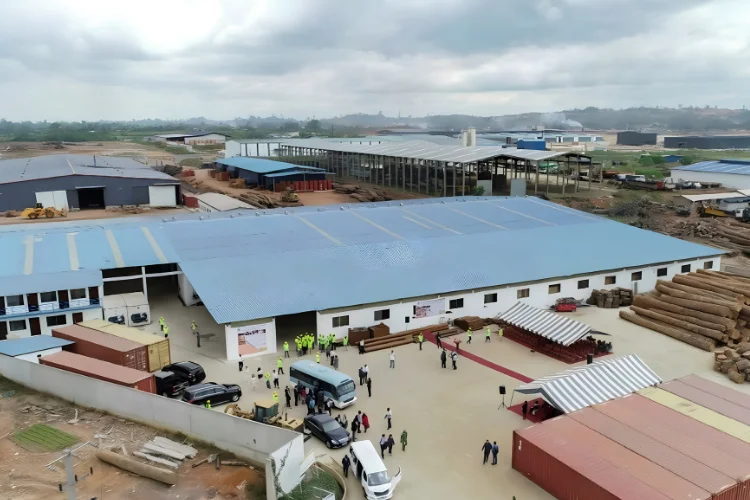
More than 40 companies operating in Gabon's Nkok Special Investment Zone (ZIS) have written to the Minister of Economy seeking clarification on a September 8 communiqué that suspended certain tax and customs exemptions and launched an audit of counterparties. The companies, which signed the note, expressed understanding for the need for transparency but also conveyed "real concern" over the lack of specificity regarding which enterprises or agreements are affected.
The communiqué in question distinguishes between advantages granted by convention or administrative decision and those provided directly by law. However, the companies claim to have invested based on the legal framework established by the law of July 18, 2011, as modified for ZIS, and are now uncertain about the status of exemptions provided under this law. They are worried that the current situation may impact their economic model.
The business community is already facing significant challenges, including increased fiscal and administrative pressure, rising production, transportation, and supply costs, and decreased demand for wood products. These difficulties have led to about 20 companies ceasing operations over the past three years. The signatories of the note are seeking official confirmation that the advantages provided by law are not targeted and that the audit does not concern them.
The context of this development is particularly sensitive, with many enterprises struggling to stay afloat. In a bid to boost the national economy, there have been calls for Gabon to focus on its small and medium-sized enterprises (SMEs) to increase domestic production. An economist recently emphasized the need for Gabon to prioritize production as a driver of national prosperity.
According to a report by the African Development Bank (BAD), 80% of informal enterprises in Gabon are owned by foreigners. This highlights the complexities of the country's economic landscape and the need for policies that support local businesses. The report also underscores the importance of mobilizing large-scale resources for Gabon's development.
The United Nations has committed $10.5 billion to Gabon in 2025, demonstrating the international community's confidence in the country's potential for growth. However, the current uncertainty surrounding tax exemptions may affect investor confidence and hinder the country's economic progress.
The Gabonese government has several key projects in the pipeline, including the development of the Belinga iron ore project, which is a priority for President Brice Clotaire Oligui Nguema. The project's success is crucial for the country's economic growth and development.
Key points
- Over 40 companies in Gabon's Nkok Special Investment Zone request clarification on recent suspension of tax exemptions.
- The suspension of tax exemptions has raised concerns among businesses about the impact on their economic model.
- The Gabonese government has launched an audit of counterparties as part of its efforts to increase transparency.