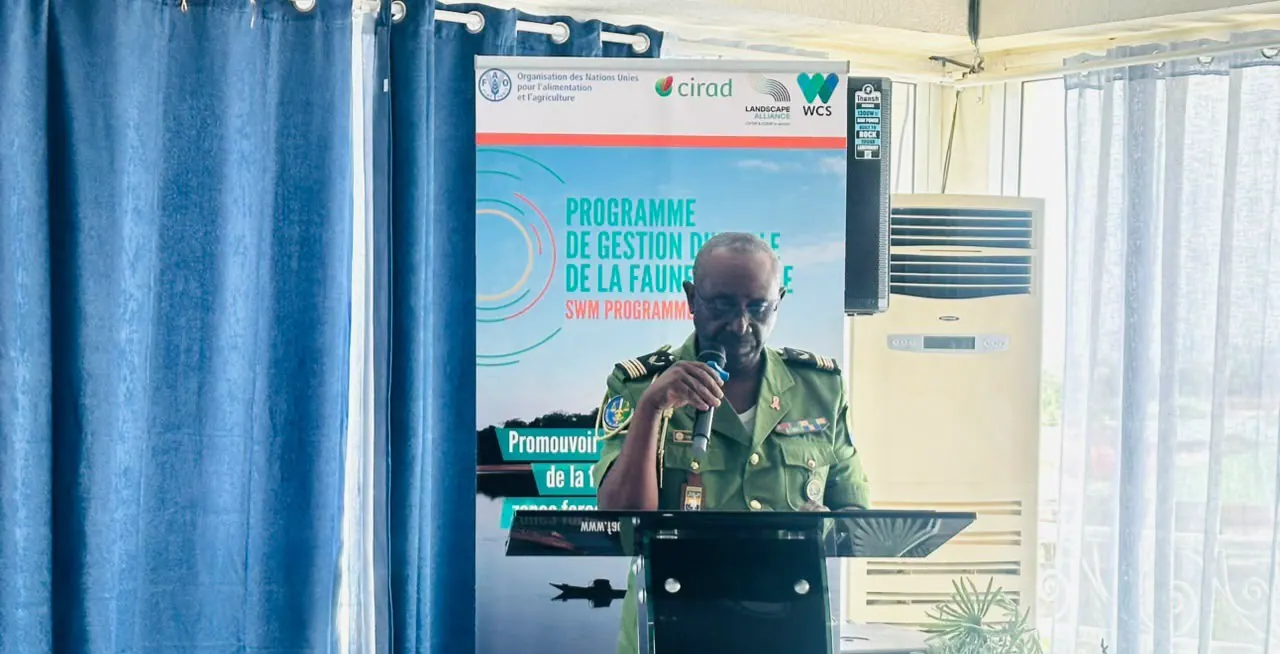
The Gabonese government recently hosted a sub-regional workshop in Libreville, concluding on October 9, 2026, which brought together experts from Central African countries, including Cameroon, Congo, and the Democratic Republic of Congo. The workshop aimed to develop a regional training program for sustainable wildlife management. The participants emphasized the need for strengthened collaboration among states, training institutions, and technical and financial partners to ensure the program's success.
Dr. Athman Mravili, representing the Food and Agriculture Organization (FAO) in Gabon, stressed the importance of collective mobilization around the adopted roadmap. He assured that the FAO is committed to supporting the realization of this roadmap and encouraged each actor to take full responsibility for its implementation. The FAO's engagement is crucial in driving the program forward.
The workshop resulted in the development of a common framework for harmonizing sustainable wildlife management practices in the sub-region. The framework consists of four modules focusing on species ecology, sustainable community hunting, social safeguards, and wildlife governance. This framework is expected to promote a shared technical language among administrations, forest operators, and local communities.
Delphin Mapaga, Secretary General of the Ministry of Water, Forests, and Environment, highlighted that the five-day workshop enabled experts to build a common reference for sustainable wildlife management. He emphasized that the traditional approach to conservation is evolving, and the involvement of local communities is essential for the success of conservation policies. The communities' participation is vital in managing wildlife sustainably.
The participants agreed that the success of this initiative relies on the concerted involvement of governments, training centers, community organizations, and development partners. The goal is to strengthen the capacities of field actors while promoting more inclusive and effective management of wildlife resources. This collaborative approach is expected to yield positive outcomes for sustainable wildlife management.
The developed framework will be integrated into the curriculum of the National School of Water and Forests (ENEF) in Cap Estérias and gradually deployed in the concerned countries. The follow-up of the roadmap will be ensured by the states, with the support of the Commission of Central African Forests (COMIFAC) and technical partners engaged in the SWM program.
The initiative aligns with the orientations of Gabon's National Growth and Development Plan (PNCD) 2026-2030. The plan aims to promote sustainable development and conservation of natural resources. The collaboration among stakeholders is crucial in achieving these objectives and ensuring the long-term sustainability of wildlife management in the region.
Key points
- The workshop resulted in a common framework for sustainable wildlife management in Central Africa.
- The FAO is committed to supporting the realization of the roadmap for sustainable wildlife management.
- The involvement of local communities is essential for the success of conservation policies.