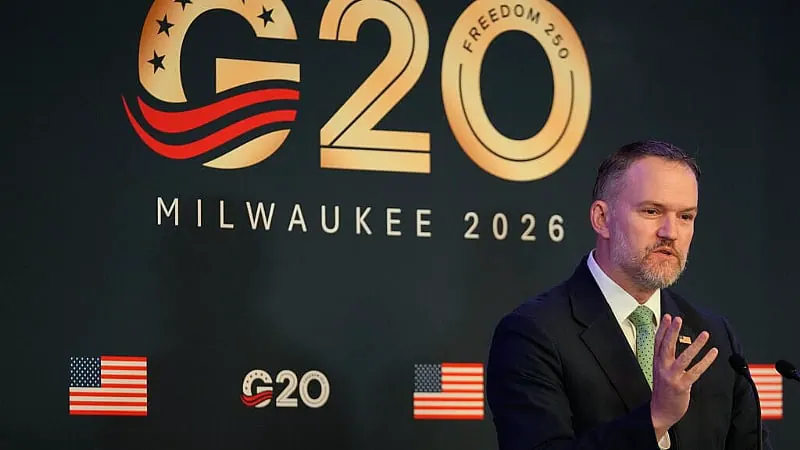
G20 trade ministers have reached a deadlock on countering excess industrial capacity, a pressing issue that has been a point of contention among major economies. According to US Trade Representative Jamieson Greer, the impasse is driven by concerns over unfair pricing and inadequate trade remedies. The issue is often attributed to China, which has rejected criticism of its industrial practices. The G20 meeting, held in Milwaukee, has brought together trade ministers from major economies to discuss pressing trade issues.
The G20 trade ministers' failure to reach an agreement on overcapacity and forced labor in supply chains has significant implications for global trade. Greer noted that nearly all countries agree that excess capacity requires action, but there is no consensus on how to address the issue. The US has launched investigations into 16 economies on overcapacity, targeting China, the European Union, Japan, India, and others. Greer's comments suggest that countries that overproduce risk creating an economy that is unsustainable in the long term.
The G20 meeting has also seen discussions on other pressing trade issues, including the weaponization of food through coercive trade actions. Trade ministers have found consensus against this practice, which has been criticized by European officials. The issue has taken on greater urgency given Russia's attacks on Ukraine's grain exports, which have impacted global food supplies. European officials, including France's minister delegate for international trade, Nicolas Forissier, have criticized Russia's actions as unacceptable.
Despite the impasse on key issues, trade ministers have made progress on other fronts. Canada, for example, is seeking bilateral trade deals with India, Turkey, Saudi Arabia, and the European Union on digital trade. Ottawa's minister for international trade, Maninder Sidhu, has expressed optimism about concluding negotiations with India in the coming months. Sidhu has also met with Greer to discuss further Canada-US cooperation.
The G20 meeting has also seen discussions on widening trade ties beyond the US. Mexico, for example, is making steady progress towards a US tariff deal, which could lead to reductions in steel, cars, and aluminum tariffs. A Mexican official has noted that the country is not looking to rush negotiations, which could potentially be impacted by the upcoming US midterm elections.
The US holds the G20's rotating presidency this year and has been actively engaged in discussions on key trade issues. Greer has warned that countries that fail to address excess capacity risk creating an economy that is unsustainable in the long term. The US has also been critical of Russia's actions on food exports, which have been seen as a form of coercion.
The G20 trade ministers' meeting will continue to focus on finding solutions to pressing trade issues, including excess capacity and forced labor in supply chains. While progress has been made on some fronts, the impasse on key issues is likely to continue to be a point of contention among major economies.
Key points
- G20 trade ministers fail to agree on addressing excess industrial capacity and eliminating forced labor in supply chains.
- The US has launched investigations into 16 economies on overcapacity, targeting China, the European Union, Japan, India, and others.
- Trade ministers have found consensus against the weaponization of food through coercive trade actions.