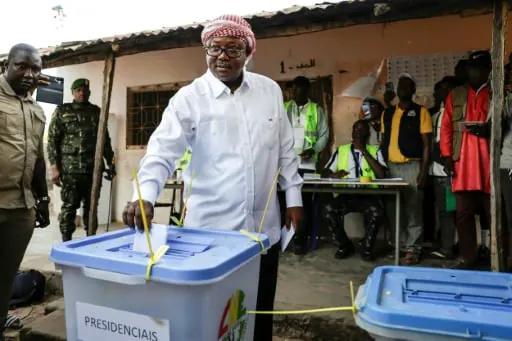
Former Guinea-Bissau President Umaro Sissoco Embalo, ousted in a November coup, has announced plans to return to the country and run for president in the upcoming election on December 6. Embalo's statement was made in an interview with AFP, where he confirmed his intention to participate in the presidential election. The coup that ousted Embalo occurred just days after a presidential vote, with the army seizing power and suspending the electoral process.
The junta that took power, led by General Horta N'Tam, a close associate of Embalo, has set December 6 as the date for presidential and legislative elections to restore civilian rule. Despite this, many observers have suspected Embalo of orchestrating the November 26 coup to halt an election process he appeared to be losing. The coup occurred one day before provisional results were to be announced, sparking concerns about the country's stability.
Activists have posted on social media that they are planning for Embalo's return on Sunday, with many calling for his comeback. According to political analyst Malam Cisse, "Legally, nothing stands in the way of Umaro Sissoco Embalo's return to Guinea-Bissau. He was ousted from power by a coup d'etat," adding that Embalo did not sign any document renouncing power. This has raised questions about the legitimacy of the coup and Embalo's potential return.
History professor Bassirou Sadio believes that once the legal conditions are met, everyone should be able to participate in the political contest while respecting established rules. The country's transitional charter bars N'Tam, who also serves as transitional president, from running for president in the election. This has led to speculation about the potential candidates and the outcome of the election.
The military justified its coup by stating it was ensuring national order following the discovery of a plot to destabilise the country involving drug lords. However, the political climate remains tense in the coup-prone nation, with the opposition urging voters to boycott the process. Guinea-Bissau has a history of instability, with five coups and several attempted overthrows since its independence from Portugal in 1974.
In August, voters in Guinea-Bissau approved a referendum on a constitutional change that gives the president more powers. The junta said the change will stabilise institutions before the elections in December. However, this move has been seen as part of a broader trend in Africa, where leaders are seeking to amend or overhaul their constitutions to extend term limits, remove age restrictions, or expand executive powers.
The upcoming election in Guinea-Bissau will be a crucial test for the country's stability and democratic progress. With Embalo's return and candidacy, the election is expected to be highly contested. The country's crippling poverty and political chaos have also made it a fertile ground for corruption and drug smuggling, adding to the challenges facing the country.
Key points
- - Ousted President Umaro Sissoco Embalo plans to return to Guinea-Bissau and run for president in December's election. - The country's transitional charter bars General Horta N'Tam from running for president in the election. - The military coup that ousted Embalo was justified as ensuring national order following a plot to destabilise the country involving drug lords.