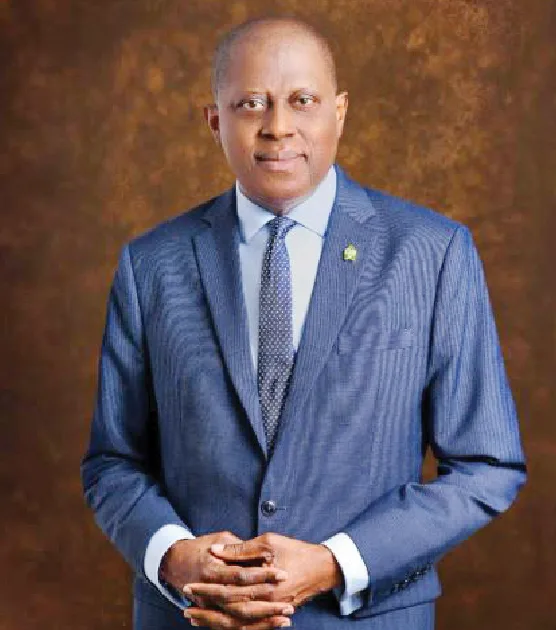
Nigeria's foreign reserves have increased by over $21 billion since Olayemi Cardoso became Governor of the Central Bank of Nigeria. The reserves stood at $54.61 billion as of September 14, 2026, representing a 30.5 percent increase from $41.84 billion a year earlier. This significant growth has provided the country with a much bigger dollar buffer than it had when Cardoso took office.
The increase in reserves is attributed to a combination of factors, including a broader FX-market overhaul, stronger foreign-currency inflows, and tighter monetary policy. The Central Bank of Nigeria has changed how Nigeria's foreign-exchange market operates, cleared a large backlog of unpaid foreign-exchange obligations, and introduced measures aimed at bringing more dollar transactions into the formal financial system.
However, the rise in reserves cannot be solely credited to the CBN's reforms. Several factors determine how much foreign currency Nigeria has, including earnings from crude oil, oil production, non-oil exports, money sent home by Nigerians abroad, foreign investments, external borrowing, and government transactions. The $54.61 billion in reserves should not be seen simply as money generated by the apex bank's reforms.
Cardoso assumed duty as CBN governor in an acting capacity on September 22, 2023, after President Bola Tinubu appointed him on September 15, pending Senate confirmation. At the end of September 2023, the CBN's Economic Report put Nigeria's external reserves at $32.79 billion, enough to cover about 6.3 months of the country's imports of goods and services.
The improvement in net reserves has also been significant, rising to $34.8 billion at the end of 2025, from $3.99 billion at the end of 2023, according to Cardoso. The International Monetary Fund has broadly supported Nigeria's CBN reforms, including tighter monetary policy, a more flexible and unified foreign-exchange market, and stronger CBN governance.
The World Bank has also welcomed the direction of the reforms, particularly the move towards a unified, market-reflective exchange rate and a monetary-policy framework focused on price stability. The lender notes that the reforms are beginning to improve Nigeria's fiscal position, reserves, and economic resilience but warns that they have caused significant short-term pressure through high inflation and increased living costs.
Economist and public affairs analyst Aliyu Ilias said the reforms had created frameworks aimed at addressing some of the country's long-standing macroeconomic and monetary challenges. He commended Cardoso for carrying out a lot of reforms and developing frameworks to help, but also noted that the country should focus on other areas that need immediate funding.
Key points
- Nigeria's foreign reserves have increased to $54.61 billion, driven by FX reforms and oil inflows.
- The Central Bank of Nigeria's reforms have improved macroeconomic stability and rebuilt foreign reserves.
- The International Monetary Fund and World Bank have supported the CBN's reforms, citing improvements in Nigeria's fiscal position and economic resilience.