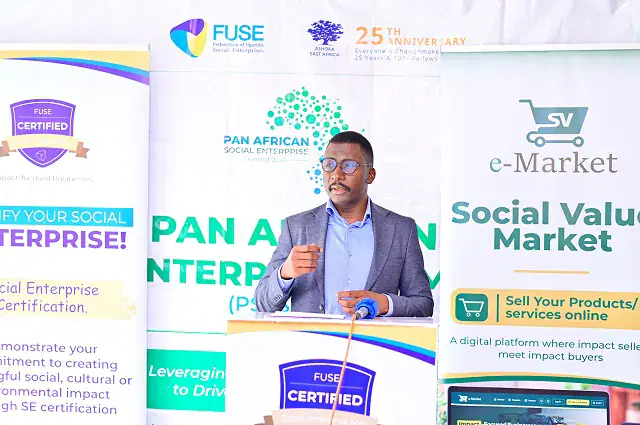
The Federation of Uganda Social Enterprises (FUSE) has launched a groundbreaking certification system aimed at distinguishing genuine social enterprises from conventional businesses in Uganda. On October 29, Timothy Mugerwa, president of FUSE, announced the initiative at a briefing with reporters at Kampala Club. This system is designed to evaluate social enterprises based on their value, setting national standards for businesses that combine commercial activities with social and environmental impact.
Under the new certification system, organisations will be assessed against benchmarks that include operational transparency, governance structures that reflect their social purpose, and reinvestment in community or environmental initiatives. FUSE is working with internationally certified experts to undertake these evaluations, ensuring a rigorous and credible process. This framework is expected to help social enterprises demonstrate their contribution to communities and the environment.
The certification process is designed to accommodate different business models, legal structures, and stages of growth, with oversight from an expert advisory group. FUSE drew on international standards while taking into account Uganda's unique social enterprise sector. The rollout follows a national certification and verification survey that established a baseline for the sector, allowing for a tailored approach to the local context.
Certified enterprises will be eligible to sell their products and services through the Social Value Marketplace, a digital platform designed to connect businesses with social impact buyers. This platform is expected to improve the prospects of social enterprises accessing markets, investment, and business partnerships. By providing a formal recognition of their social and environmental contributions, FUSE aims to enhance the visibility and viability of these businesses.
Uganda has a thriving social enterprise sector, with several businesses and initiatives operating around social and environmental objectives. Examples include Village Energy, Ecobricks in Masaka, Mob-Clinic, Ewaffe Cultural Village, and Endiro Coffee. FUSE, which has about 2,500 members across the country, is engaging with the Ministry of Trade, Industry, and Cooperatives to develop a policy framework for the sector.
The certification initiative comes as social enterprises seek greater recognition for business models that generate revenue while addressing challenges such as access to energy, healthcare, waste management, and community development. By establishing a national standard for social enterprises, FUSE hopes to promote the growth and impact of these businesses, ultimately contributing to Uganda's social and economic development.
Social enterprises, cooperatives, and other eligible organisations can now apply for evaluation through the FUSE certification portal. With this launch, FUSE solidifies its role as a key player in Uganda's social enterprise sector, providing a valuable service to businesses that prioritize social and environmental impact alongside profit. The certification system is poised to have a lasting impact on the sector, promoting accountability, transparency, and effectiveness.
Key points
- FUSE launches Uganda's first domestic Social Enterprise Certification and Verification System.
- The certification system evaluates social enterprises based on operational transparency, governance, and reinvestment in community or environmental initiatives.
- Certified enterprises will be eligible to sell their products and services through the Social Value Marketplace.