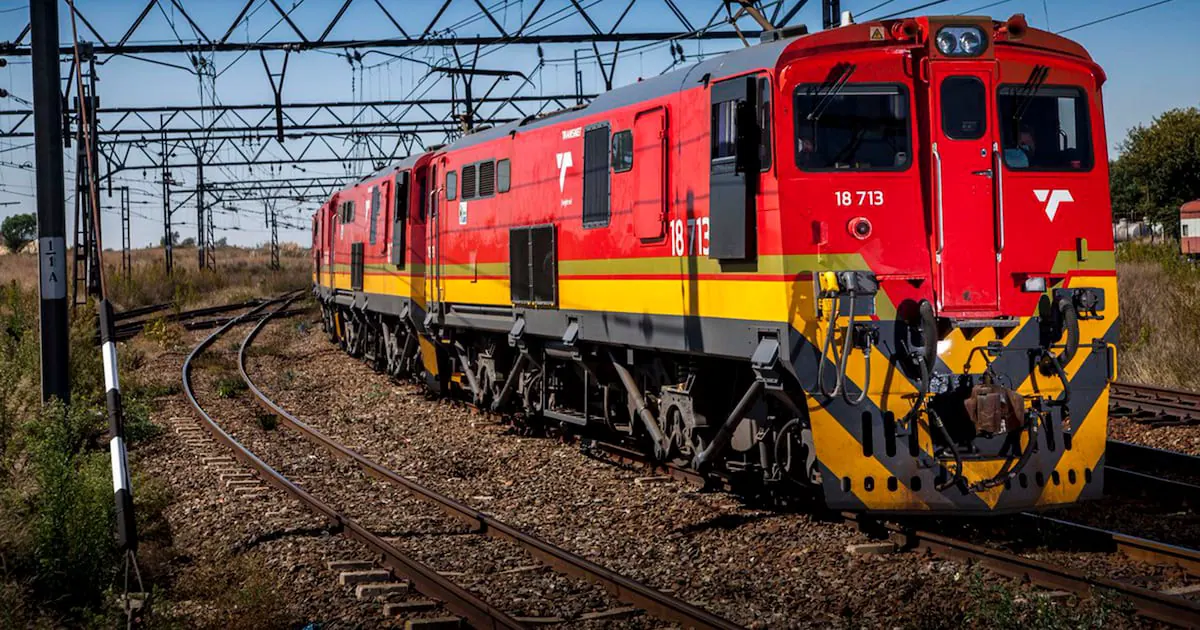
South Africa's logistics network is showing signs of progress, with structural reforms underway to rehabilitate the country's rail network. However, concerns have been raised that funding delays may slow or derail this progress. Transnet, the state-owned logistics company, has made significant strides, swinging to a profit of R4.6 billion for the year ended March 2026.
Transnet has unveiled the fourth edition of its rail network statement, a document that provides clarity on its rail reform agenda. The statement, published by the Transnet Rail Infrastructure Manager (Trim), outlines the path forward for rehabilitating the rail corridors on Transnet's network that have deteriorated over the years. This rehabilitation is crucial for increasing volumes moved on the corridors and meeting the government's target of handling 250 million tonnes of freight by the end of the 2030 financial year.
The government's target is ambitious, representing a significant increase from the 160.1 million tonnes handled in 2024/25. To achieve this, Trim is working to rehabilitate the rail corridors, but the effort comes with a multi-billion rand price tag. The cost of delayed funding could undermine Trim's efforts, with the company warning that delayed or lower fund injections will cause a downward adjustment of volume capacity projections and a slower improvement in network performance and reliability.
Trim is exploring alternative funding sources through private sector participation and other avenues, but these may take time to materialize. In the meantime, the government will have to step in to plug the funding gap. The need for funding is urgent, as rail freight volumes have been on a downward trajectory, dropping from 226 million tonnes in 2017/18 to 160.1 million tonnes in 2024/25.
The rehabilitation of the rail network is critical for South Africa's economy, as delays in upgrading the infrastructure have resulted in missed export revenue for the fiscus. The network statement demonstrates that structural reforms in the logistics network are working, with the door now open for competition and the dismantling of Transnet's monopoly. A year ago, the government allowed 11 private companies to operate on Transnet's rail network.
Action is being taken to reverse the deteriorating state of the rail infrastructure, including efforts to tackle security threats such as cable theft and vandalism. Trim is working to address these issues head-on, particularly in the north corridor, which transports coal from the Mpumalanga coal fields to the Richards Bay Coal Terminal for export. While this progress is laudable, the availability of funding from National Treasury remains a concern.
The outcome of Trim's efforts will depend on the availability of funding, with the company relying on government support to meet its targets. If funding delays persist, the progress made so far may be undermined, with potential long-term consequences for South Africa's economy. The situation highlights the need for sustained investment in the country's logistics network to ensure the rehabilitation of the rail corridors and the achievement of the government's freight handling targets.
Key points
- Delays in funding may impact Transnet's rail freight volume targets.
- The rehabilitation of the rail network is critical for achieving the government's target of handling 250 million tonnes of freight by the end of the 2030 financial year.
- Alternative funding sources, including private sector participation, are being explored to support the rehabilitation of the rail corridors.