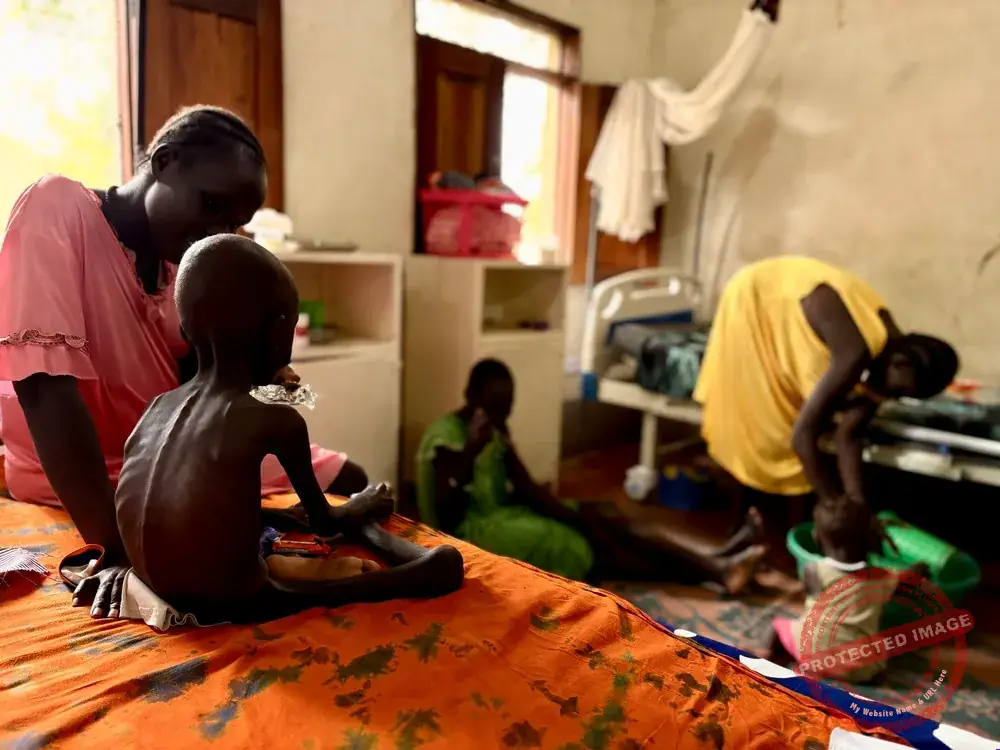
Médecins Sans Frontières (MSF) has warned that thousands of people across South Sudan are without access to essential healthcare due to donor funding cuts and the withdrawal of humanitarian organisations. The organisation reports that the closure of health facilities, shortages of medicines, and the withdrawal of medical support are forcing patients to travel long distances to reach hospitals. This has resulted in patients arriving with conditions that could have been diagnosed and treated much earlier.
In Aweil, Northern Bahr el Ghazal State, the withdrawal of funding and the closure of primary healthcare facilities are forcing patients to travel long distances to access medical care at Aweil State Hospital. The hospital serves an estimated 1.4 million people, according to MSF. Patient Abuk Athak shared her experience of walking for two hours while in labour to reach the hospital after the nearest health centre closed due to a lack of staff, medicines, and a midwife.
MSF data shows that the number of functional Primary Health Care Centres (PHCCs) and Primary Health Care Units (PHCUs) in Northern Bahr el Ghazal fell from 131 to 63 by January 2026. This decline is linked to funding shortages under South Sudan’s Health Sector Transformation Programme (HSTP), a multi-donor programme supporting medicines, staff incentives, and basic healthcare services across the country.
As primary healthcare facilities close or reduce their services, more patients are arriving at Aweil State Hospital in critical condition. MSF figures show that hospital admissions increased by 44 per cent between January and September 2026, compared with the same period in 2025. Admissions of children under five with severe acute malnutrition rose by 47 per cent, from 1,227 to 1,801.
Humanitarian funding cuts are deepening the crisis, with US funding for South Sudan’s Humanitarian Needs and Response Plan falling by 61 per cent in 2025 compared with 2024. The United Kingdom also reduced its overall aid allocation to the country by 23 per cent in 2025–26, with a further 39 per cent decrease projected for 2026–27. By October 2026, South Sudan’s Humanitarian Needs and Response Plan was only 36 per cent funded.
The effects of funding cuts are visible around Aweil, where the World Food Programme (WFP) stopped food distributions in Wedweil refugee settlement in August. The settlement’s only clinic, operated by the International Rescue Committee (IRC), has also reduced its services following US funding cuts in 2025. MSF expects more patients with severe health conditions to arrive at Aweil State Hospital.
MSF doctor Daniel Garang says the situation in Aweil is unprecedented in his seven years working in the area. He reports seeing mothers and their children lying on mats in the hospital compound for days after being discharged, unable to leave because they lack the money to return home. Dr Garang warns that worsening food insecurity, combined with reduced access to healthcare, is increasing the risks facing vulnerable families.
Key points
- MSF reports a 44% increase in hospital admissions in Aweil State Hospital between January and September 2026.
- The number of functional Primary Health Care Centres in Northern Bahr el Ghazal fell from 131 to 63 by January 2026.
- US funding for South Sudan’s Humanitarian Needs and Response Plan fell by 61% in 2025 compared with 2024.