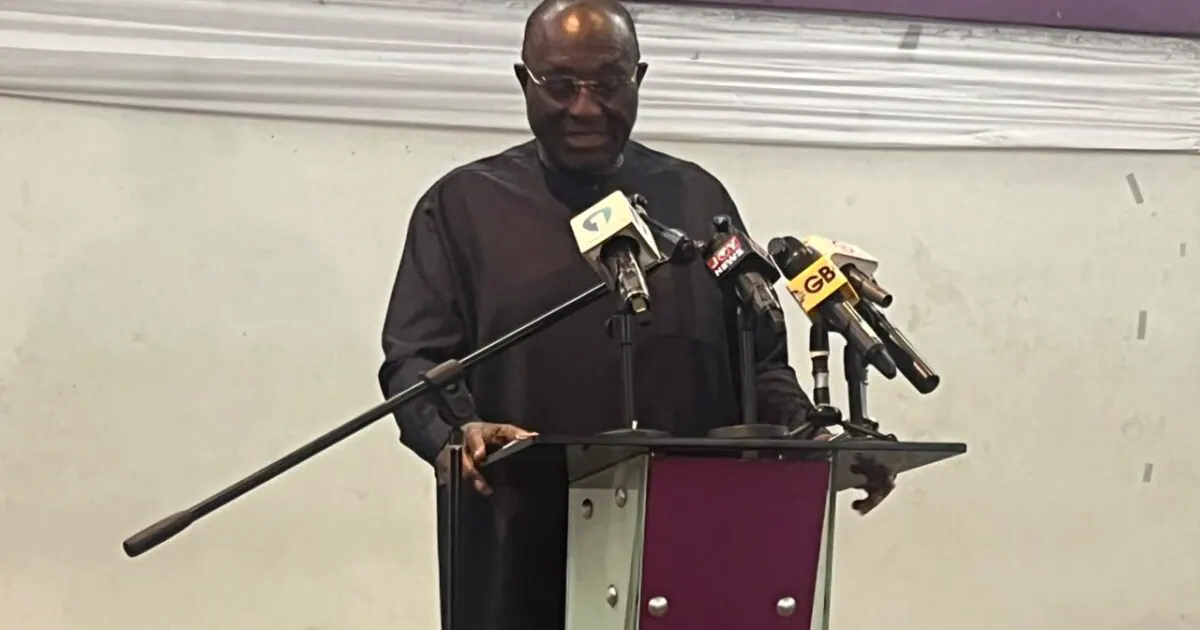
Former Trade and Industry Minister and United Party (UP) leader Alan Kwadwo Kyerematen has proposed that the Accra-Kumasi Expressway be financed through private capital, rather than state funds. He argues that commercially viable infrastructure projects like the expressway should attract private investment, particularly where investors can recover their investment through toll revenues. This approach would free up government resources for other pressing infrastructure needs.
Speaking at a public lecture at the British Council in Accra, Kyerematen questioned the decision to use public funds to finance the entire project. He suggested that the government could instead allow private investors to finance, construct, and operate the road under an arrangement that would enable them to recover their investment over an agreed period. This approach would enable the government to allocate resources to other critical infrastructure projects.
The proposed Accra-Kumasi Expressway is a 175.6-kilometre road that is expected to be constructed at a cost of US$4 billion. President John Dramani Mahama announced on September 14 that US$2 billion had been secured for the project and placed in a dedicated account at the Bank of Ghana. The government plans to complete the project without borrowing, with Finance Minister Dr Cassiel Ato Forson stating that the full funding requirement is expected to be available by the end of 2026.
Kyerematen's proposal centres on whether the commercial potential of the expressway should be used to attract private capital from the outset, rather than requiring the state to provide the initial financing. He argues that greater use of private capital should form part of a broader economic transformation strategy, in which the government creates the policy and regulatory environment, while commercially viable projects attract private investment.
The Chief Executive Officer of Accra-Kumasi Expressway Limited, Francis Ahlidza, has stated that the road will be operated as a commercial asset to enable the government to recover taxpayers' investment within the concession period. Ahlidza also mentioned that economic analysis is being undertaken, with the expectation that the investment could be recovered over a 50-year period, while generating additional revenue for expansion of the road network.
Kyerematen's suggestion has sparked debate about the best approach to financing large-scale infrastructure projects in Ghana. While the government has secured funding for the expressway, Kyerematen's proposal highlights the potential benefits of leveraging private capital for such projects. This approach could enable the government to allocate resources to other critical infrastructure needs, while also promoting economic growth and development.
The government's current model for the expressway envisages the road generating revenue after completion. With the project expected to be completed without borrowing, the government's focus is on ensuring that the investment is recovered over time. As the project moves forward, it will be closely watched by stakeholders, including investors, policymakers, and the general public.
Key points
- Alan Kyerematen advocates for private-sector financing for the Accra-Kumasi Expressway.
- The proposed Accra-Kumasi Expressway is a 175.6-kilometre road expected to cost US$4 billion.
- The government has secured US$2 billion for the project and plans to complete it without borrowing.