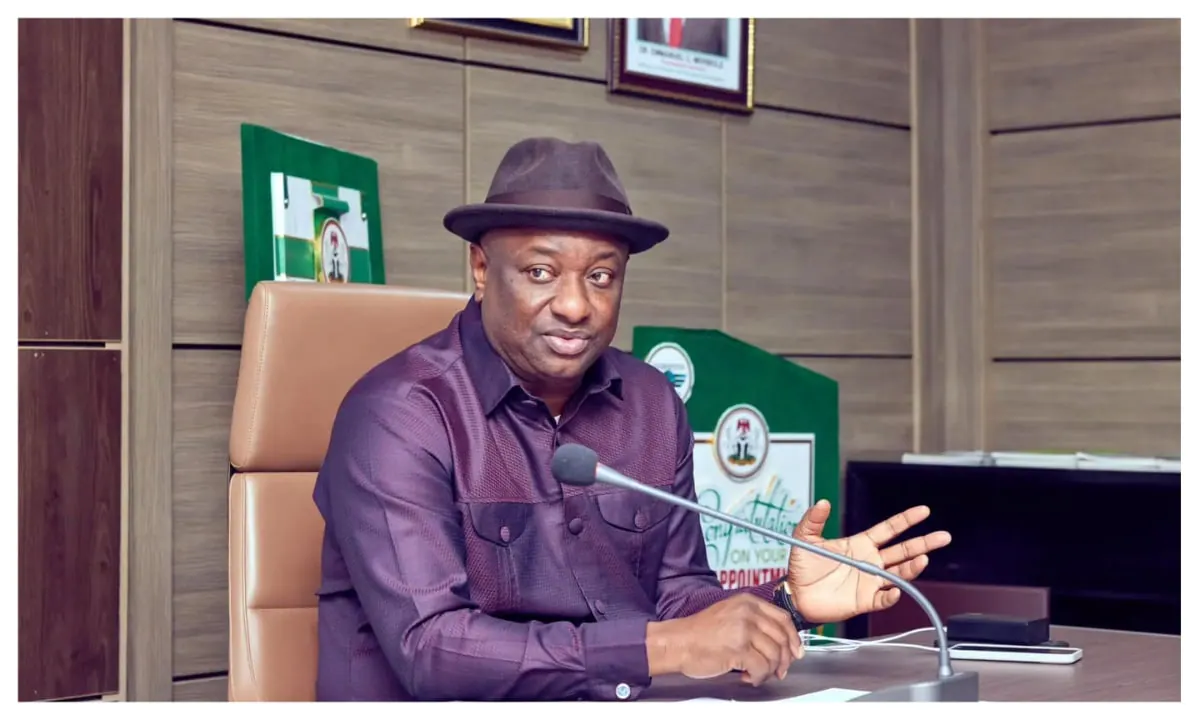
Nigeria's Minister of Aerospace and Space Development, Festus Keyamo, has disclosed that the removal of fuel subsidy by President Bola Ahmed Tinubu's administration provided the $500 million used for the reconstruction of the Lagos airport and other critical aviation infrastructure. This revelation was made at an event in Lagos on Monday, October 5, 2026. Keyamo emphasized that the funds were not obtained through borrowing.
According to Keyamo, the country's liquidity and foreign reserves improved under President Tinubu's administration, making the funds available for the airport reconstruction. He noted that the country's foreign reserves rose significantly from $3 billion to $56 billion. The Minister's statement suggests that the government's efforts to improve the economy have yielded positive results.
The removal of fuel subsidy by President Tinubu in 2023 has generated significant savings for the government. In August 2026, Minister of Finance, Taiwo Oyedele, stated that the Federal Government had approximately N20.4 trillion in incremental resources during the period of fuel subsidy removal. Additionally, N30.64 trillion was spent on various initiatives.
Keyamo also highlighted the positive impact of the improved aviation sector on investor confidence. He stated that investors are now rushing into the country, perceiving Nigeria as a viable investment destination. This development is expected to boost economic growth and create new opportunities.
The reconstruction of the Lagos airport is part of a broader effort to upgrade Nigeria's aviation infrastructure. The project aims to enhance the airport's capacity and provide a better experience for travelers. The funding for the project was not borrowed, demonstrating the government's commitment to fiscal responsibility.
The improved aviation sector is a significant achievement for President Tinubu's administration. The government's efforts to boost the economy and attract investment have yielded positive results. The increase in foreign reserves and investor confidence are key indicators of the country's progress.
As Nigeria continues to implement reforms aimed at improving the economy, the government is expected to announce more initiatives to sustain the momentum. The fuel subsidy removal has generated significant savings, which are being channeled into critical infrastructure projects like the Lagos airport reconstruction.
Key points
- The Nigerian government has used $500 million, generated from fuel subsidy removal, to fund the reconstruction of the Lagos airport.
- The country's foreign reserves have increased from $3 billion to $56 billion under President Tinubu's administration.
- Investors are increasingly interested in Nigeria due to improvements in the aviation sector and the economy.