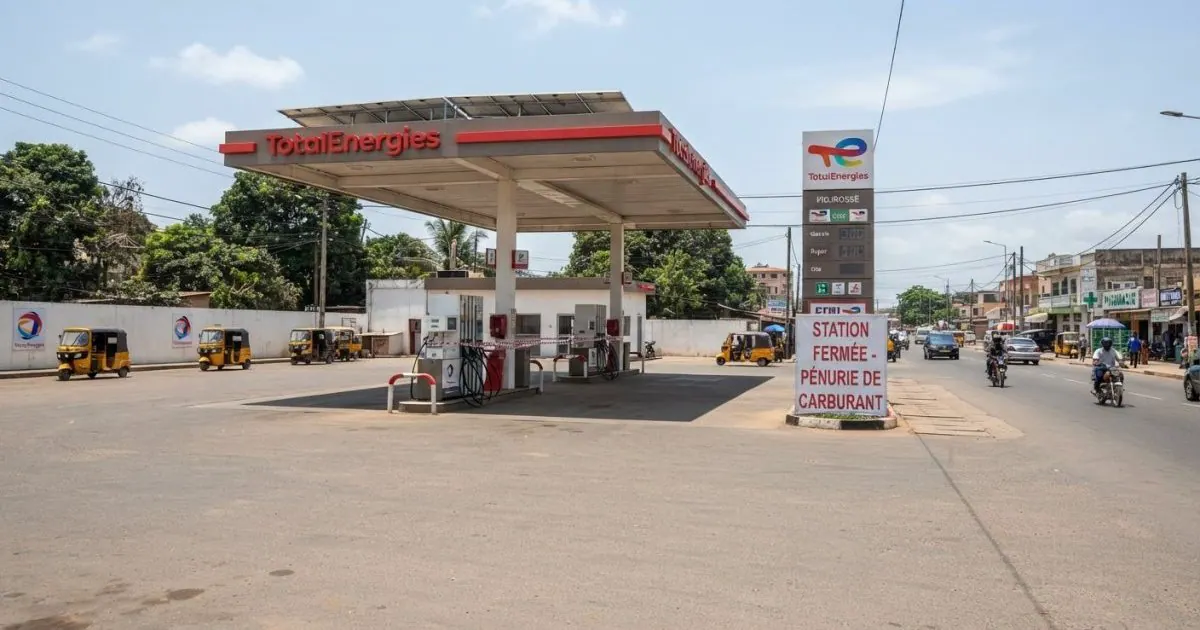
A visit to over 20 fuel stations in Cotonou, Abomey-Calavi, and Porto-Novo on Friday, October 2, 2026, revealed that only a few had fuel in stock. Most stations had their pumps idle, with attendants either sitting or busy on their smartphones. When approached by customers, attendants would simply raise their hands to indicate that there was no fuel available. A sign on some stations read "RUPTURE ESSENCE," indicating a complete lack of fuel.
The shortage has caused long queues at the few stations that still have fuel. Motorcyclists and motorists are flocking to these stations, while others are forced to travel to different areas in search of fuel. This situation is occurring despite assurances from the Director of Cabinet of the Ministry of Internal Trade and Formalization of the Economy, Laurent Akpo, that there is no fuel shortage in Cotonou.
According to Akpo, the fuel is available at the Benin's oil depot, and the difficulties experienced at fuel stations are due to unusual demand and the time required to accelerate their supply. He stated that the situation should normalize in the following days. However, as of October 2, the shortage persisted, causing inconvenience to residents and commuters in the region.
The fuel shortage has significant implications for the region's economy and daily life. With many stations running dry, people are finding it difficult to access fuel for their vehicles, which may impact transportation and other economic activities. The government has not provided a clear explanation for the shortage, but it is working to resolve the issue.
The shortage has also led to a surge in demand at the few stations that still have fuel, resulting in long queues and congestion. This has raised concerns about the potential for fuel price hikes and the impact on the region's economy. The government has urged calm, assuring residents that efforts are underway to address the shortage.
Benin's fuel consumption stands at 2.5 million liters per day, according to recent reports. The country is working to boost its fuel supply and stabilize the market. A recent development is the planned commercialization of 250,000 barrels of Benin's crude oil, expected to hit the market in October.
The fuel shortage in Grand Nokoué region has brought to the fore concerns about Benin's fuel supply chain and distribution network. While the government works to resolve the current shortage, residents and commuters are hopeful that a lasting solution will be found to prevent such shortages in the future.
Key points
- Only a few fuel stations in Cotonou, Abomey-Calavi, and Porto-Novo had fuel in stock as of October 2, 2026.
- The fuel shortage has caused long queues at the few stations that still have fuel, and residents are finding it difficult to access fuel for their vehicles.
- Benin's daily fuel consumption stands at 2.5 million liters, and the country is working to boost its fuel supply and stabilize the market.